What’s Wrong With Your Car?
Get Simple Answers Fast.
Did you land on the wrong page? 🚘 Start Your Diagnosis Here. 🚘
by Eddie Carrara
I’ve been working on cars for over 35 years.
I’m an ASE-Certified Master Technician, and I’ve spent most of my life diagnosing and repairing vehicles—starting right out of high school and continuing ever since.
But this site isn’t about me.
It’s about helping you understand your car—and avoiding unnecessary repairs.

4 Common Types of Brake Squeaks
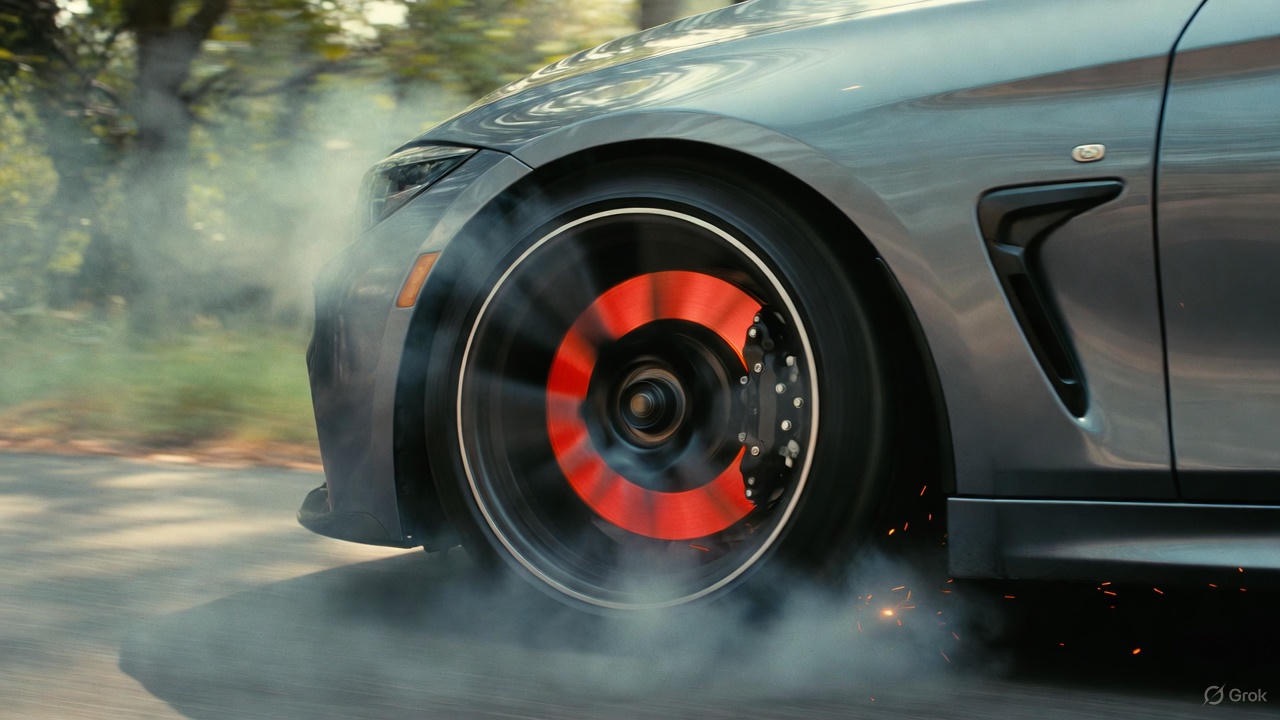
Why are your brakes squeaking?
Why Do My Brakes Squeak?
Any squeak in your vehicle can be annoying, especially if it continues to get worse. Here are four common types of squeaks that come from the brakes—problems that come through the shop every day—plus a fifth (bonus) brake noise, a scraping noise. I hope I can help you understand what's causing your brakes to squeak.
If your brakes are making a grinding noise, 👉 Stop Guessing and Start Diagnosing Here
If your Brakes are making a squeaking noise, 👉 Don't Ignore It, Find Out Why
If your not sure what your brakes are doing, It Could Cost A Lot More If You Wait, Get The Answers Here
Four Types of Brake Squeaks
|
Disc Brakes |
Drum Brakes |
|
Morning squeak |
Rear drum brake |
|
Thinning brake pads |
|
|
Cheap brake pads |
|
Two Types of Brakes
- Most brakes today are disc brakes, where a pad presses against a disc or rotor to stop the car. The first three squeaks described here come from disc brakes.
- Many cars have drum brakes on the back wheels, where a curved “shoe” presses against a hollow drum to stop the car. The last squeak here is made by drum brakes.
1. Disc Brakes Squeak After Car Sits Overnight
Most brakes squeak after sitting overnight. This is usually due to moisture from rain, dew, or condensation that collects on the surface of the rotors.
When moisture collects on the brake rotors, it causes a thin layer of rust to form on the rotor surface. As the rotor turns, the pads scrape the rust off the rotors, and then the rust gets caught on the leading edge of the brake pad. These fine particles of rust then get embedded into the leading edge of the pad and cause a squeak.
The only way to prevent this type of squeak is to garage your vehicle or store it in a climate-controlled environment. Rust on the rotors can also cause pad impressions on the rotors, which in turn cause a thumping noise or brake pulsation.
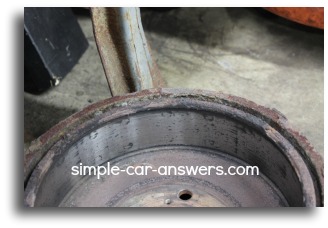
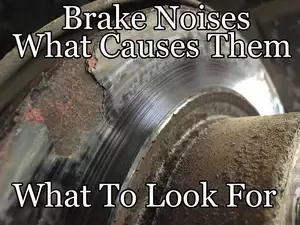
Here is a brake drum that has shoe impressions which is caused by a vehicle sitting without moving for a few days.
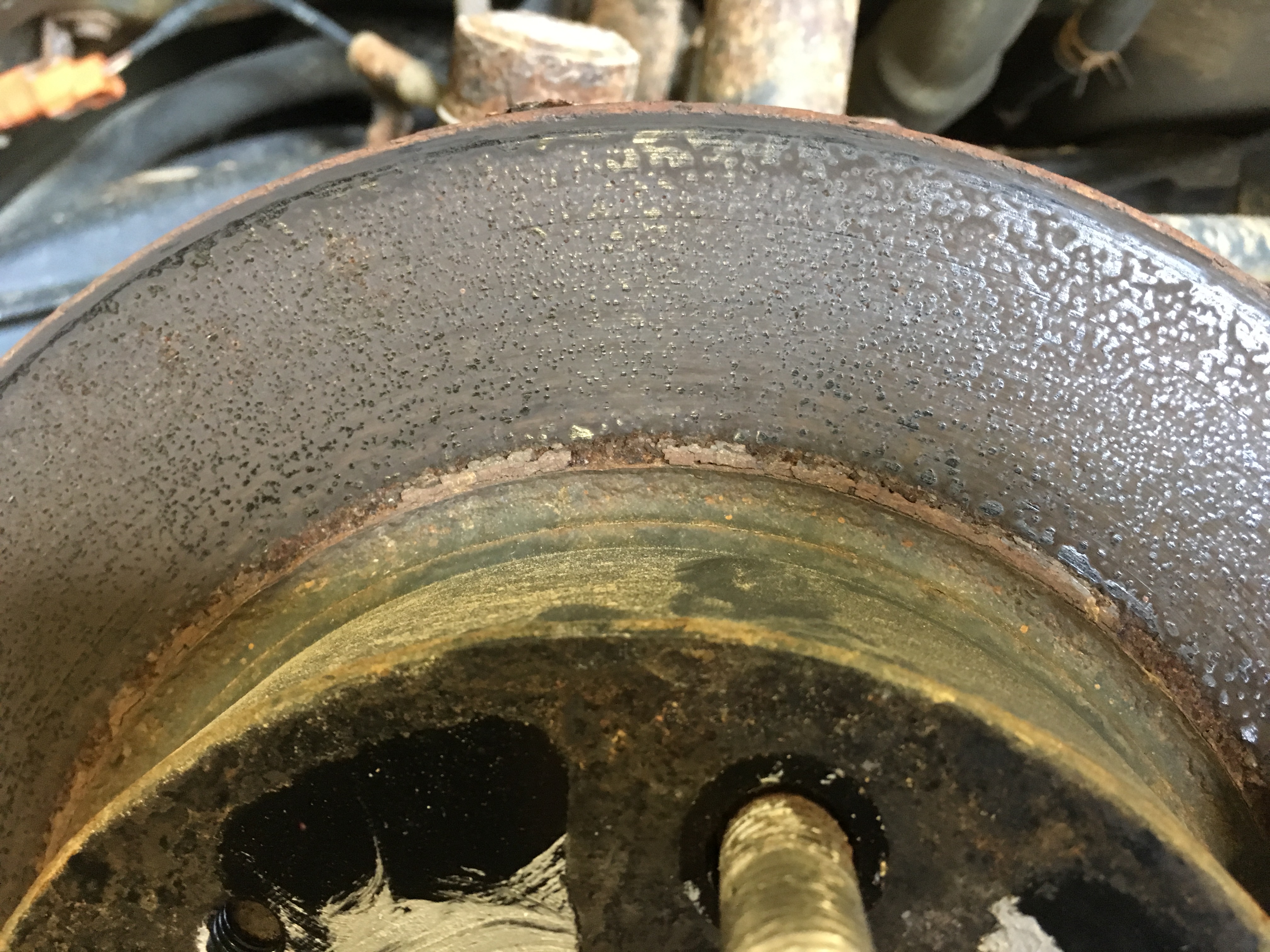
This vehicle sat for almost two weeks, can you see the rust embedded in the metal surface? This would cause a grinding noise when applying the brakes and may even cause a grinding noise just while driving without hitting the brakes.
2. Thinning Brake Pads
The brake-wear indicator is another common cause of brake squeak. This sound starts when the brake pads are almost worn out and getting extremely thin. It’s a very effective warning that the brake pads are almost used up and need to be replaced.
The wear indicators are little metal tabs made of hardened steel. The manufacturers attach wear indicators in different ways: welding them on, using a rivet, or using a push-on clip attached to the edge of the brake-pad backing.
These steel tabs are designed to hit the rotor before the brake pad completely wears out, warning the driver that the pad material is getting very thin and is about to create a metal-to-metal situation. You don’t want to get to that point because it means ineffective braking, and metal grinding and scratching on the rotor can damage the rotor’s smooth surface.
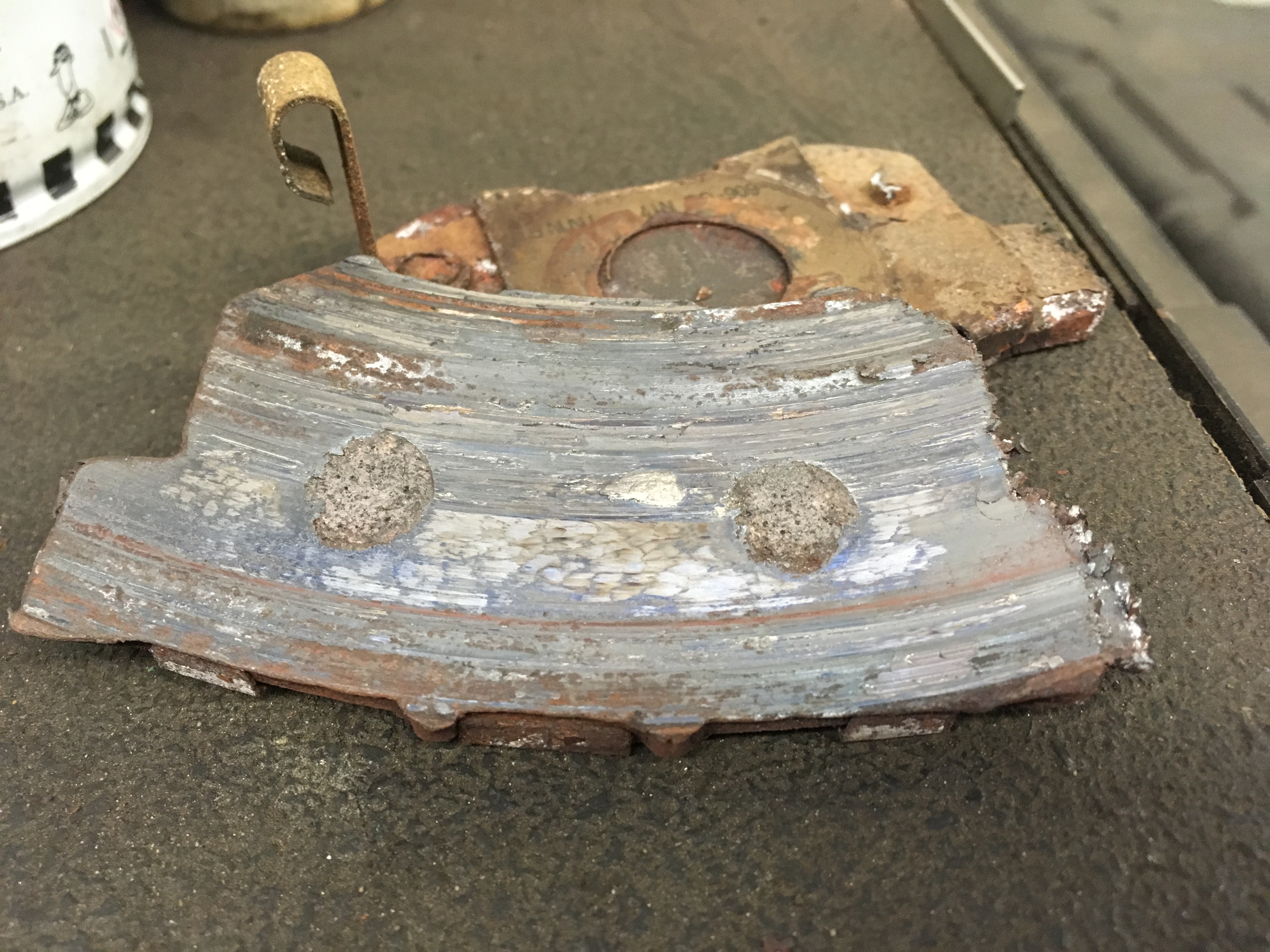
This brake pad is worn a little beyond the brake pad wear indicator, OK, maybe a lot beyond, lol.
3. High Metal Content in Brake Pads
Brake pads normally contain bits of metal, but some cheap brake pads are manufactured with very high metal content. They have large chunks of metal pressed into the pad material. These large pieces of metal drag on the rotor and cause a high-pitched brake squeak.
Since brake pads sometimes can last between 30,000 and 40,000 miles, you'll have to listen to this annoying sound for months. This is one reason to spend a few extra bucks on quality brake pads.
Another reason, of course, is that your brakes stop the car, and quality helps. Don’t let $20 stand between you and an accident that could end up costing you a lot more money.
To minimize squeaks from your brake pads, use brake pads with a high content of organic brake material (resin, rubber, Kevlar, fiber, what have you).
More organic brake material means fewer metal shavings in the brake pad, less squeaking, and less metal dust on your wheels. Metal particles in brake dust can discolor chrome or aluminum wheels.
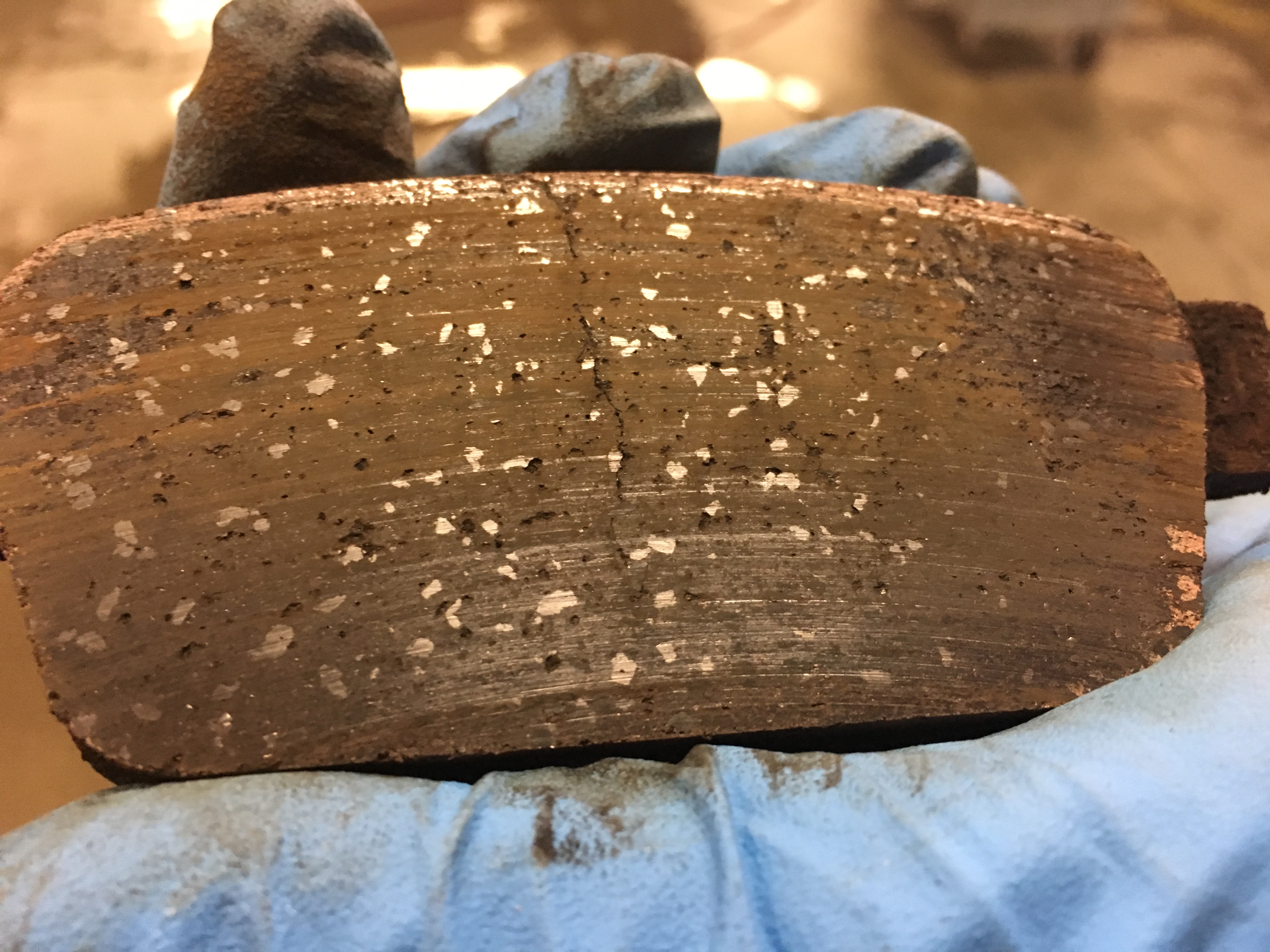
This brake pad has medium size particles of metal embedded in the organic brake material. Particles this size may cause a brake to squeak, but not always. You'll also notice the brake has been overheated several times causing a heat crack in the middle of the pad. Brakes in general get extremely hot, but this pad was twice backed too many times.
4. Drum Brakes That Need Lubrication
Have you ever heard a squeak from the rear brakes after pushing on the brake pedal? This is a sure sign that the shoe-to-backing-plate contact points need lubrication. If these contact points lose lubrication, the metal will begin to rust. Once this happens the shoes will scrape against the backing plate, causing a rhythmic squeaking noise with the rotation of the wheels. Most new vehicles have disc brakes on all four wheels, but drum brakes are still used on the rear wheels of some cars.
The best way to prevent this noise, or repair it, is to keep the contact points lubricated, either with a high-temperature anti-seize compound or a lube called Moly Paste M77. You use it on the back of brake pads and on all brake pad/shoe contact points, not on the brake pad or shoe surfaces themselves.
If you're looking for a lube to use on the caliper slide pins, use a Hi-Temp CRC Brake Caliper Synthetic Grease. If you use high-quality products when doing your brake jobs, the time spent doing the job will be well worth it. In the long run, you'll have longer-lasting brakes with no headaches.
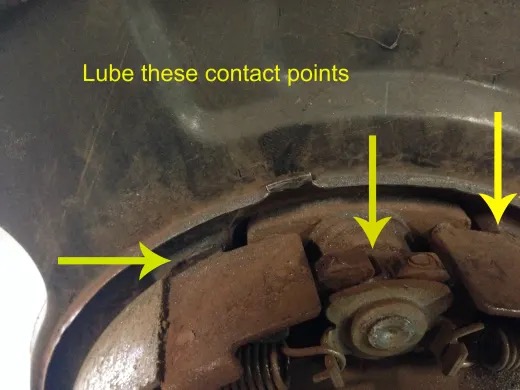
Clean and lube these contact points if your drum brakes squeak. | Source Eddie Carrara
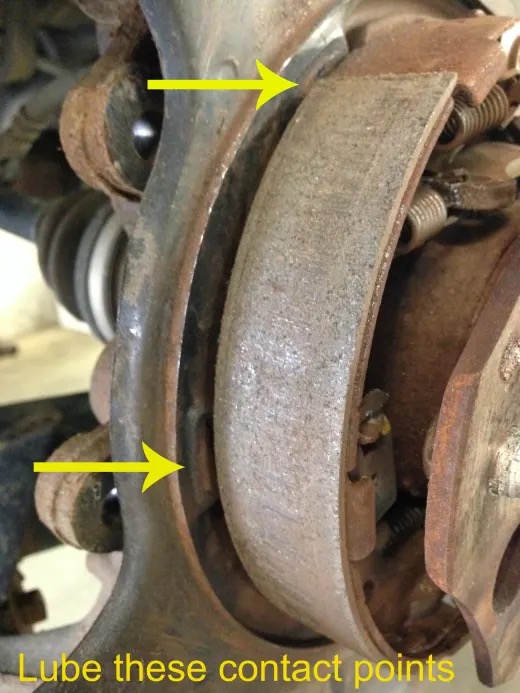
More contact points to lube on drum brakes. | Source Eddie Carrara
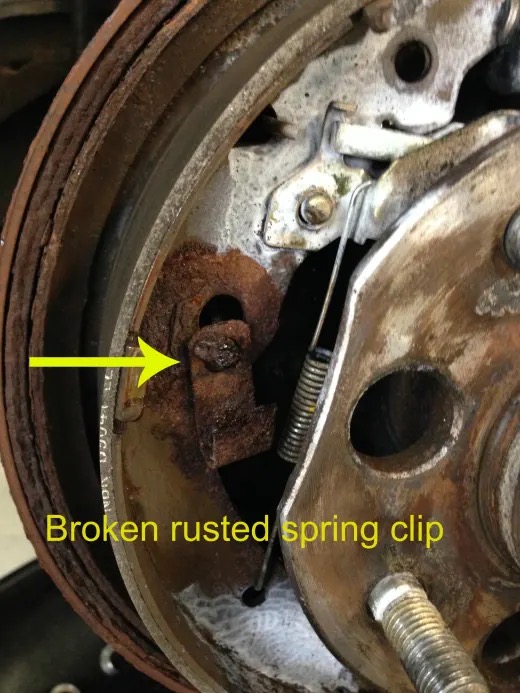
Moisture can cause a lot of damage. Look at this spring clip, it's completely disintegrated. | Source Eddie Carrara
Bonus Noise: Scraping From Plate or Rock Hitting Rotor
Give Me Your Feedback!
As always, leave me your feedback and comments. All questions are welcome, and no question is stupid. Describe your problem the best you can, and sooner or later we will reach a conclusion and come up with a solution.
You might like these
ABS Brake Light On After Wheel Bearing Replacement
If your ABS brake light is on, and you just replace a wheel bearing, here's what went wrong.
3 Most Common Brake Noises: Causes and How to Fix Them
3 most common brake noises I encounter, I'll shed some light on what the repair process looks like, Some of the repair techniques I share here are unorthodox
What Can Cause Grinding Noise in a Car's Braking System?
What Can Cause Grinding Noise in a Car's Braking System?
This article is accurate and true to the best of the author’s knowledge. Content is for informational or entertainment purposes only and does not substitute for personal counsel or professional advice in business, financial, legal, or technical matters.
