What’s Wrong With Your Car?
Get Simple Answers Fast.
Did you land on the wrong page? 🚘 Start Your Diagnosis Here. 🚘
by Eddie Carrara
I’ve been working on cars for over 35 years.
I’m an ASE-Certified Master Technician, and I’ve spent most of my life diagnosing and repairing vehicles—starting right out of high school and continuing ever since.
But this site isn’t about me.
It’s about helping you understand your car—and avoiding unnecessary repairs.
What Can Cause Grinding Noise in a Car's Braking System?

This brake rotor has seen better days; it has been through extreme conditions and should be replaced.
Grinding Noise When Braking Sometimes
Many components can cause a grinding noise in a car's braking system. Some components need a simple fix that costs little or nothing, others can get very involved and cost thousands.
The most common problem that causes a grinding noise in a car's braking system is that the brake pads or shoes have worn out and the metal backing of the brake pad is contacting the surface of the rotor.
Sometimes there are warning signs before this grinding starts; for example, the brake pedal feels soft or travels to far before the brakes engage. There are also situations where there are no warning signs and the brake material becomes brittle and falls off the backing in one quick swipe.
The most common reason we don't notice a brake system issue before it happens is that we’re just not paying attention. We get in our vehicles and immediately turn on the radio, or the fan for heat, or the AC, and these noises can drown out the warning signs. The next thing you know your brake pedal drops to the floor and your car won’t stop.
Important Tip
A good routine is to start your vehicle, let it idle for about 15 seconds or more, listen to the engine for any unusual sounds, and drive the first mile with no loud noises to distract you while you listen to the vehicle for any unusual sounds. A couple of taps on the brake pedal is a good idea too. If all is well, crank it up and enjoy the ride.
If your brakes are making a grinding noise, 👉 Stop Guessing and Start Diagnosing Here
If your Brakes are making a squeaking noise, 👉 Don't Ignore It, Find Out Why
If your not sure what your brakes are doing, It Could Cost A Lot More If You Wait, Get The Answers Here
Other Causes of Grinding Noises From Brakes
Because there are many problems that could cause the grinding noise, I will list as many as possible here to help guide you to a solution to your problem.
- Rusted rotors
- Frozen caliper piston
- Seized brake pads in caliper holder
- Damaged or dislodged anti-rattle clip
- Dislodged pad shims
- Debris (like pebbles) between the rotor and backing plate
- Loose mounting bolts
- Frozen caliper slide pins
- Broken shoe springs
- Rusted drums
- Broken retaining springs or pins
- Bent or broken backing plate
- Separated shoe linings
If not taken care of quickly, some of these problems can cause extensive damage.
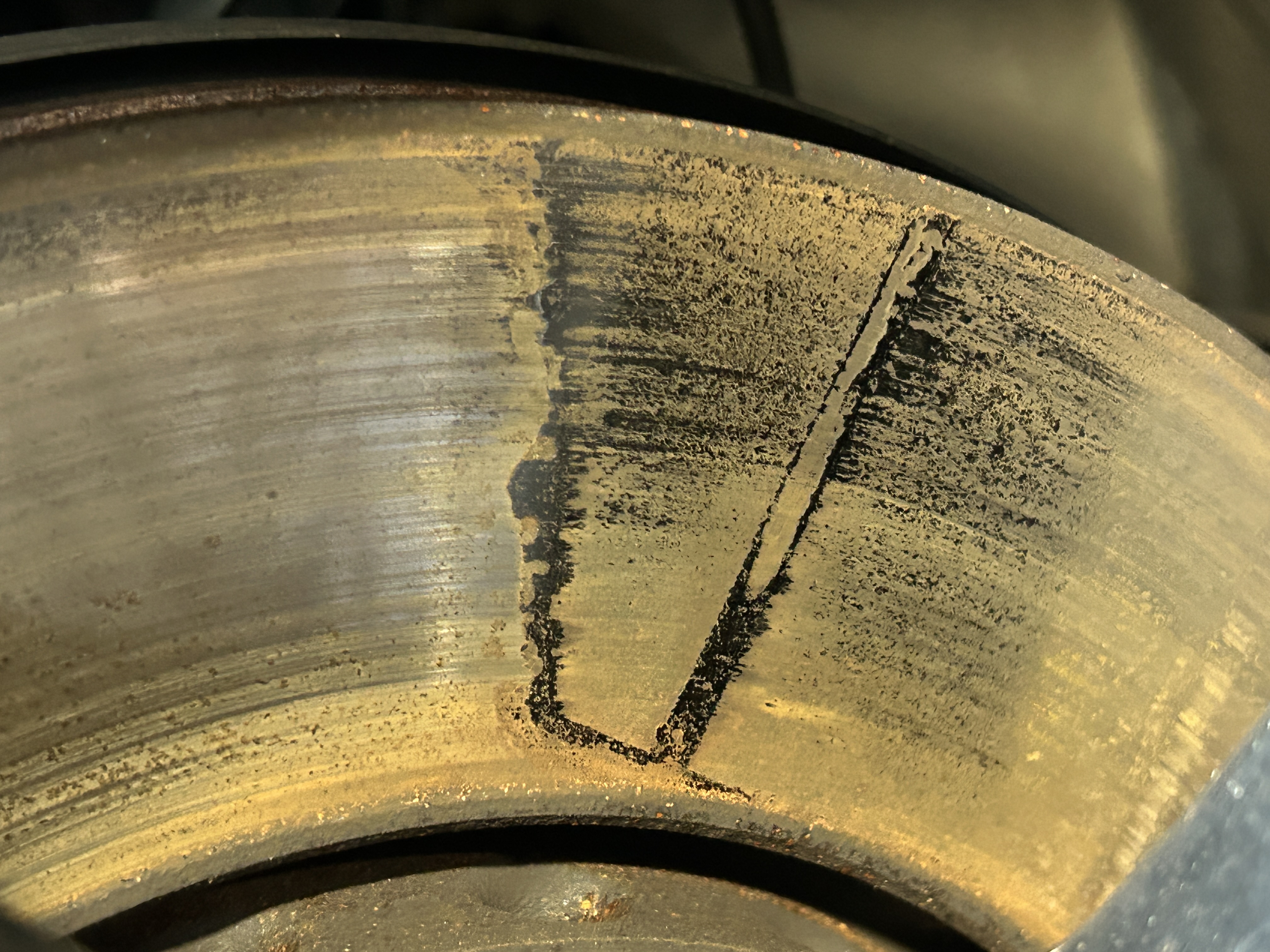
When a vehicle sits for a few days without being driven, the brake rotor will rust everywhere except where the brake pad sits. This is called a brake pad impression and can cause a very loud thumping noise with or without the brakes applied. If you have a rhythmic thumping noise with your car is moving and it has sat for a few days, this is most likely your culprit.
Grinding Noise After Wheels Were Removed: The Backing Plate?
If you just had your tires rotated, or the wheels removed for a brake inspection and you hear a grinding noise when driving away from the garage, the most likely cause is that the rotor backing plate clearance has been compromised.
When a mechanic removes the wheel, it can drop down onto the backing plate, causing minor damage but bending it to the point where the plate will contact the rotor and cause an awful noise that sounds like a pie plate dragging on the ground behind the vehicle.
The fix is very simple: just bend the backing plate away from the rotor by pushing on the plate using a long screwdriver or ridged metal bar. You can access the backing plate by prodding and poking between the spokes of the wheel. The clearance only needs to be about a quarter-inch or more.
How Much Does a Complete Brake Job Cost?
The cost of a complete brake job can vary, depending on what is being changed, the make of the vehicle, the geographical area, the labor rate, and the mechanic's discretion. The year, make, and model of a vehicle will be the biggest factor; you cannot compare the cost of a complete brake job for a Porsche Cayenne to the cost of a Honda Civic.
Another factor will be if you’re using original equipment (OE) parts or aftermarket parts. Using original equipment parts will drive up the cost, but OE parts are usually higher quality and will last longer with fewer problems like squeaking and squealing.
The average parts and labor cost of a typical brake job for rotor and pad replacement (one axle, front or rear) with OE parts would run about $600 to $1200; the cost would drop to between $450 to $750 using aftermarket parts.
How Much Does It Cost To Fix Grinding Brakes?
This is a tough question to answer not knowing what is causing the grinding noise. If the brake pads are worn out and you need to replace rotors and pads because the brakes are metal to metal, the cost can be in the mid to upper hundreds.
Some mechanics will offer a pad slap if the customer doesn’t have the money to replace all components. If the rotor thickness is within spec, replacing the pads only as a temporary fix is acceptable but is not recommended in all situations.
Keep in mind that your brakes stop an extremely heavy object ( your vehicle) and if you need your brakes in an emergency situation, you want your car to stop as quickly as possible, so cheaping out on brakes is not a good idea if you can afford decent quality parts.
How Do I Know When My Brakes Need Changing?
Here are a lot of the warning signs that you need a brake job:
- Soft brake pedal
- Pulsating brake pedal
- Grinding sound
- Moaning sound
- Shaking steering wheel when applying the brakes
- Pulling to one side when braking
- Wheels locking up and skidding
- Hot smell at one wheel
- Wheels not spinning freely
- Pedal kickback
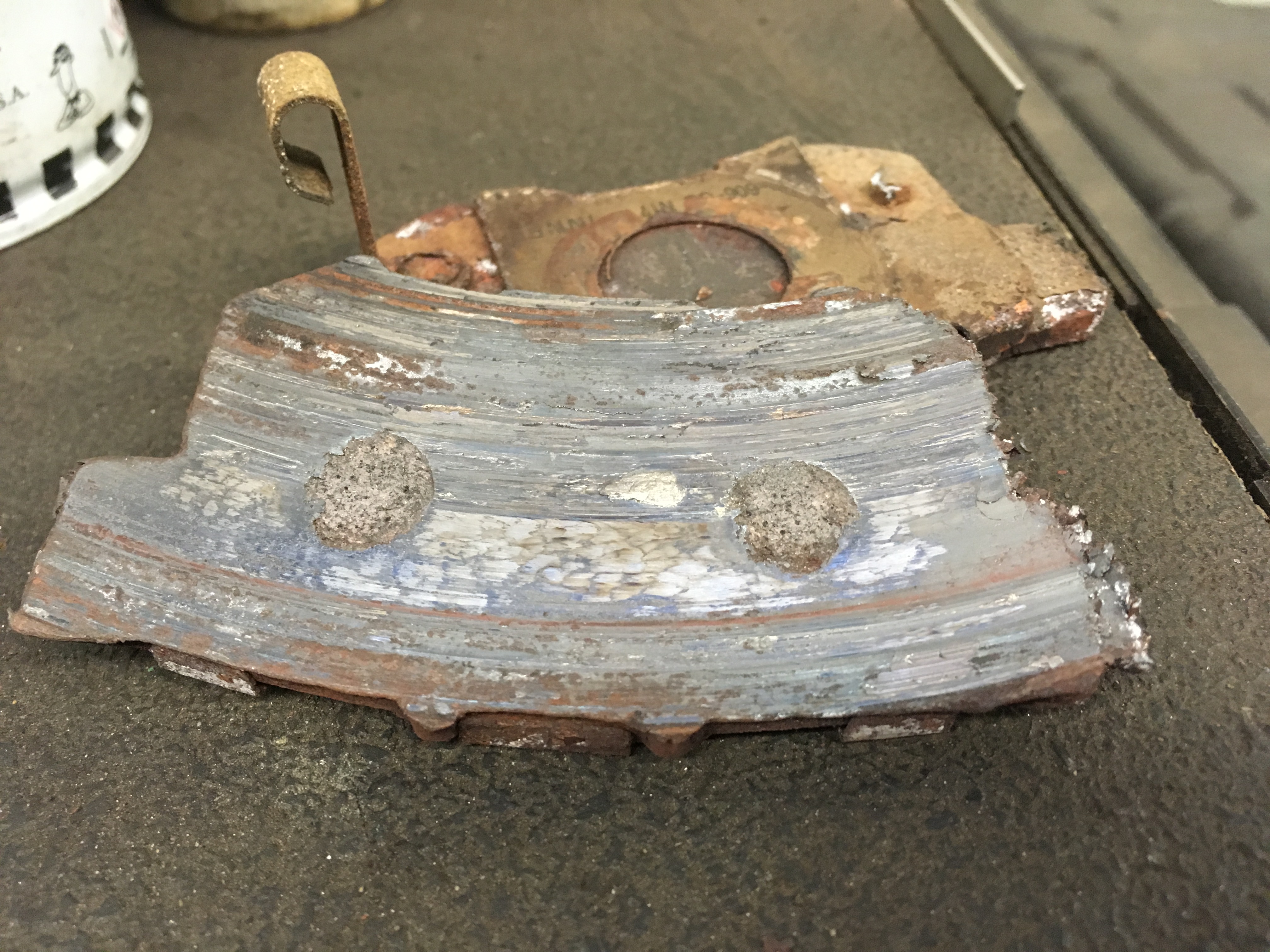
This is a brake pad that was worn metal to metal. The grinding noise was so bad and their radio was so loud! They had no idea how much danger they were in if they needed to stop in an emergency situation like a kid running out in front of their car! .
Can You Drive With Bad Rotors?
What makes rotors "bad," you may wonder: were they naughty or did they do something wrong?
All rotors come from the manufacturer with a minimum thickness specified for new and worn rotors. Before you have rotors resurfaced, you need to gauge whether or not there is enough material to cut a new surface safely.
If the rotor that needs resurfacing has any damage to it, you need to measure the thickness of the rotor at the damaged area and decide if resurfacing is acceptable or if replacing is the proper repair.
Rotor thickness can be measured with a micrometer or vernier caliper. In my opinion, a micrometer is more accurate, but either will give you a general idea of the rotor thickness.
Are Grinding Brakes Dangerous?
Grinding noises from brakes can be dangerous. They may just be caused by debris or something out of alignment, but they may be happening because your brake pads have worn down to nothing and you have no brake material left. A grinding noise is a warning sign something is wrong and you should get it checked as soon as possible.
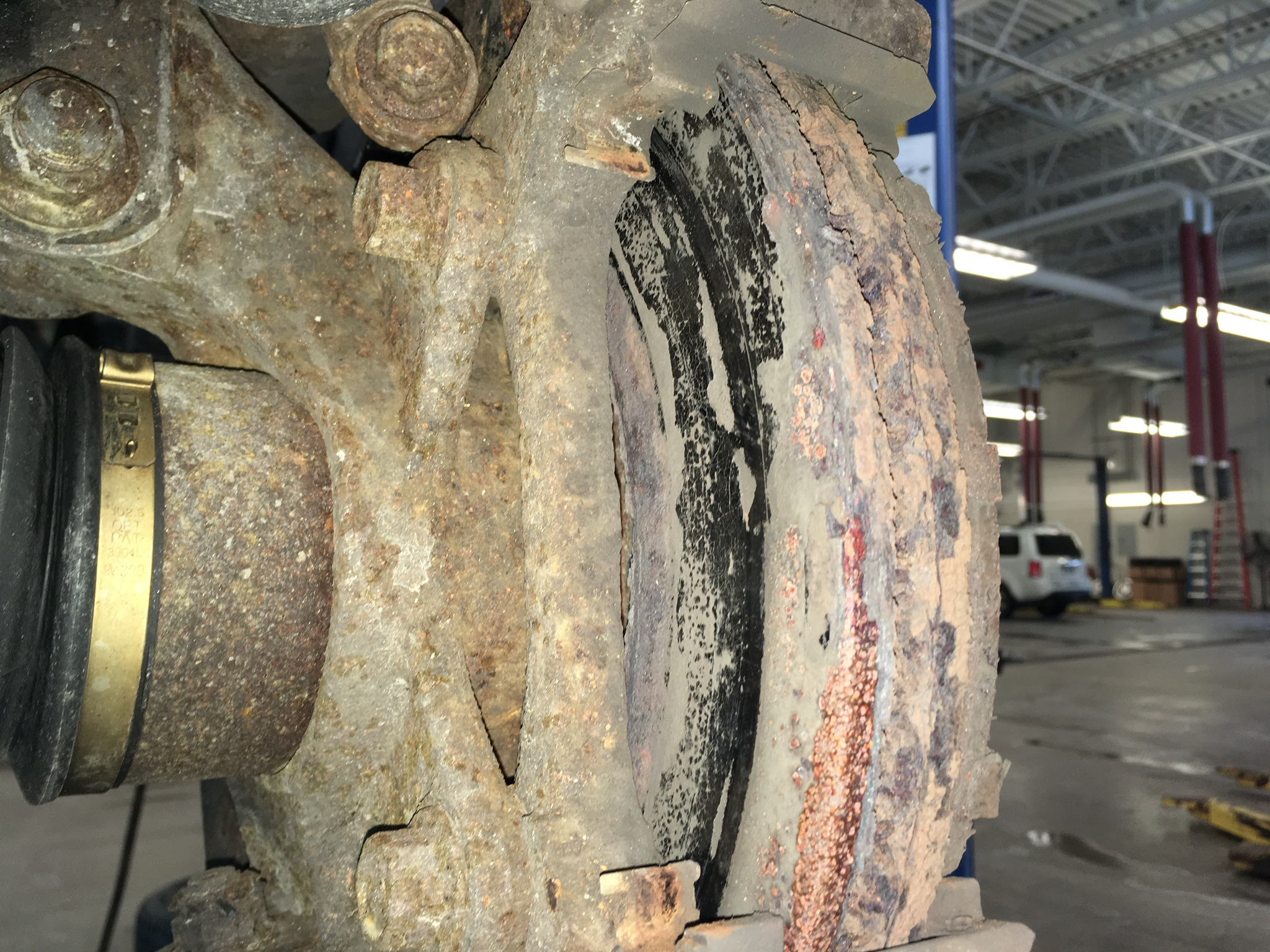
This rotor is beyond it useable life. It's hard to delineate between the rust and the rotor. We see this neglect daily and have a hard time grasping the customers thought process with this much grinding noise going on.
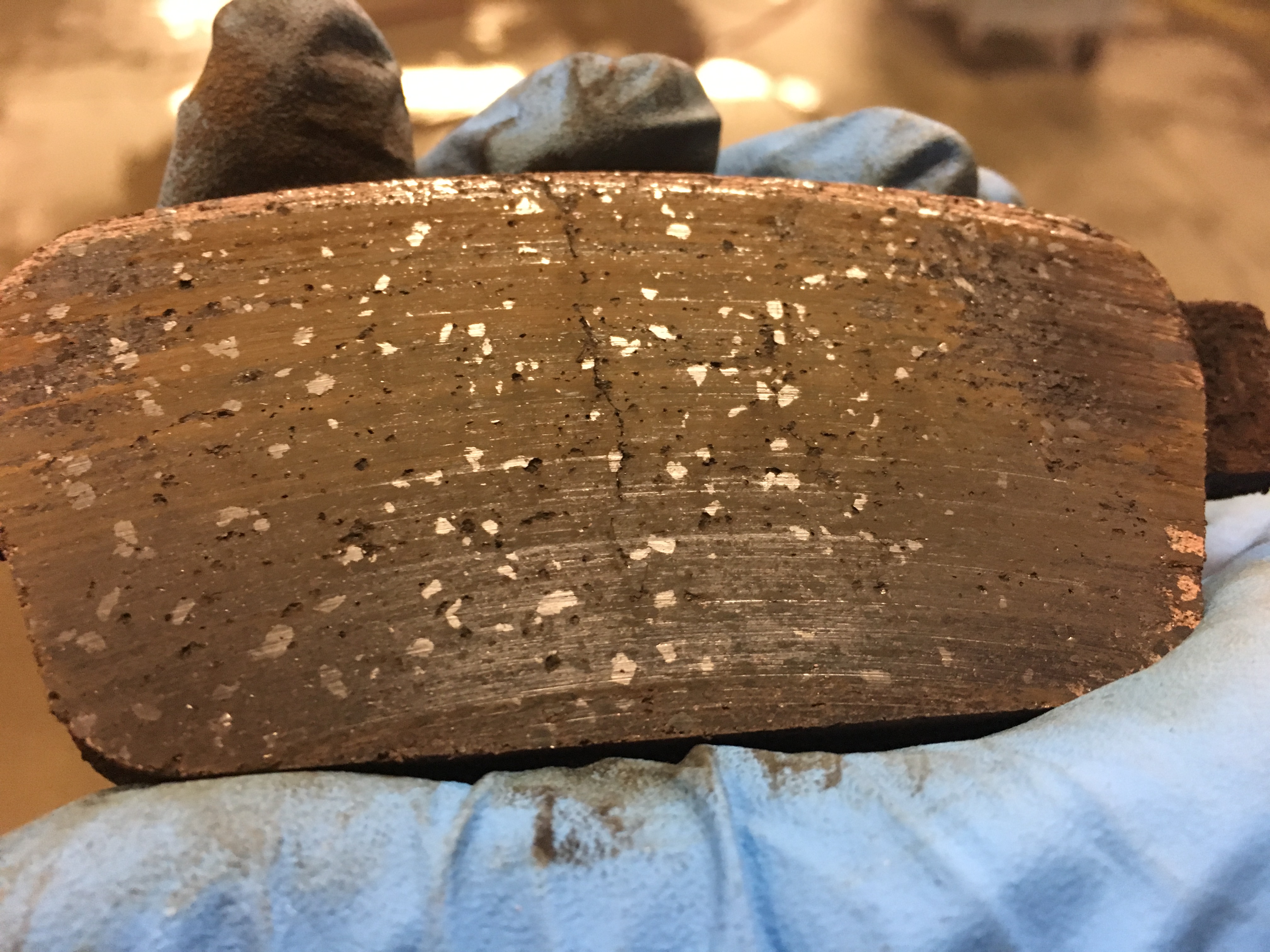
This brake pad was overheated and has a crack down the middle. The pad material was so brittle it was causing a grinding noise.
Things to Note Down if Your Brakes Make a Grinding Noise
If your brakes are grinding, here are some things to consider.
- When was the last time you had your brakes inspected? You may need a little TLC if the braking system has been neglected, a thorough inspection will only cost about fifty dollars, money well spent.
- How long has this grinding noise persisted? Have the brakes been making noise for a while or did it just start happening? If it’s been making noise for a while, it’s not a good idea to wait any longer, because brakes do fail completely.
- Does the noise happen only sometimes? If your brakes only grind sometimes, it could be caused by moisture, including humidity in coastal or lakeshore areas, or debris from dirt roads. If you notice it after you have had rain overnight or for a few days, or the noise stops after driving for a while or on hot sunny days, maybe moisture or dirt on the rotors is your cause.
- When does the grinding noise happen? Do you hear the grinding noise when stopping, turning, accelerating, accelerating into a corner, light braking, or heavy braking? These are some notes you should be taking, so when you visit the garage you can explain to your mechanic exactly when it happens to avoid wasting their time and your money.
Is It Normal for New Brakes to Grind?
New brakes don’t normally grind, but it's possible.
If the mechanic has bent a rotor's dust shield during a brake repair, it’s possible the backing plate is touching the rotor. This is very common when repairing brakes because the backing plate is a thin piece of metal and it bends very easily. It can also be repaired as easily as it was damaged.
Some rotors come with unusual metal lips that are supposed to prevent debris from entering between the backing plate and rotor, like on the Honda Element. This lip causes a lot of trouble for mechanics because they have to grind the lip off before installing the new rotors to prevent it from contacting the backing plate.
If a rotor is resurfaced incorrectly, it can cause a slight grinding or rubbing type of noise. If you have this noise after having your rotors resurfaced, the mechanic might have to do one more cut to smooth out the rotor surface.
Some new rotors will have a hissing or rubbing type noise when braking for the first few hundred miles. This is caused by the way the manufacturer has cut the finished surface at the factory. This noise should slowly disappear after driving a few hundred miles.
Why Would Brakes Make Noise When Not Braking?
If your brakes are noisy when you’re not using them, it’s possible you have a stuck caliper piston or frozen slide pins. Or the brake pads may be jammed into the calipers and corroded onto the pad holders.
If you have a grinding noise on drum brakes, it’s possible something inside the drum has failed, like a shoe hold-down pin, retainer spring, or shoe brake adjuster.
In either case, if your brakes are noisy when you aren't even using them, I highly recommend you make an emergency stop at your closest garage to at least have the noise checked out.
Will Adding or Changing Brake Fluid Stop Grinding?
No, brake fluid will not stop a grinding noise! The brake fluid is the hydraulic fluid for the brakes' hydraulic system and has nothing to do with your brakes grinding. Even if your brake fluid is extremely dirty it will not cause a grinding noise.
If you ever meet a mechanic who tells you that you need to replace the brake fluid to stop a grinding noise, ask them why. Dirty fluid could cause a blockage, and prevent components from working properly or block the return flow back to the master cylinder, but it cannot directly cause the grinding noise.
How Do I Know if I Need Brake Rotors?
The brake rotor will need to be inspected and measured to find out if it can be resurfaced or replaced. If rotors are rusted to the point that the braking surface is flaking off, the rotors have probably gone through extreme conditions and most likely need to be replaced.
Rotors can also be warped so badly that they can't be resurfaced. If so, they are not salvageable and need to be replaced. The rotor runout or parallelism can be measured with a dial indicator. Each manufacturer has a specification guideline to follow which will tell you whether to discard the rotor or resurface it.
If a rotor's parallelism is out of spec you can expect the steering wheel to shake when braking at either low or high speed depending on how badly the rotors are warped. Sometimes you can also feel the brake pedal pulsate when braking.
Can Dirty Brake Fluid Cause a Grinding Noise?
The brake fluid itself cannot cause a grinding noise. However contaminated brake fluid can cause parts to fail: clogged lines, frozen caliper pistons, leaking seals, and master cylinder failure.
Checking brake fluid at every oil change is a good idea. The master cylinder reservoir is white see-through plastic, so checking the level just by eyeing it is possible, but if you want to check for contamination, remove the cap and look at the color of the fluid. It should be light amber and clear. If you notice green algae or any dark contaminants, it may be an indication it's time to replace the brake fluid.
I recommend you replace the brake fluid about every three years or 30,000 miles, whichever comes first. I also recommend flushing the brake system completely at that time, not just changing the reservoir fluid. Contaminants get into the entire brake hydraulic system, not just the reservoir.
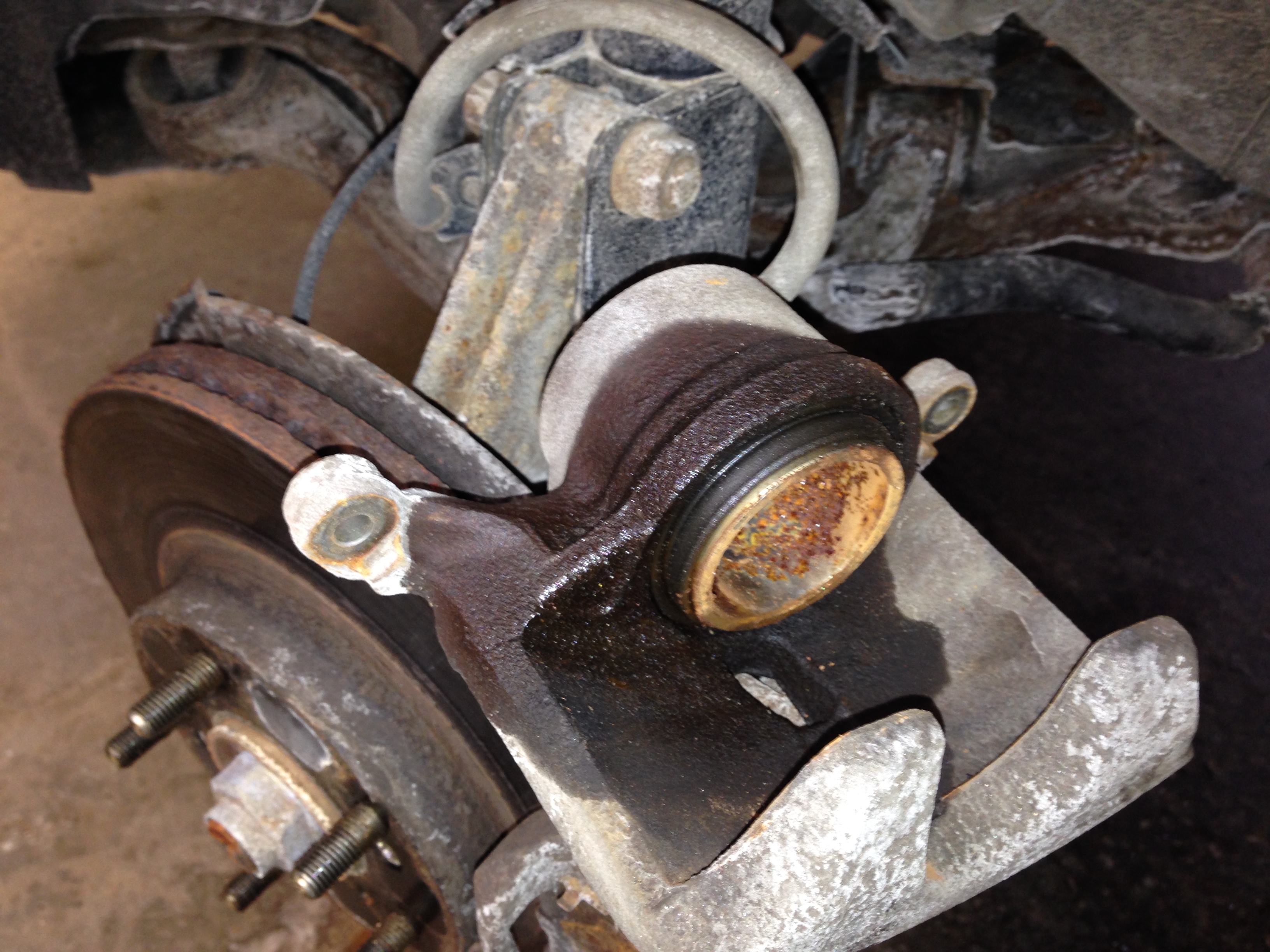
This brake caliper started leaking because of contaminated brake fluid, the fluid deteriorated the rubber seals over time.
This article is accurate and true to the best of the author’s knowledge. Content is for informational or entertainment purposes only and does not substitute for personal counsel or professional advice in business, financial, legal, or technical matters.
