What’s Wrong With Your Car?
Get Simple Answers Fast.
Did you land on the wrong page? 🚘 Start Your Diagnosis Here. 🚘
by Eddie Carrara
I’ve been working on cars for over 35 years.
I’m an ASE-Certified Master Technician, and I’ve spent most of my life diagnosing and repairing vehicles—starting right out of high school and continuing ever since.
But this site isn’t about me.
It’s about helping you understand your car—and avoiding unnecessary repairs.

My Car Is Leaking Fluid 6 Liquids That May Drip From a Car
Here is a close simulation of what types of fluids could drip from YOUR car and their colors. Keep in mind that manufacturers started using their own dedicated fluids so some of the colors here may be different. It's best to check what color fluid your manufacturer uses for each system.
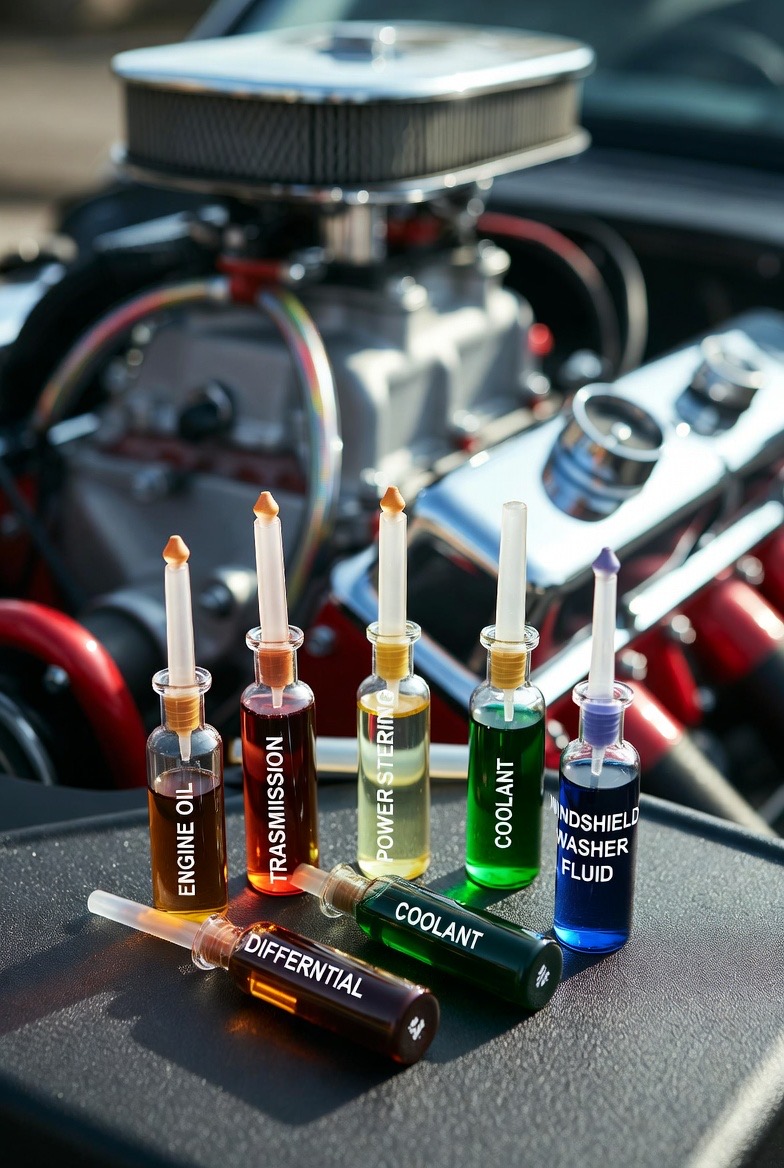
What Is That Fluid Leaking From Under My Car?
Something dripping from a car might or might not indicate a dangerous situation that needs attention. In this article, I will cover the six most common fluid leaks from a car—from the leaks that will leave you stranded to the leaks that should, in fact, be happening. Yes, there are times when fluids should leak naturally from your car, and we will cover that as well.
Let’s try to figure out what fluid is leaking from your car and what you should do about it.
Find the Source and Check the Color
First of all, before you start worrying, make sure the fluid leak is coming from your car and not the vehicle that was parked in that spot before you got there. Just grab a flashlight, get down on one knee, and take a good look under your car.
If the fluid is coming from your car, you need to determine the fluid’s color. The best way to do that is to slide a piece of white cardboard or a piece of plywood under your car and let the car drip onto it. Capturing the drip this way will enlighten you in two ways: One, it will reveal the color, and two, it will give you a good indication of where the fluid is leaking from.
First, without moving the board, notice where the drip is hitting the board; turn your head and look up from this point at the bottom of your car and see exactly where your leak is coming from. Once you have a clear view of where the fluid is leaking from, remove the board and check the color.
My Car Is Leaking Fluid 6 Liquids That May Drip From a Car
The six fluids that most commonly drip from a car are:
- Water
- Motor oil
- Transmission fluid
- Coolant
- Gear oil or differential fluid
- Power-steering fluid
I left brake fluid out of this list because it’s not common for brake fluid to leave a puddle under your car. Nevertheless, a brake fluid leak is potentially serious (see my article about common brake problems). Just for quick reference, brake fluid is clear to amber in color and smells like fish oil; if you doubt me, take the cap off the brake fluid reservoir and sniff the cap.
If your brakes are making a grinding noise, 👉 Stop Guessing and Start Diagnosing Here
If your Brakes are making a squeaking noise, 👉 Don't Ignore It, Find Out Why
If your not sure what your brakes are doing, It Could Cost A Lot More If You Wait, Get The Answers Here
1. Water Leaking From Your Car
The three H’s—hazy, hot and humid—are probably the most common cause of fluid leaking from a car, in the eastern U.S. at least. A car’s air conditioner needs to do something with the moisture it removes from the air inside the passenger compartment. It drains the water onto the ground under the car, via a rubber hose.
On very humid days, the water will pour out of the air conditioner drain onto the ground like from a faucet, until the cabin humidity is almost gone. This is what I meant earlier when I said that some leaks are supposed to happen.
This hose is usually at the front right (near the area where the passenger rests their feet) or in the middle of the cabin. If you have a newer minivan or large SUV with front and rear climate control, it’s possible to have two evaporators and two air conditioner drains, one in front and one in the rear.
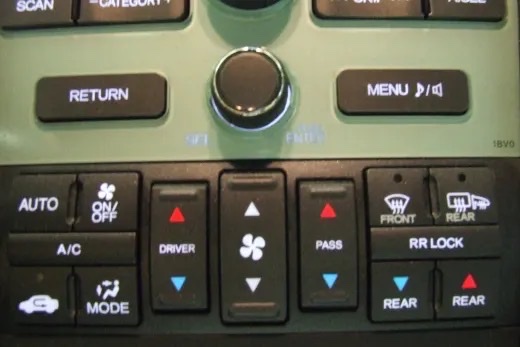
Dual climate control on a 2011 Honda Pilot. The rear controls are the blue and red arrows at right under “RR lock.” Fan speed is controlled from the rear controller.
Here's a Tip: When you use the air conditioning system, it’s best to keep the recirculation button in the “on” position rather than the “fresh air” position (see picture below of the recirculation button on a Ford). If you leave the car in “fresh air” mode, it will continue to drag humid air into the car, the vehicle’s cabin will never reach optimum temperature, and sometimes when the weather is extremely humid, the air will turn into fog as it pours from your vents into your car’s passenger cabin.
If you ever experience this phenomenon, reach over and push the recirculation button. The recirculated air will lose humidity on each pass through the evaporator, and your air conditioner will be working at maximum efficiency
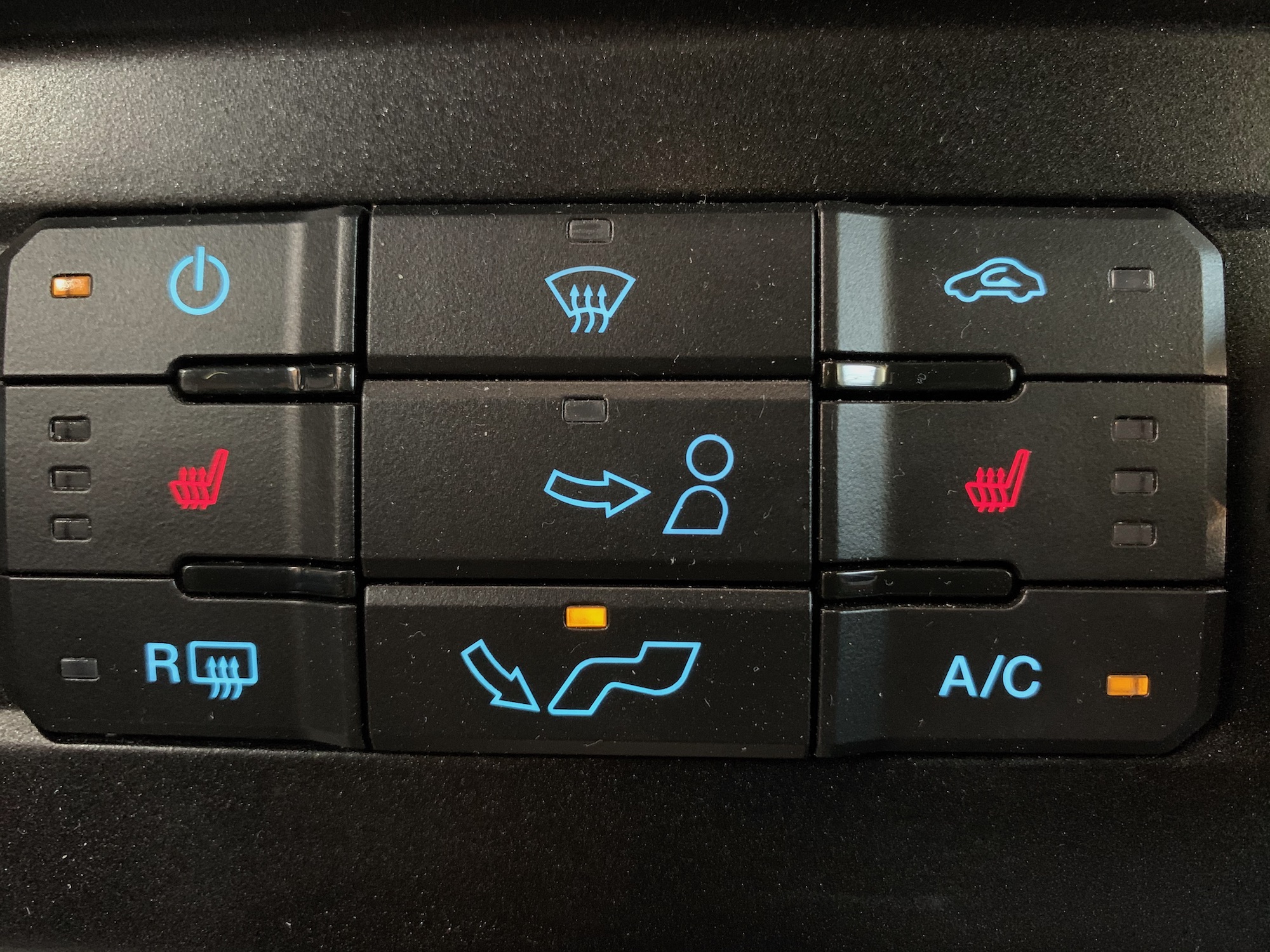
Recirculation button (Top Right) the fresh air button (Center) (2018 Ford F150). The recirculation button should be on when using air conditioning, but should not be on otherwise; it will fog up your windows.
2. Oil Leaks
Engine oil, or “motor oil,” may vary in color from light amber to dark brown, depending on how well you maintain your car. If there is an oil leak, common sense tells you that it will be under the engine, but it’s not always immediately obvious where your engine is located. Don’t laugh: On a front-wheel-drive car, your engine could be located at the front left or front right, depending on where the transmission sits, and the engine could be in the rear of the car if you’re driving a Porsche or a VW bug.
Once you figure out the oil is dripping from the engine, all you have to do is pinpoint the leak. You might want a mechanic to take a look at it if you can’t find exactly where it is leaking from. Oil leaks can come from some pretty obscure sources, like a crankshaft seal under the timing cover, or they can come from something easy to spot like a valve cover gasket.
If you know you have an engine oil leak, check your dipstick frequently. Do not drive a car that's low on oil. It will overheat and damage itself. If you have a massive oil leak do not drive your car at all.
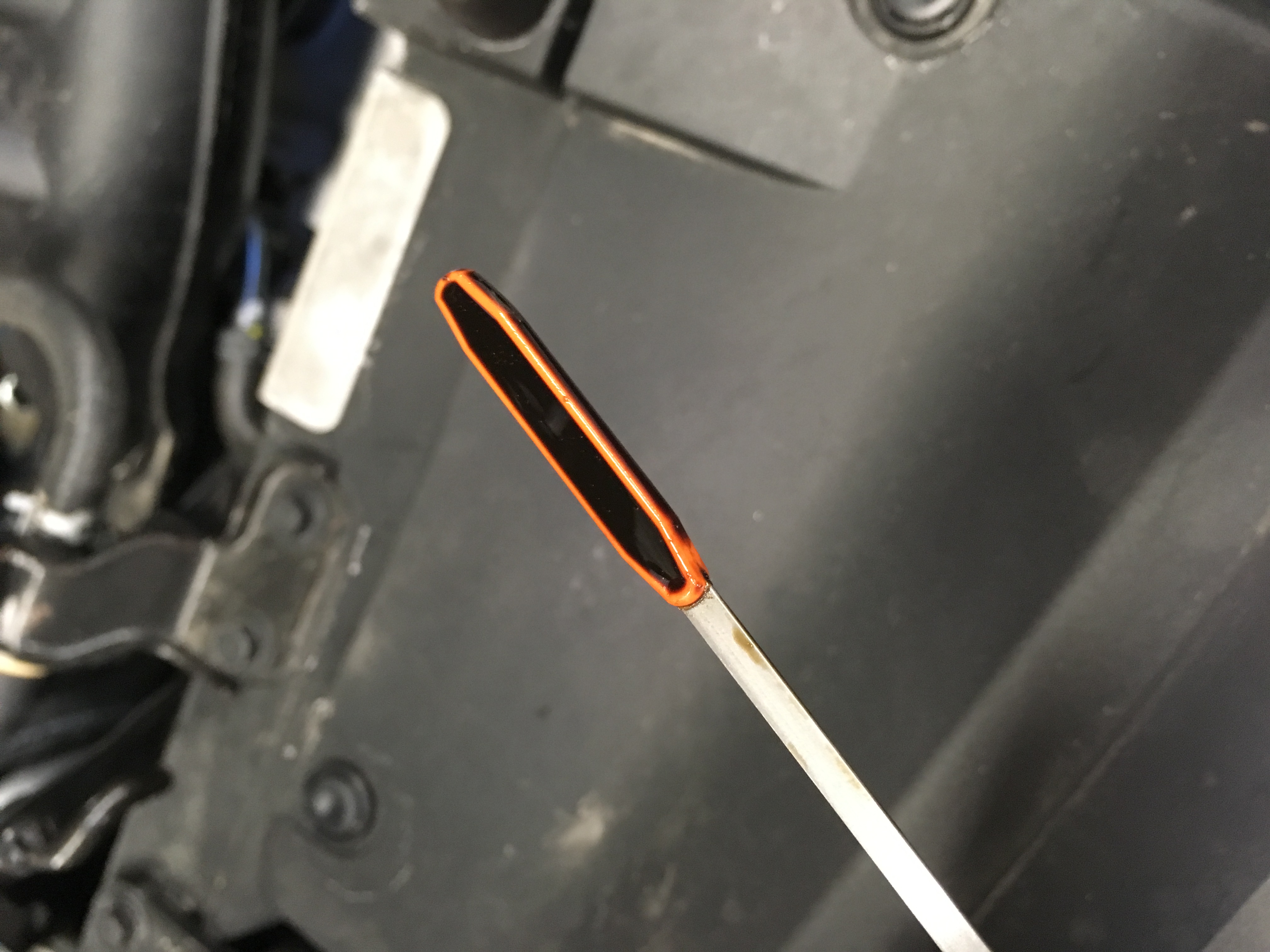
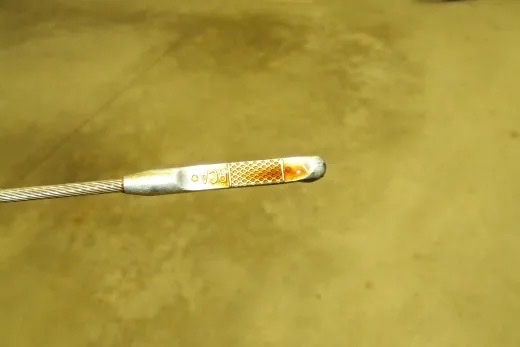
Notice the different color in oil above. If you haven't change your oil in a while it could look more like grease than amber colored oil.
3. Coolant or Antifreeze Leaks
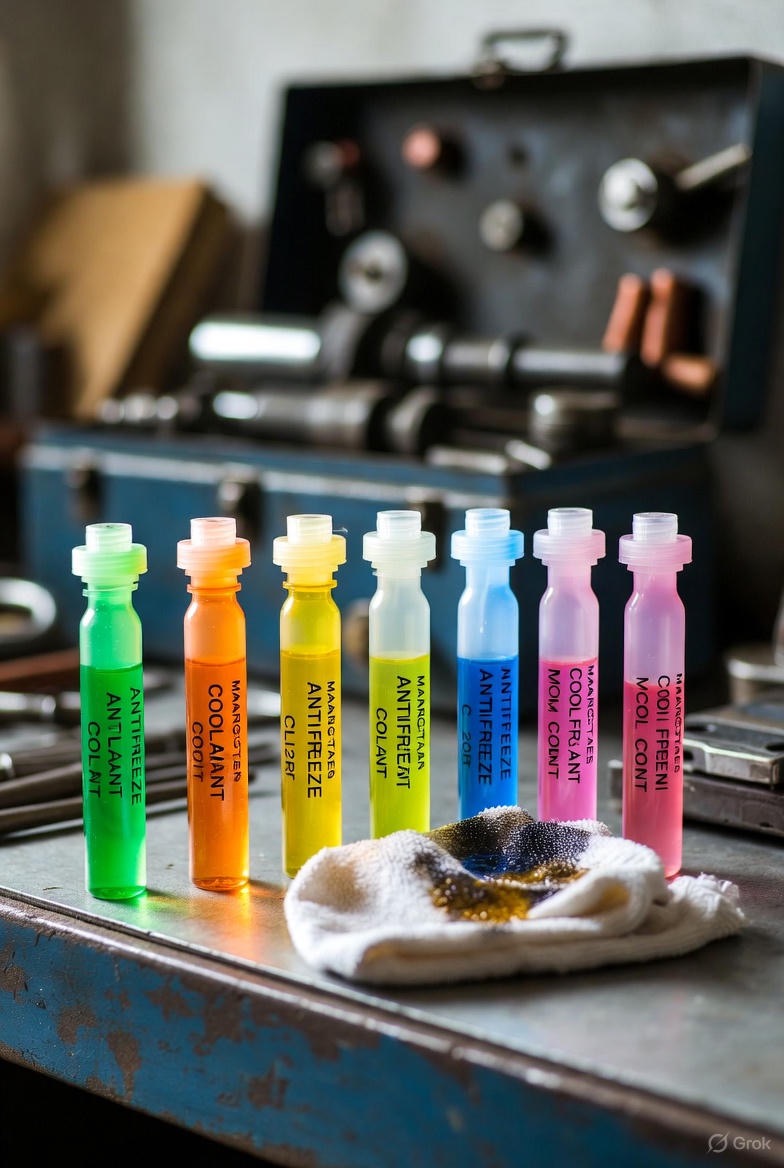
Coolant comes in many colors now; it used to be green, but now its color depends on the manufacturer of the car or the coolant. Honda provides a blue coolant, Mercedes uses clear, Toyota uses red, and I have seen orange, green and all the colors of the rainbow. Coolant has a sweet smell, like candy, and also a sweet taste. Don’t taste it—it’s half ethylene glycol, which is poison—but I have tasted it a few times in my career, not by choice.
A coolant leak could be almost anywhere, because of all the coolant hoses that surround your engine. Some coolant hoses (the heater hoses) go into the passenger compartment itself. But the most common place for a coolant leak is your radiator, and that will be located behind the grill in the very front of the car.
If you suspect you have a coolant leak, you may be able to smell it. Take a quick glance at the coolant overflow tank; it is usually see-through and has “high” and “low” markings on it.
If it’s empty, or you aren’t sure what you are seeing, let your engine cool completely and look in the radiator. Do not remove the radiator cap on a hot engine. It could blow hot coolant or steam into your face and cause severe burns. If you can’t see any coolant when you are peering down into the radiator, you may have a leak.
You don’t want to drive a car that has lost a massive amount of coolant. It can overheat and ruin the engine. Keep an eagle eye on the temperature gauge. Or better yet, tow it to where it can be fixed.
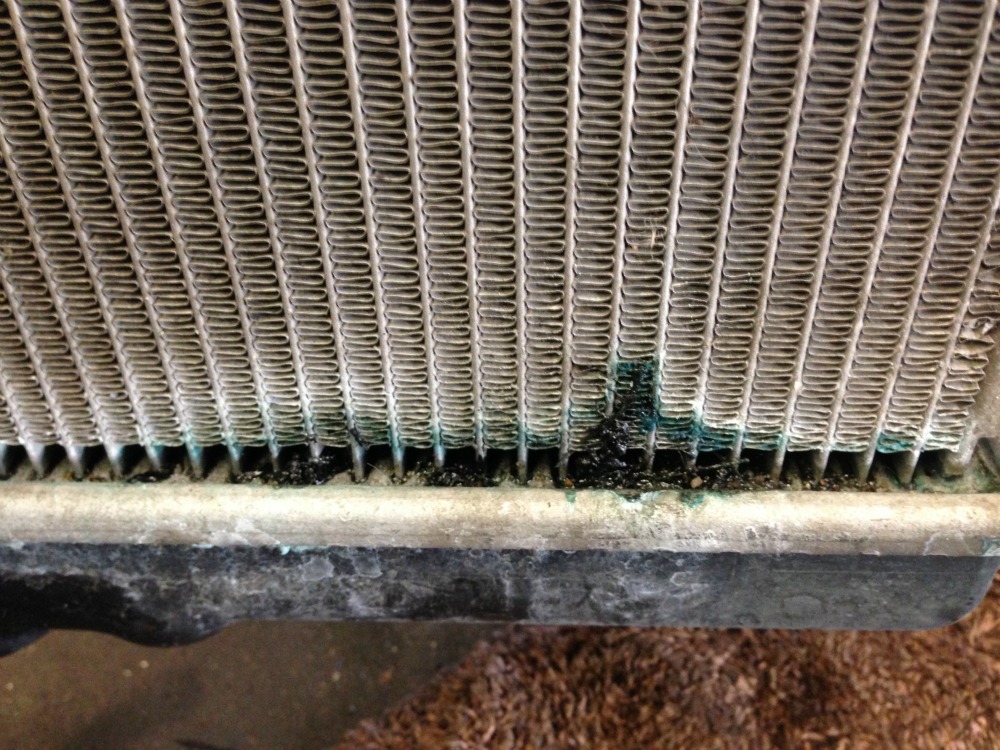
This radiator is leaking green coolant due to the fact that the tank to tube section is rotted. This radiator will need to be replaced ASAP!
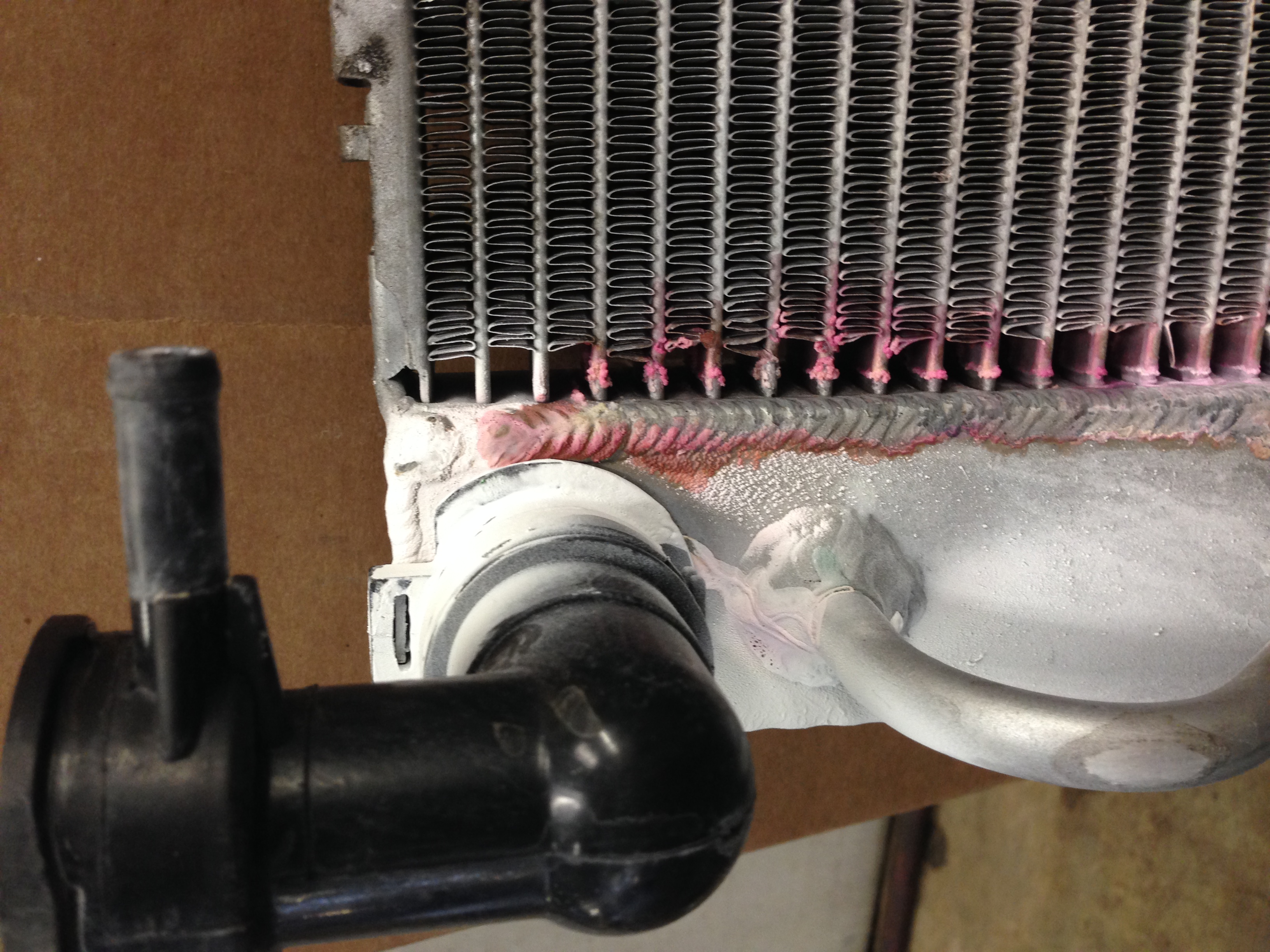
This radiator was sprayed with leak detector ( A white powder) to pinpoint the leak. It appears that the tube to tank welds failed due to either stress or poor workmanship. This radiator will need to be replaced ASAP!
4. Transmission Fluid Leaks
If your transmission is slipping, 👉 Find out why in this Transmission Slipping Guide!
Automatic transmissions use red or pink fluid, and lots of it. Very often, the first sign of an automatic transmission leaking is that the transmission will start to slip (the car will rev without going into gear). If the leak continues, eventually the car will not move at all.
Automatic transmissions use fluids specially formulated by the manufacturer. If you don’t use Honda-made automatic transmission fluid (ATF) in a Honda automatic transmission, you will compromise shift quality and void your warranty, so I recommend following Honda’s guidelines and using their recommended fluids.
Standard (“manual”) transmissions use gear oil (like heavy, strong-smelling motor oil; see “Gear Oil” below) or the manufacturer's proprietary manual transmission fluid. Very old Hondas use regular motor oil in their standard transmissions.
The most common place for a transmission fluid leak on a front-wheel-drive car is the axle seals; on a rear-wheel-drive car, it is the output shaft seal. If you see red or pink fluid under your car, pull the transmission dipstick and check your transmission fluid level. Check the owner’s manual for the proper way to check transmission fluids, different manufacturers have different ways of checking transmission fluids. Some manufacturers don’t even let you check the fluid: The last model of the Honda Passport had no way of checking the transmission fluid—weird!
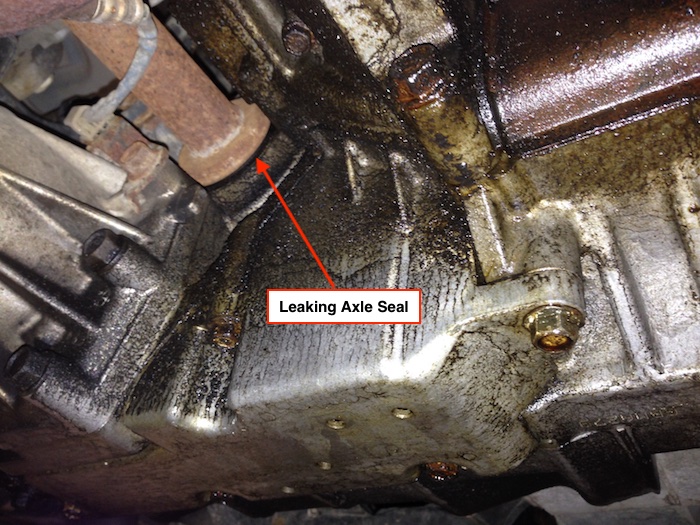
This axle seal had been leaking for a long time and it's difficult to determine the color of the fluid. At this point we will clean all the old fluids, check all fluid levels and road test the vehicle until we can pinpoint the cause of the leak.
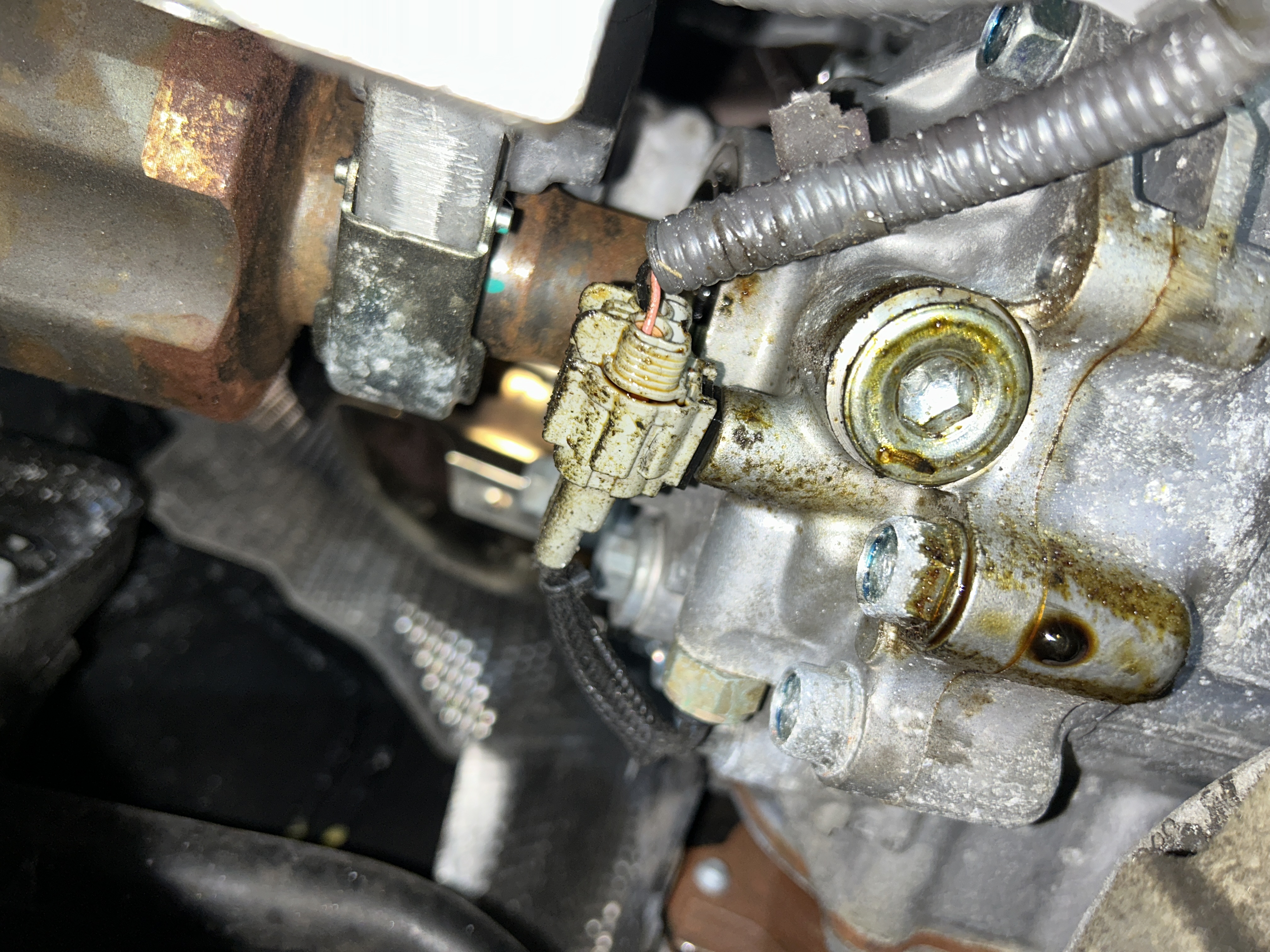
This leaking axle seal is on a Nissan Rogue. These axle seals are a common failure on the Nissans. The fluid is dark amber and not the traditional pink color because its a CVT transmission.
5. Gear Oil or Differential Fluid Leaks
Differential fluid, hypoid, gear oil, or gear fluid: Whatever you call it, it’s very thick, it looks like honey, and it smells like a warm, greasy Mack truck sitting at a truck stop. If you get this stuff on your hands the smell doesn’t go away for days. Gear oil is dark brown, or dark amber if it’s new and clean. If your rear differential is leaking, or your standard transmission has a leak, you will find this fluid dripping. Gear oil can also leak from the wheel bearing seals or rear axle seals. Sometimes you will see oil being slung from the center of the wheel all over the wheel rim of the vehicle. Dust will collect on the wheel and turn black. If you have a four-wheel-drive car, gear oil can leak from the front axle as well. The smell alone will enable you to determine if it’s gear oil or not.
6. Power-Steering Fluid Leaks
👉 Dive deeper into Power Steering Fluid Leaks
Power steering fluid is hard to describe specifically because some manufacturers use transmission fluid and some use their own brand of power steering fluid. Honda uses its own proprietary power steering fluid which is light amber in color. Power steering fluid may have a distinctive smell, kind of like burnt cooking oil. If you think you might have a power steering fluid leak, the first place you should look is at the reservoir. The reservoir will have high and low markings and it should be easy to see whether the fluid level is low.
Other signs that fluid is low are that the power steering pump will whine when trying to turn the steering wheel, or the steering wheel will feel tight when turning in a parking lot or at low speeds. The most common place the power steering will leak is on each end of the steering rack. The steering rack has end seals on both sides of the steering rack; they are the first to start leaking because they go through the most wear and tear.
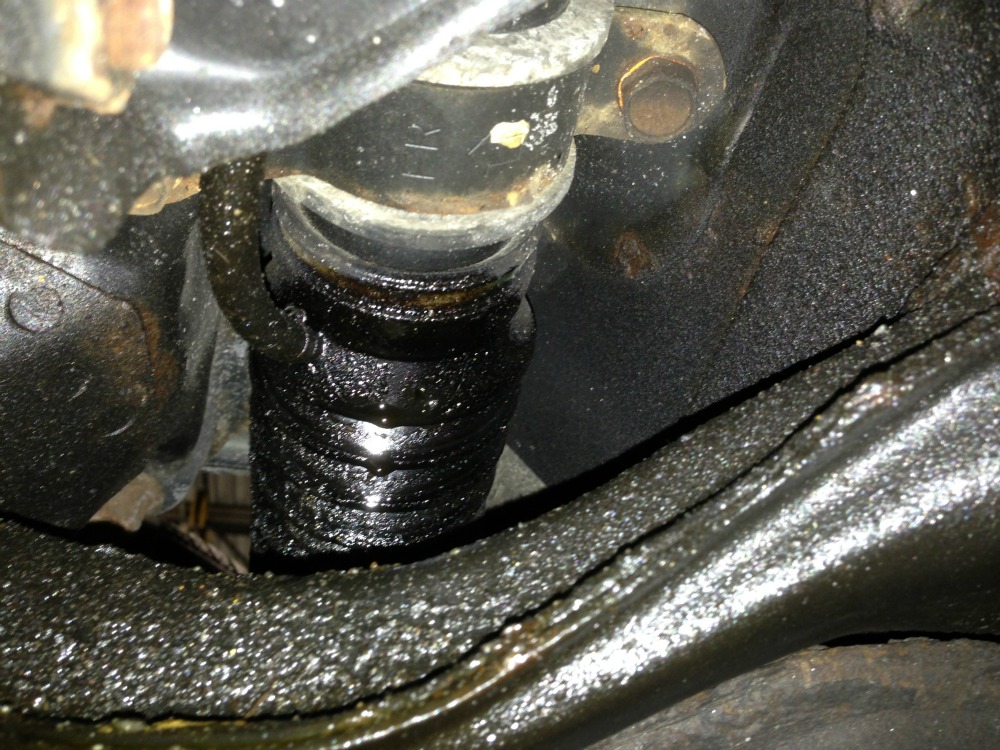
This power steering fluid leak is one of the most common leaks in a fluid controlled power steering system. The leak is located at the end or the steering rack where the inner tie-rod connects to the steering rack. The seal that is protected by the rubber bellowed boot fails and eventually leaks out the boot. Most newer vehicles come equipped with electronic power steering which eliminates the use of fluid.
Head Gasket Leak. I Don't Recommend Using "Stop Leak"!
Suspect your head gasket is leaking? 👉 This Blown Head Gasket guide will answer a lot of questions.
I have one last tip; I do not recommend using any additives that claim to stop leaks unless it is absolutely necessary. These products are at best a temporary fix that could cause a permanent problem by damaging your car's drive train. Do your car a favor and avoid using them.
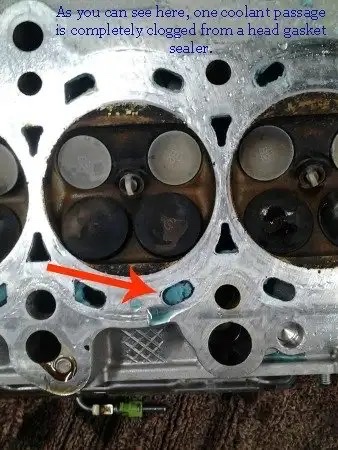
A clogged coolant passage caused by using STOP LEAK. Only use those products in emergency situations.
Didn't find the information you were looking for? 👉 Start back at the Home Page
My Car Is Leaking Fluid 6 Liquids That May Drip From a Car: FAQs
Why Is There Water Leaking From My Car?
Water leaking from a car is very common, especially when using the air conditioner. The air conditioner removes moisture from the passenger's compartment and drains it under the vehicle via a drain hose. This hose is typically located under the passenger's foot well or in the center of the vehicle just below the dash area.
Something to keep in mind is that in most newer vehicles, when you are in defrost mode, the air conditioning automatically comes on to remove moisture from the windshield area to give the driver a clear view inside and out. Thus water may drip from under the passenger compartment of a newer car even if you haven't turned on the air conditioner.
What Does It Mean When Your Car Is Leaking Oil?
When your car is leaking oil it usually means you have a gasket or a seal that has either been damaged or has just worn out due to age. If you notice an oil leak, I recommend you make an appointment with your mechanic to have it at least diagnosed to determine the severity of the leak.
Do "Stop Oil Leak" Products Work?
"Stop oil leak" products are not a permanent fix for any oil leak. The products may cause more leaks, or even worse, clog up an oil galley.
These products were designed to temporarily stop small oil leaks and I don't recommend using them unless it's absolutely necessary.
Can You Drive a Car With an Oil Leak?
If the oil leak is not pouring out of the engine, or dripping onto any hot components like an exhaust manifold, a car with an oil leak can be driven. But if oil is dripping from your car, I don't recommend driving it, because the car could completely stop running at any time and leave you stranded. Or worse, the leak could destroy your engine.
If you must drive a car with an oil leak, you will need to check your oil frequently, and you will need to be the judge of how bad it's leaking and how often it will need to be topped off.
Oil leaking from an engine can cause a huge mess wherever you park and permanently damage asphalt surfaces, so keep that in mind when parking at someone's house, especially if you like those people.
Is It Bad to Drive With a Leaking Head Gasket?
The problem with driving a vehicle with a leaking head gasket is the car can quit on the driver at any time.
When a head gasket is leaking, it can leak in many different ways. It can leak into the combustion chamber and cause the spark plugs to fail. This in turn can cause clogged catalytic converters, and cause plumes of thick smoke from the exhaust pipe.
Coolant or oil can leak past the head gasket and out the side of the engine causing either a low-oil or low-coolant condition. These can cause the engine to overheat or "seize," to stop running and start melting.
If you think you may have a blown head gasket, I recommend getting it checked so you know exactly what is wrong and whether it is safe to drive in that condition.
How Much Does It Cost to Fix an Oil Leak on a Car?
The cost to fix an oil leak can vary greatly depending on what's leaking and where. Some of the most common leaks are seals and gaskets.
The rear main seal is one of the most costly oil leaks because of the location of the leak. The rear main seal is located between the engine and transmission and the mechanic will need to remove one of these components to replace the seal. The cost is usually around $1000 or more to fix this oil leak.
How Do You Know If You Have a Transmission Fluid Leak?
Most vehicles use a red or pink fluid in the transmission which is very noticeable when you see it on the driveway or garage floor. If you don't notice the leak, eventually the transmission will begin to slip under acceleration or while driving.
What Are the Symptoms of Low Transmission Fluid?
The main symptom of low transmission fluid is the transmission slipping: the engine will rev up, but the car will not move, or it will move very little compared to engine RPM.
Another symptom of low transmission fluid is "surging": The transmission will slip in and out of gear causing a surging feeling while driving at a steady speed.
Can a Transmission Leak Be Fixed?
Yes, transmission fluid leaks can be fixed unless the transmission case is cracked or damaged beyond repair. Transmission fluid may leak from seals, gaskets, lines, and fittings.
How Much Does It Cost to Fix a Transmission Fluid Leak?
The cost to fix a transmission fluid leak would depend on what is leaking and what type of vehicle it is. The most common leak on a front-wheel-drive vehicle is an axle seal. The average cost to replace an axle seal in a non-4-wheel drive vehicle would range from $200 to $400.
In rear-wheel-drive vehicles, the most common transmission fluid leak is the output shaft seal where the drive shaft connects to the transmission. The cost to replace this seal may be a little less then than on a front-wheel-drive vehicle because there are fewer parts to be removed to perform the job.
These are the most common leaks we see on a day-to-day basis, but there are a lot more places the transmission can leak, like transmission lines, transmission coolers, and input shaft seals and gaskets.
What Color Is Antifreeze?
The color of antifreeze has changed over the years and it now comes in almost every color in the rainbow. I recommend using the manufacturer's coolant, but if you can't do that, at least use the same color coolant. Mixing two different color coolants can lead to a brown coolant; it may still protect your engine from corrosion and overheating, but it doesn't look very pretty.
Share Your Experiences
If you have any questions about a fluid leak in your car, just leave me a comment in the comment section below and I will respond quickly. Your experiences are useful to me and others.
This article is accurate and true to the best of the author’s knowledge. Content is for informational or entertainment purposes only and does not substitute for personal counsel or professional advice in business, financial, legal, or technical matters.
