What’s Wrong With Your Car?
Get Simple Answers Fast.
Did you land on the wrong page? 🚘 Start Your Diagnosis Here. 🚘
by Eddie Carrara
I’ve been working on cars for over 35 years.
I’m an ASE-Certified Master Technician, and I’ve spent most of my life diagnosing and repairing vehicles—starting right out of high school and continuing ever since.
But this site isn’t about me.
It’s about helping you understand your car—and avoiding unnecessary repairs.

What Is a Wheel Bearing? Diagnosing a Wheel Bearing Noise
Your mechanic says you need a wheel bearing. Now you're wondering, "What is that?"
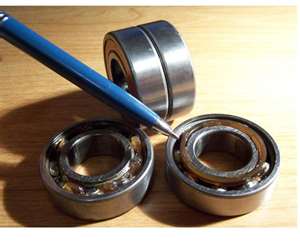
I'll make this as easy to understand as possible, with pictures, videos, and my own explanation. I'll tell you what a wheel bearing is, its job, where it's located, and what it sounds like when it's damaged.
If your brakes are making a grinding noise, 👉 Stop Guessing and Start Diagnosing Here
If your Brakes are making a squeaking noise, 👉 Don't Ignore It, Find Out Why
If your not sure what your brakes are doing, It Could Cost A Lot More If You Wait, Get The Answers Here
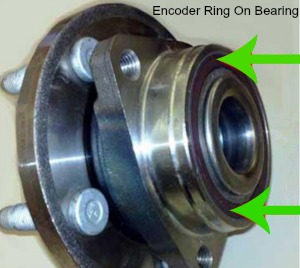
This a wheel bearing pressed onto the hub. Note that some wheel bearing have the ABS ( Anti-Lock Brake) encoder rings built into the bearing assembly. Careful not to damage this ring physically, and never place a magnet near this ring or it can permanently damage the encoder internally.
What Does a Bad Wheel Bearing Sound Like?
When bearings are damaged and making noise, it's hard to diagnose because you have to drive the vehicle in order to reproduce the sound. Here are tips to help you find the source of the problem:
- When the seal on the wheel bearing is broken or damaged, the noise starts out very faint and becomes louder over time. It sounds like the noise that your tires make when hitting a rumble strip on the highway, just not quite as loud, something like the sound of playing cards flapping against bicycle spokes.
- While driving down the road at about 40 mph, sway the car side to side slowly, shifting the weight of the vehicle from one side to the other. Do not drive crazy or cause the car to spin out, just sway it gently. Notice whether the noise gets louder or softer. If the noise is a little less if you turn right, the damaged bearing may be on the right side, or vice versa.
- Note that tires that are "chopped" or "scalloped" (worn in patches) also make a rhythmic noise that increases in speed. This sounds very similar to a bad wheel bearing. Look at your tires as well if you hear this kind of noise.
Why Do Wheel Bearings Make Noise?
Most wheel bearings are hardened steel and can withstand a lot of abuse. Its two worst enemies are heat and water. Heat caused by lack of lubrication can destroy a wheel bearing. Water that penetrates a sealed bearing will also destroy it.
Most wheel bearings manufactured today are sealed. They come from the factory pressed together as an assembly: front race, bearing set, center race, bearing set, and outer race, with seals on both the front and rear. Seals protect bearings from the elements, water, and debris, and they also seal in the high-temperature grease the bearing needs. When a seal is broken or damaged, the wheel bearing will fail and start making noise.
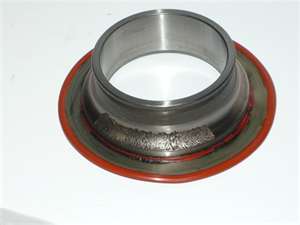 Damaged inner wheel bearing race |
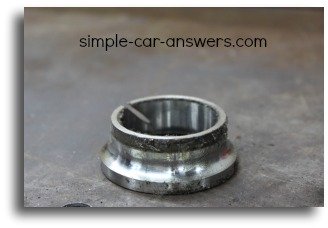 Damaged inner wheel bearing race |
Pinpointing the Source of Bearing Noise
As explained in the video below, if you really want to know whether your noise is a bearing noise and you can get the car up on a lift, you can use an improvised stethoscope (actually a big screwdriver) to listen to the sound and find out where it's coming from. Have someone in the vehicle start it and run it at about 40 mph. Using a long screwdriver or stethoscope, rest it on the hub near each wheel bearing. Careful! Don't let the tool touch a moving part, or it could fly up and hit you. Listen through the handle of the screwdriver (or through the stethoscope) for the noise, and I guarantee you will be able to determine which bearing is bad.
Replacing Your Wheel Bearing
Wheel bearings do not fail immediately, and usually give you some time before you need to have them replaced. I suppose if a wheel bearing failed completely it could lock up and prevent the car from moving. Then again, my daughter drove on a noisy bearing for six months and nothing happened except that it got louder and louder.
You shouldn't necessarily have the bearings on both sides of the vehicle replaced, if your mechanic suggest to replace either both front or rear bearings because one is noisy, I recommend you find a new mechanic, unless they can prove both wheel bearings are bad. Just because one wheel bearing fails is no reason to think the others are about to; bearings should last a long time.
Replacing one is a bit expensive because of the labor involved. There are a lot of parts to remove and get out of the way before you can get to the wheel bearing, especially on a four-wheel-drive or front-wheel-drive vehicle. It's a difficult job to do yourself without a press because it's a tight fit getting the bearing in and out of the hub. It's less work (though more expense for parts) to replace the whole hub and bearing as a unit.
Needed Wheel Bearing Removal Tools
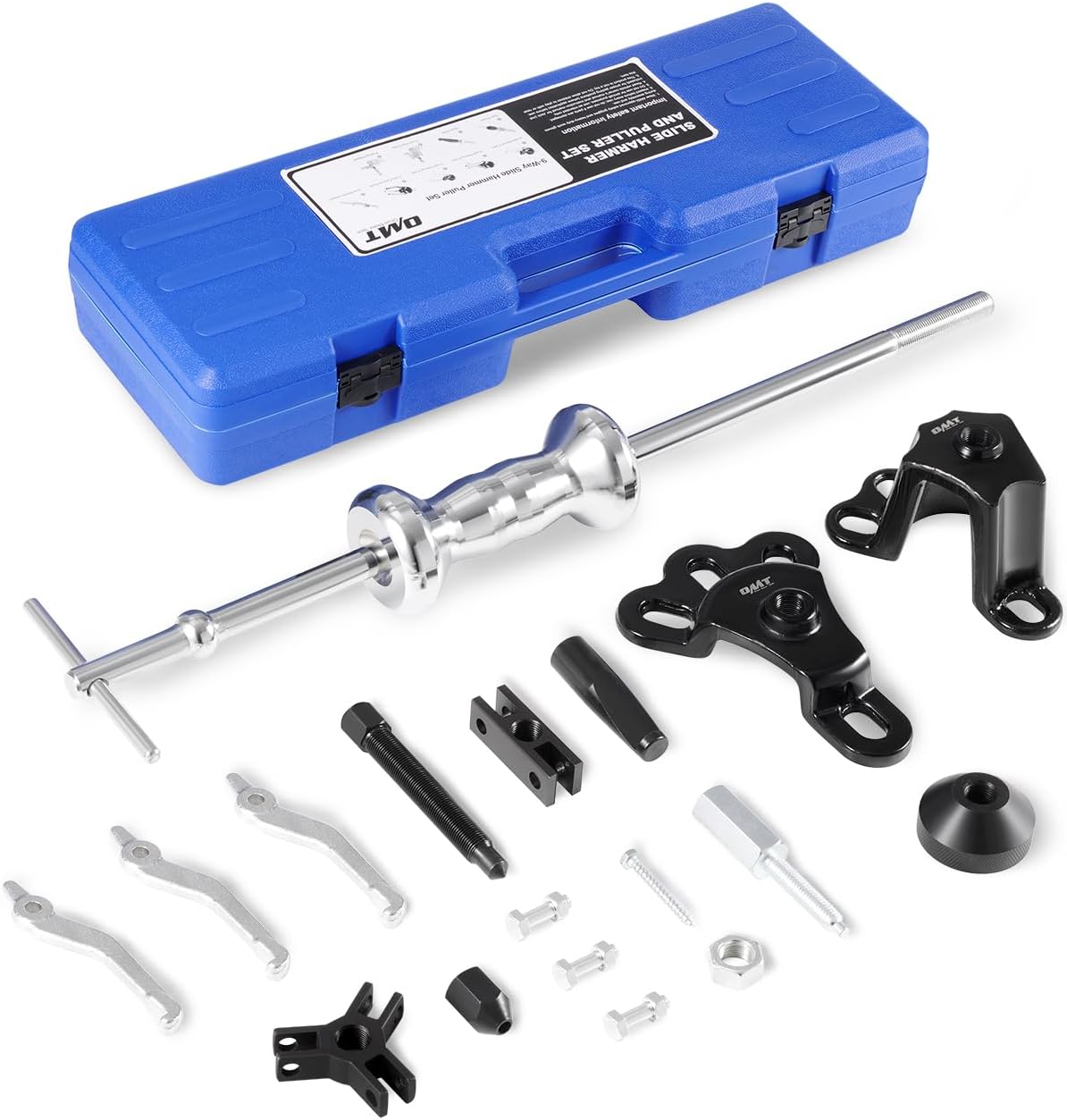 This Orion Motor Tech 9-Way Slide Hammer Set is designed to remove the hub and bearing. |
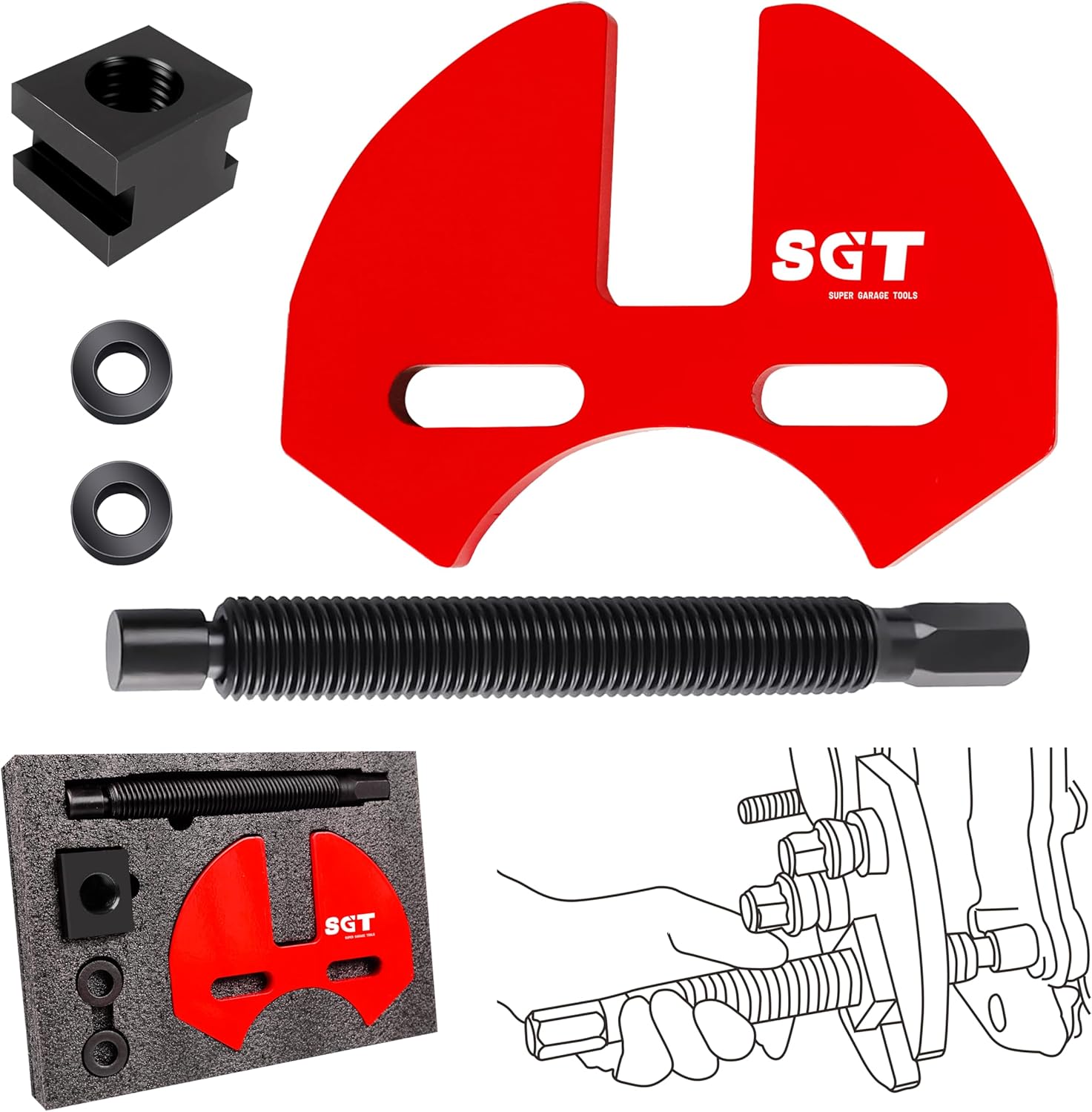 This SGT 40100 Hub Remover Set will remove the hub and bearing depending on application. |
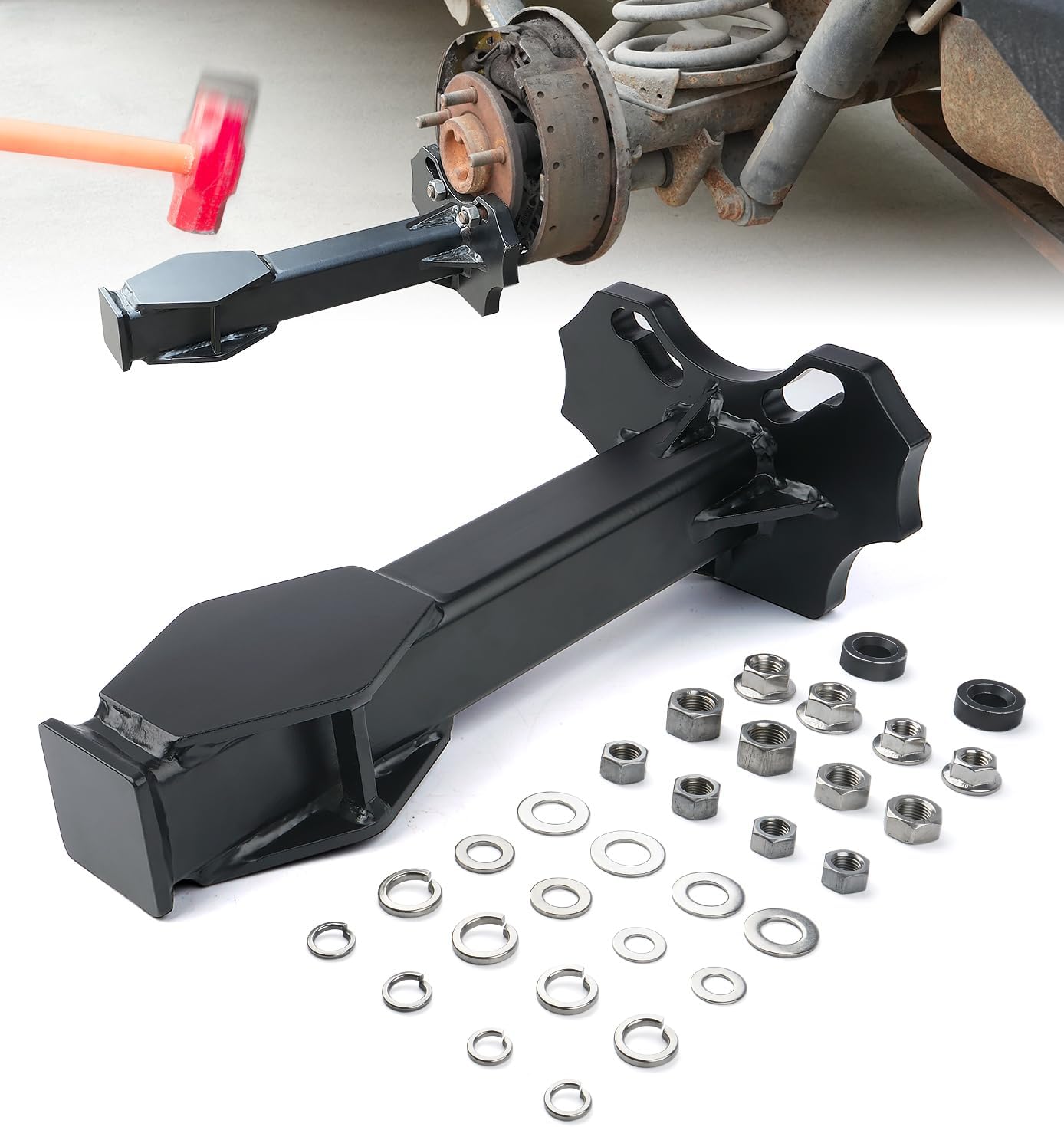 This Wheel Bearing Hub Removal Tool Kit will remove the hub and bearing depending on the application |
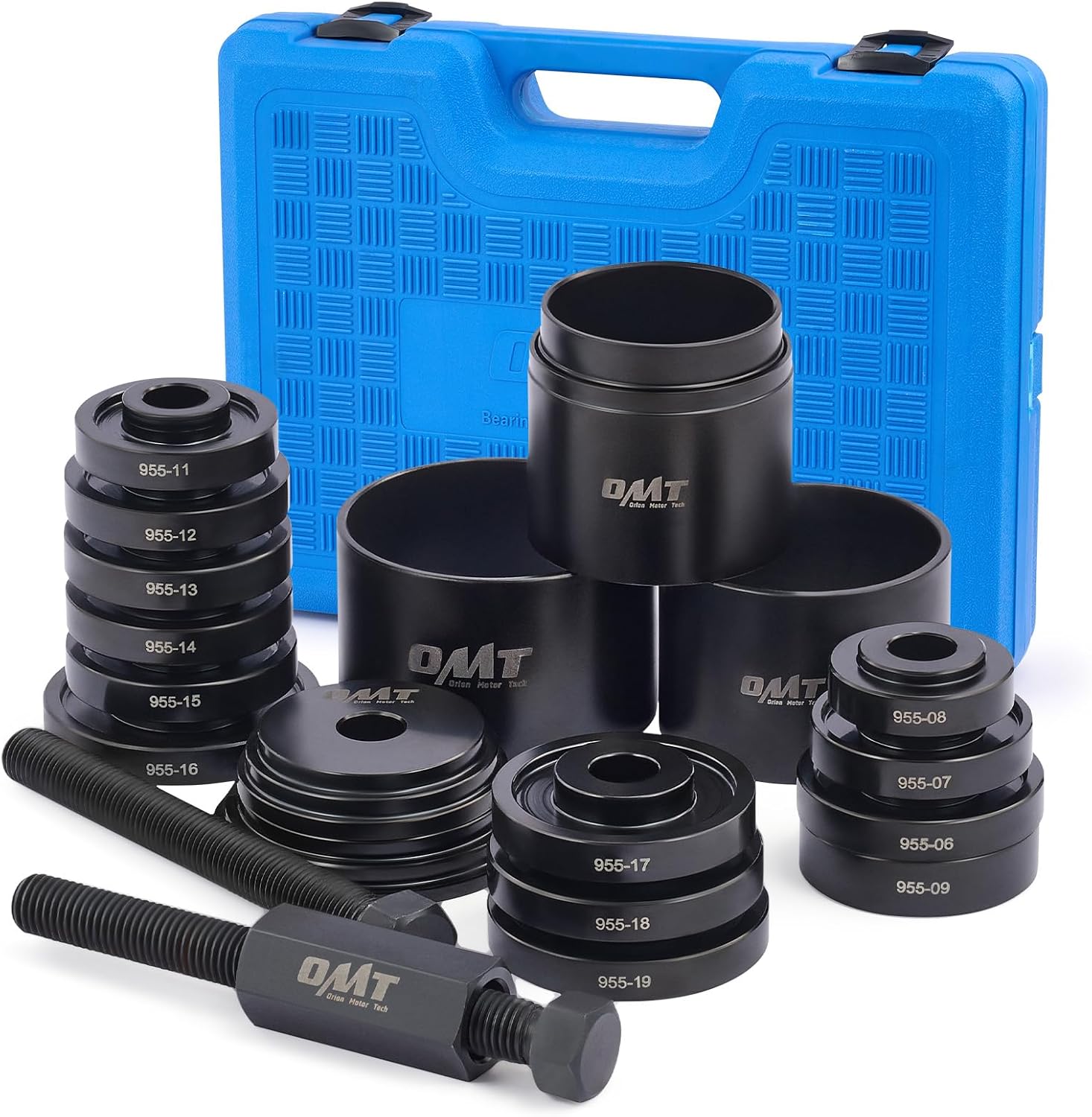 This Orion Motor Tech Wheel Bearing Press Kit for Front Wheel Drive Bearing Will Remove & Install Wheel Bearings. |
Ask Questions or Comment Below!
I hope this article helped you. If you have a question, feel free to leave it in the comments, and I will answer it as soon as possible. Your questions are welcome and help other readers.
More Articles on Car Noises
- 3 Most Common Brake Noises: Causes and How to Fix Them
The three most common brake noises I encounter every day when talking to customers are a grinding sound, a thumping from the rear, and a squeak. This article also includes a repair technique for noisy drum brakes that I found by trial and error. - 5 Reasons Why a Car Makes a Knocking Noise When Driving Over Bumps.
If your car is making a knocking noise when driving over bumps, here are five components to look at before you bring it in to your mechanic. - Car Clicking Noise While Turning and Accelerating.
Car clicking noise while turning is common in front-wheel drive vehicles. I was fixing this noise on several different cars per day
This article is accurate and true to the best of the author’s knowledge. Content is for informational or entertainment purposes only and does not substitute for personal counsel or professional advice in business, financial, legal, or technical matters.
