What’s Wrong With Your Car?
Get Simple Answers Fast.
Did you land on the wrong page? 🚘 Start Your Diagnosis Here. 🚘
by Eddie Carrara
I’ve been working on cars for over 35 years.
I’m an ASE-Certified Master Technician, and I’ve spent most of my life diagnosing and repairing vehicles—starting right out of high school and continuing ever since.
But this site isn’t about me.
It’s about helping you understand your car—and avoiding unnecessary repairs.

Check Engine Light is On, What Could Be the Problem?
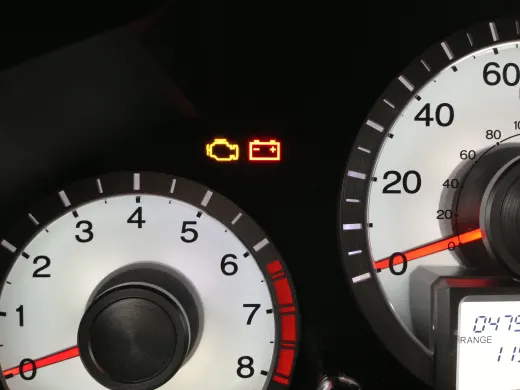
"Check engine" light (left) appearing as a yellow engine-shaped icon (2011 Honda Pilot)
"Check Engine" Light On?
Your "check engine" light comes on when your car’s onboard computer (or PCM, Powertrain Control Module) records some kind of problem. This onboard computer runs your car so that it has optimum fuel economy and low emissions. The PCM creates a code indicating what part or system is malfunctioning (electrical system, oxygen sensors, and so on). Your tech can get the code from the vehicle and look up its meaning.
In the meantime, you’re probably wondering: what are the possibilities? Is there something going on in your car or in your life that triggered this "check engine" situation? Where should a mechanic start looking to find the problem?
The First Two Questions to Ask Yourself if the Check Engine Light Is On
1. Is the engine running normal or do you notice a hesitation, bucking, or skipping while the engine is running?
2. Is the Check Engine light flashing?
10 Diagnostic Questions to Ask If Your "Check Engine” Light Comes On
- Has your car been in the shop for service recently?
- Have you fueled your car recently?
- Did you possibly overfill your fuel tank?
- Have you installed any new electronic devices recently?
- Did your “check engine” light come on after driving through a deep puddle?
- Do you have excessive humidity in your car caused by a water leak?
- Do you live in a rural area where there are lots of critters?
- Are other warning lights illuminated on the dash?
- Did your car sit for a long period of time without anyone driving it?
- Were you the last one to drive your car?
If your brakes are making a grinding noise, 👉 Stop Guessing and Start Diagnosing Here
If your Brakes are making a squeaking noise, 👉 Don't Ignore It, Find Out Why
If your not sure what your brakes are doing, It Could Cost A Lot More If You Wait, Get The Answers Here
What Does the Check Engine Light Look Like?
Don’t confuse your "check engine" light with your maintenance reminder (a light that goes on automatically to remind you it’s time for a routine service). If you’re not sure, check the index in your owner’s manual, under “warning lights.”
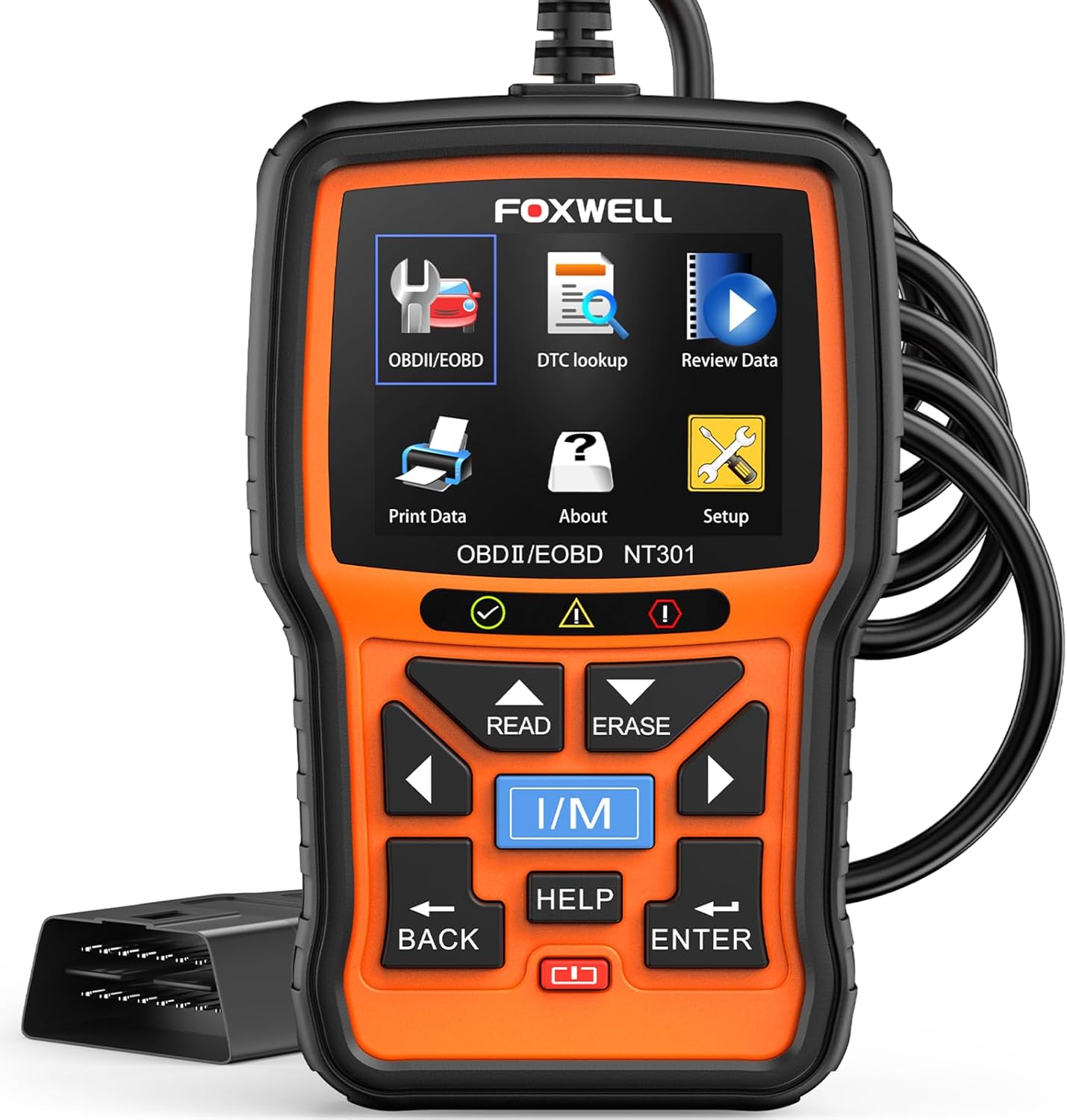
FOXWELL NT301 OBD2 Scanner Live Data Professional Mechanic OBDII Diagnostic Code Reader Tool for Check Engine Light.
How Long Can You Drive With Your Check Engine Light On?
- Is the engine running normally? If your engine is running normally, and you have no problem driving it, the problem is not so severe that you need to panic. Of course, you should not ignore the light; it is warning you of some problem with the emissions system. When the light is on, your car runs on default parameters, not optimized to reduce emissions and increase mileage, and so you won’t get the gas mileage the car is designed to get. Just call your mechanic or dealer to make an appointment within a reasonable amount of time.
- Is the "check engine" light flashing? If it's flashing, it means you have a serious problem and you really should not be driving your car. It's flashing because it's saying “STOP!!! Hey, Look At Me!!!” It’s saying your catalytic converter is being damaged. It’s probably a good idea to call a tow truck at this point; you don’t want to add to the cost of any repairs that will be needed.
What Does the Check Engine Light Mean?
The check engine light is a light that the engine computer uses to signify that there is something wrong. They are orange, amber, or yellow, and not to be ignored!
How to Reset the Check Engine Light
The only way to "reset" the check engine light is by fixing the problem causing it. Thus, the 10 reasons I list below may help you reset your check engine light.
Why Is My Check Engine Light on? 10 Reasons Why Your Check Engine Light On
1. Has Your Car Been Serviced Recently?
If your car has been in the shop recently for service, it’s quite possible the technician has caused your "check engine" light problem. Sometimes a technician will forget to reinstall a connector to a sensor, or not snap the connector back together completely. Or he or she may knock a connector loose while doing a minor service.
On older Hondas, the oxygen sensor is directly below the oil filter, so a technician removing the oil filter for a routine oil change might spill oil onto the oxygen sensor. It’s just possible, though not common, that a technician wiping oil off the sensor damaged it somehow.
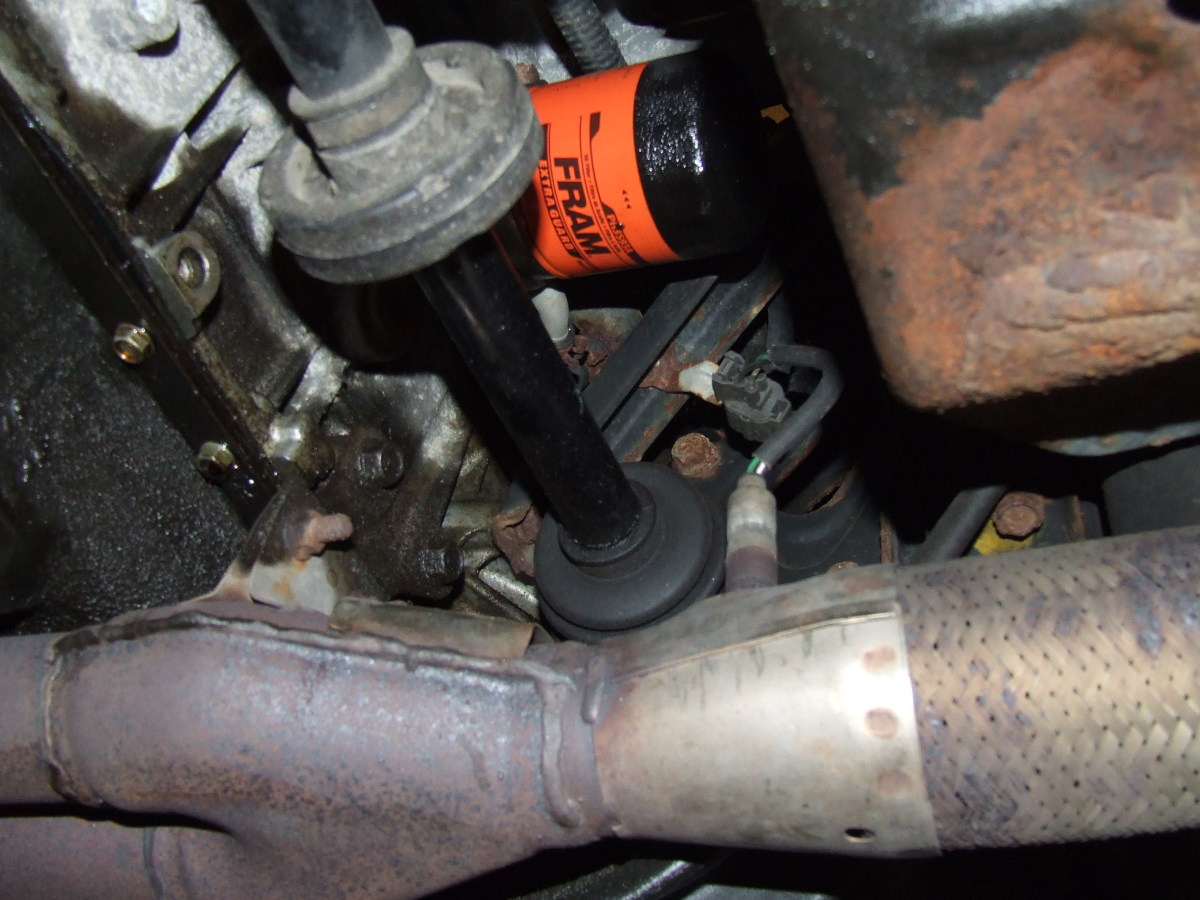
On this 1991 Honda Accord, you can see how the oxygen sensor (little rat-tailed item) is located directly below the oil filter. You can imagine how easy it is to dump oil on it.
2. Have You Fueled Your Car Recently?
If you didn’t tighten the fuel cap enough (or forgot to put it on altogether!), it can cause your "check engine" light to come on. All Honda fuel caps have a ratcheting device built into the cap to achieve a good seal and keep you from over-tightening the cap. When tightening your fuel cap, be sure to turn it enough to hear at least three clicks; that ensures the proper torque was applied. If your check engine light is on, simply check your fuel cap to make sure it is turned three clicks.
3. Did You Overfill Your Fuel Tank? 5. Did Your "Check Engine" Light Come on After Driving Through a Deep Puddle?
If you’re one of those people who like to top off the fuel tank, you need to break that habit, especially if you own a newer Honda. When the gas pump shuts off automatically, the tank is as full as it needs to be. To keep gasoline fumes out of the atmosphere, modern United States cars are required to trap the fumes and recycle them into the engine to be burned. Overfilling the tank can spill fuel into tiny vacuum lines and filters, which in turn can clog emission devices (like the "evap canister" being replaced in the three do-it-yourself videos at the end of this article). Soaking these devices in gasoline will cause the "check engine" light to come on. Replacing the damaged parts could be costly, but the time spent diagnosing the problem could be even more so.
4. Have You Installed Any New Electronic Devices Lately, or Had Them Installed by a Professional?
Everyone likes all the new gadgets available for cars these days, like backup cameras, thunder-booming stereos, remote car starters, high-intensity-discharge headlights, and rear entertainment systems, to name a few. It’s just possible that the person installing your device may have blown a fuse, or worse, may have tapped into the wrong wire and caused that dang "check engine" light to come on again.
Check to see that all electronics in the vehicle are working properly (e.g. dash light, 12-volt power supply, interior lights). If everything is working properly, I would either test all the fuses (using a test light or a voltage meter is the fastest way to do that) or return the vehicle to the person who did the work.
This isn’t common but it does happen. After driving for a while on the highway, your exhaust can get extremely hot; if you then happen to drive through a deep puddle, it is possible for water to cool the oxygen sensor too quickly and crack the material inside the sensor. The oxygen sensor is located under the vehicle, usually in or near the catalytic converter where the temperature can exceed 600 degrees. If this sounds like your scenario, take your car to the dealer or your local mechanic.
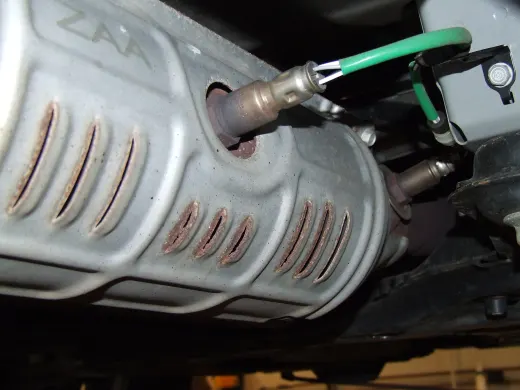
You can see both oxygen sensors, front and rear, one in the front pipe before the catalytic converter and the other is in the center of the catalytic converter. If you hit a puddle deep enough, you could actually submerge the sensors.
6. Do You Have Excessive Humidity in Your Car Caused by a Water Leak?
Water on the front or back carpet in your car will often be coming from the front of the car somewhere; water flows towards the back because of acceleration, and because the floor is tapered towards the rear of the vehicle. If the water is only visible on the rear carpet, the leak may be in the rear of the vehicle.
The most common cause of a water leak is the windshield; sometimes a newly replaced windshield will leak.
If a leaky windshield drips water on an ECU (Engine Control Unit) fuse box or any other control unit, this will cause an ECU failure and your “check engine” light will come on. Water is very damaging to all electronic devices (just drop your smartphone in water and see what happens).
7. Do You Live in a Rural Area Where There Are Lots of Critters?
Critters can cause all sorts of problems in cars, from horrible smells to chewed wires. If you live or work in an area where mice, rats, chipmunks. or squirrels can get into your car, they can wreak havoc on your car’s electrical systems. Given the chance, critters will build nests and store food for the winter, and for some reason, they like to chew wires. In fact, some car manufacturers assemble wire harnesses wrapped with mouse-deterrent tape, no kidding. It’s not completely effective but it’s a start. If a critter chews the right wires in your vehicle, it will cause the “check engine” light to come on, and an expensive bill! Replacing a wire harness is daunting and time-consuming. If you find chewed wires, some manufactures sell Rodent Tape that can deter them from chewing.
Signs of critters in your vehicle are:
- bad odors
- acorns and nuts (or dry dog food) stored in the engine compartment or glove box
- chewed carpeting
- loud noises when the heating or air conditioning fans come on. Critters are notorious for building nests inside blower motor assemblies, causing all kinds of problems.
8. Are Other Warning Lights Illuminated on the Dash?
In some cases, a failure in another part or system can cause your "check engine" light to come on. Multiple warning lights illuminated on the dash don't necessarily mean multiple problems, so don't panic. The lights could all be caused by a single problem: For example, if your alternator is not charging, or if it’s over-charging, it could cause low or high voltage in the system, which would cause many lights to come on.
9. Did Your Car Sit for a Long Time Without Anyone Driving It?
Cars that sit for a long period of time are susceptible to a plethora of problems. Critters move in, batteries go dead, tires go flat, brake rotors become rusted and cause a pulsation when applying the brakes, pulleys rust and cause belts to squeak, and the list goes on. If your car sat for a while, your "check engine" light could come on because a sensor or solenoid is stuck, or for other reasons. Have it checked out by an honest mechanic; they are out there, you just have to find them.
10. Were You the Last One to Drive Your Car?
If you were not the last one to drive your car and the "check engine" light is on, you need to start asking questions. Sometimes family members or friends who borrow your car spill soda or coffee on the console without telling you. On some Hondas, the ECM/PCM (engine control unit/powertrain control unit) is located below the center of the console, and sugary drinks can destroy this expensive control unit.
Automatic Scan Tool: Write Down the Code
If you have a buddy, friend, uncle, or cuz that can check the code because they have a scan tool, make sure you write down the code because if you decide to erase it, you’ll want to know what it was when the light comes back on (and if it’s an issue other than a loose gas cap, the problem will usually come back). It’s good practice for you and good information to give your mechanic.
Buying a Scan Tool to Interpret "Check Engine" Codes
If you want to try and diagnose the problem yourself, you will need to figure out with the diagnostic code is telling you. Here is a guide to understanding the codes.
You will also need a scan tool. If you decide to buy one, choose one that will last for years. Vehicles are only getting more sophisticated each year, so plan for the future. The OBD2 system covers 1996 and later cars (the OBD1 system that covers older ones may be included, depending on the device). I recommend looking for these four time- and money-saving features:
- A display that includes a description of the cause of the warning light, as well as the code. This saves you time from having to look up the description that goes with the numerical code in a book or on the computer.
- LED display for state emissions readiness check and drive cycle verification. This feature will let you know if it will pass an emissions test.
- Battery backup that will keep the code in the device after you disconnect the scan tool, so you can review it and analyze it away from the car (even if you forgot to write down the code)
- A USB cable to update the information in your scan tool from your own computer. If you can't update the scan tool, it will be obsolete in three years.
Please Leave a Question or Comment.
Leave me a comment or a question, don’t be shy. I just might have the answer you’re looking for.
And if you found this information useful, why not share it (for example, on Facebook or Twitter, using the buttons to the right)?
This article is accurate and true to the best of the author’s knowledge. Content is for informational or entertainment purposes only and does not substitute for personal counsel or professional advice in business, financial, legal, or technical matters.
