What’s Wrong With Your Car?
Get Simple Answers Fast.
Did you land on the wrong page? 🚘 Start Your Diagnosis Here. 🚘
by Eddie Carrara
I’ve been working on cars for over 35 years.
I’m an ASE-Certified Master Technician, and I’ve spent most of my life diagnosing and repairing vehicles—starting right out of high school and continuing ever since.
But this site isn’t about me.
It’s about helping you understand your car—and avoiding unnecessary repairs.

Can Rodents or Mice Ruin a Car? What to Do About Car Pests
Can Rodents Ruin Cars?
The simple answer to this question is yes! But is there a way to prevent this from happening? Absolutely! Every minute of the day, a mechanic uncovers damage caused by:
- Mice
- Rats
- Chipmunks
- Squirrels
- Opossums
These rodents can chew wires, hoses, plastic panels, and other car parts that make good nesting materials. Not only do they damage cars by chewing parts, but they also ruin cars by urinating and defecating throughout the entire interior, which doesn’t leave a pleasant smell; in fact, it's downright raunchy.
If your brakes are making a grinding noise, 👉 Stop Guessing and Start Diagnosing Here
If your Brakes are making a squeaking noise, 👉 Don't Ignore It, Find Out Why
If your not sure what your brakes are doing, It Could Cost A Lot More If You Wait, Get The Answers Here
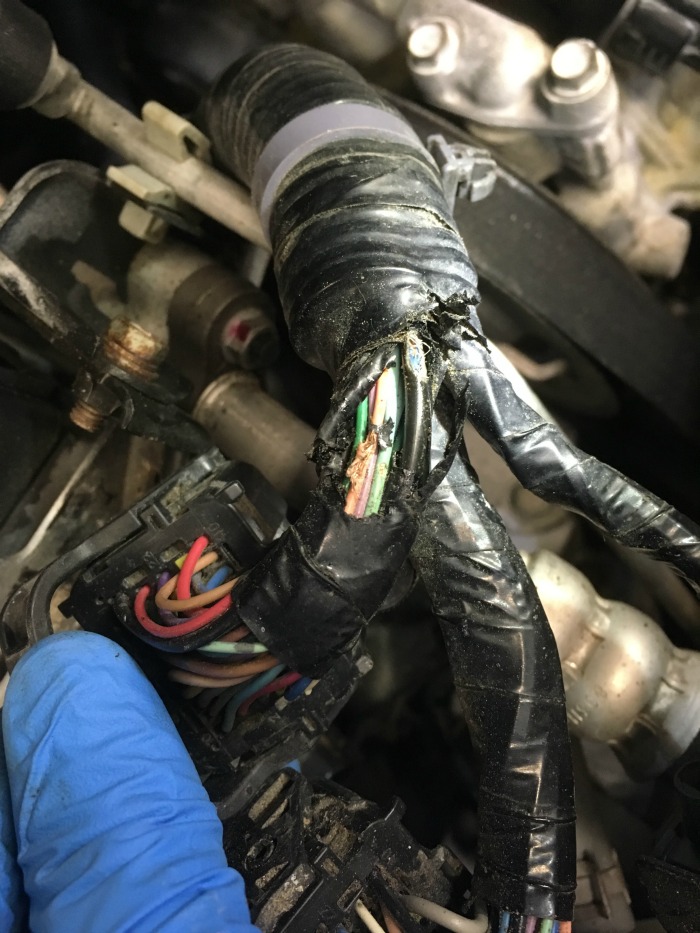
Mouse chewed wires, for whatever reason, rodents are very fond of wires leading to the injectors, it's the most common place to find chewed wires.
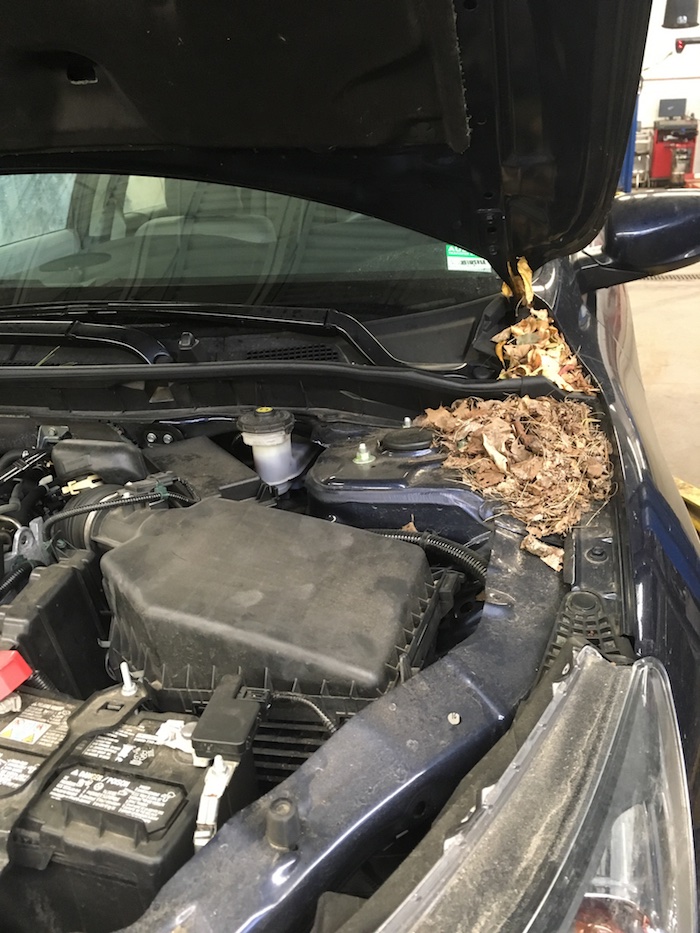
Mice like to build nest near the engine because they can stay warm on cold nights.
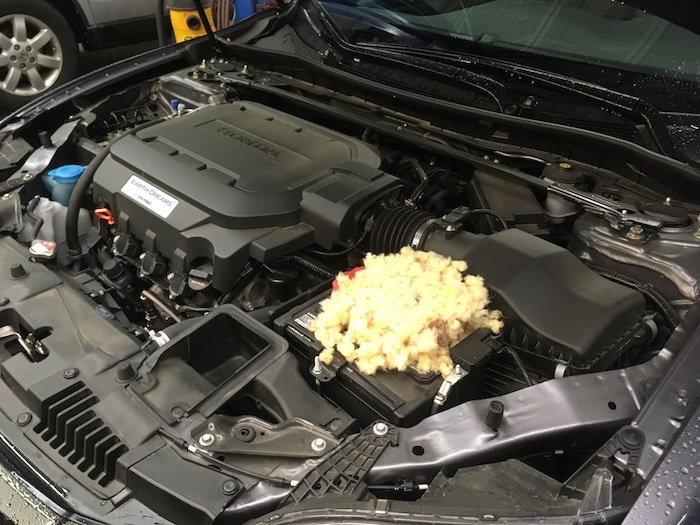
A mouse decided that this would be a good place to build a nest, the car owner didn't agree.
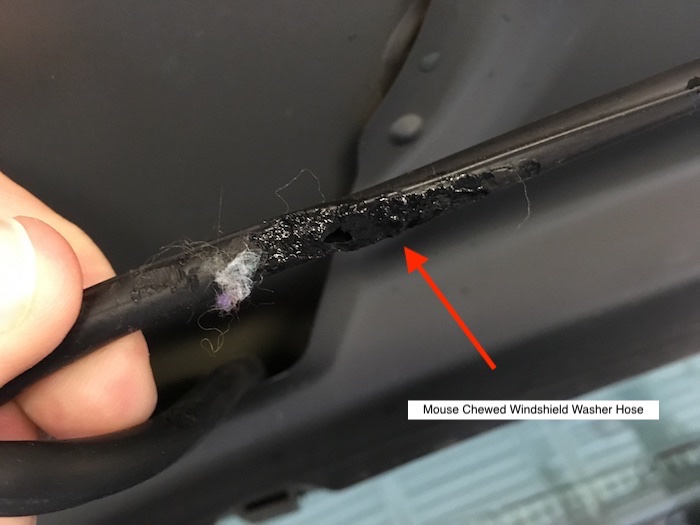
Just another day of sharpening their teeth on a wire harness.
Signs That Mice May Be Living in Your Car
Rodents are not very clean, nor do they pick up after themselves. If you think you may have rodents, like mice, living in your car, you’ll need to look for evidence, like mouse droppings, bad odors, or weird sounds. One of the most common noises you’ll hear is the heater fan making a rumbling or vibrating noise; this is because mice like to build nests in warm, dark areas, and the heater blower motor meets both criteria.
The heater blower motor may provide these comfy living conditions, but it also comes with a little surprise. Once the operator enters the vehicle and turns on the fan, the amusement park ride begins for these little critters; some make it out before the ride gets out of control, some don’t, and if they don’t make it out in time, all hell breaks loose and so do their little bodies. I’m not going to go into details because I’m sure you can imagine the mess it makes and the smell that follows a few days later.
Rodents Give Mechanics a Bad Name
There is a disconnect between the customer and the mechanic when rodents are the cause of a problem in a vehicle. It’s almost like the customer doesn't believe rodents could be living in their vehicle, and they think the mechanic is selling them a bunch of malarky. But there are many news reports on this very widespread problem and tons of documentation on the issue.
Some of the most common problems found in our Honda shop are chewed windshield washer hoses and nests built into the HVAC blower motor. I’m not sure what the attraction is with these windshield washer hoses; maybe it's because they have alcohol running through them, and it makes a nice nightcap for the mice? In our garage, we see about ten of these chewed windshield washer hose problems each week and a half dozen HVAC heater motor nests. Some of these cars are in our inventory, and the others are customer vehicles.
What Rodents Chew In Your Car
So you’re probably asking yourself, “Self … where do the mice get the nesting material from?” Most of the material comes from either your vehicle or your garage. Items they use from your vehicle include:
- Insulation they chew from the vehicle's hood liner (where the windshield washer hoses are located)
- Carpet insulation
- Interior upholstery
Mice also like to bring in snacks for the late-night matinee, like acorns, dog food, birdseed, and French fries found under the seats. They taste great, washed down with a little windshield washer fluid. Remember, they have unlimited access to your vehicle, so it is important to keep your car clean with no snacks left behind for your unwelcome guest's late-night binge eating problem. One important thing to remember about rodents is they shit and piss where they eat and live, and that’s not cool.
Where Rodents Live in Your Car
Rodents can also build nests in these areas:
- Behind the dash.
- Under the center console.
- Behind any plastic panel.
- Headliner.
- In the engine compartment.
- In the trunk.
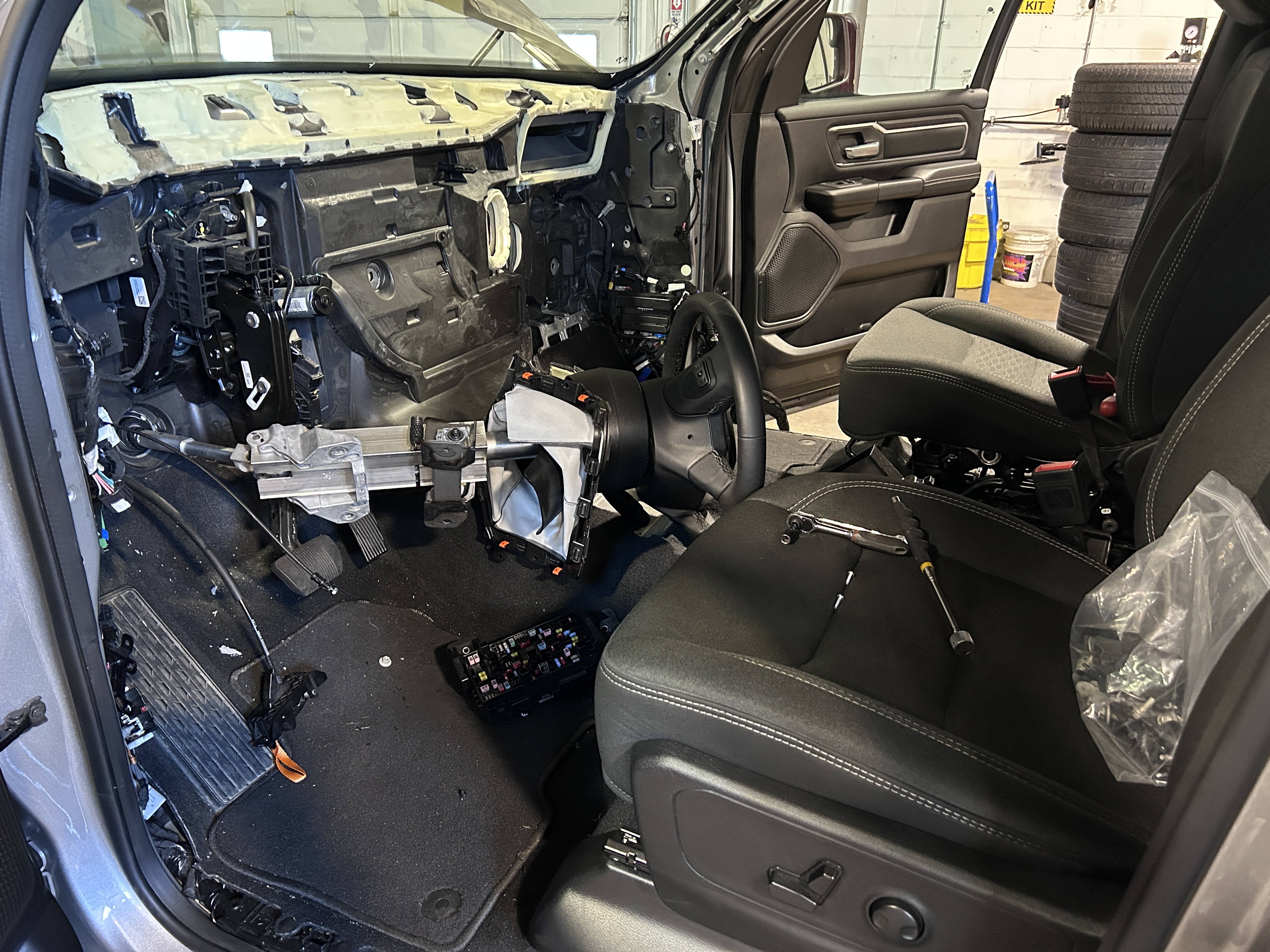
A mouse had died in this truck and we couldn't locate where the smell was coming from. We ended up removing the complete dash and HVAC system to find the dead mouse in the AC evaporator.

Once we split the evaporator case open we found the poor little guy had been trapped and couldn't get out. The smell was awful , we bleached the evaporator and case.
When Rodents Live in Your Garage
If you park in a garage, there is a good possibility that these critters will have a smorgasbord of options. If you’re anything like me, I store water, dog food, birdseed, snacks, and leftovers in the garage. It's only because I'm lucky that I don’t have rodents living in my garage or vehicle.
If you think you may have mice or rodents living in your garage, you can either set up snap traps to put a permanent end to a temporary problem, or you can get an electronic rodent deterrent system that simply plugs into a wall outlet. I have also found battery-operated units that you can place inside your vehicle.
So, what can you do to help prevent further damage or evict these critters from your car? You can try one of the many electronic devices mentioned above or you can try a different line of defense like peppermint oil or Pine-Sol. I have also heard of customers using Bounce dryer sheets. I’m not sure dryer sheets work, but your car will definitely smell better.
Stop Rodents From Chewing Wires and Hoses
If you have rodents that are chewing wires or windshield washer hoses, you can wrap rodent tape around these areas. The tape has hot pepper embedded in it because most rodents don’t like to eat hot pepper (unless it’s on the hot fries under the seat). If you’re looking for a spray, there are some commercially offered sprays you can spray directly on the affected areas.
Let me know what you think, and if you have stories, please share them with us. If you have questions, leave them in the box below, and I will get back to you.
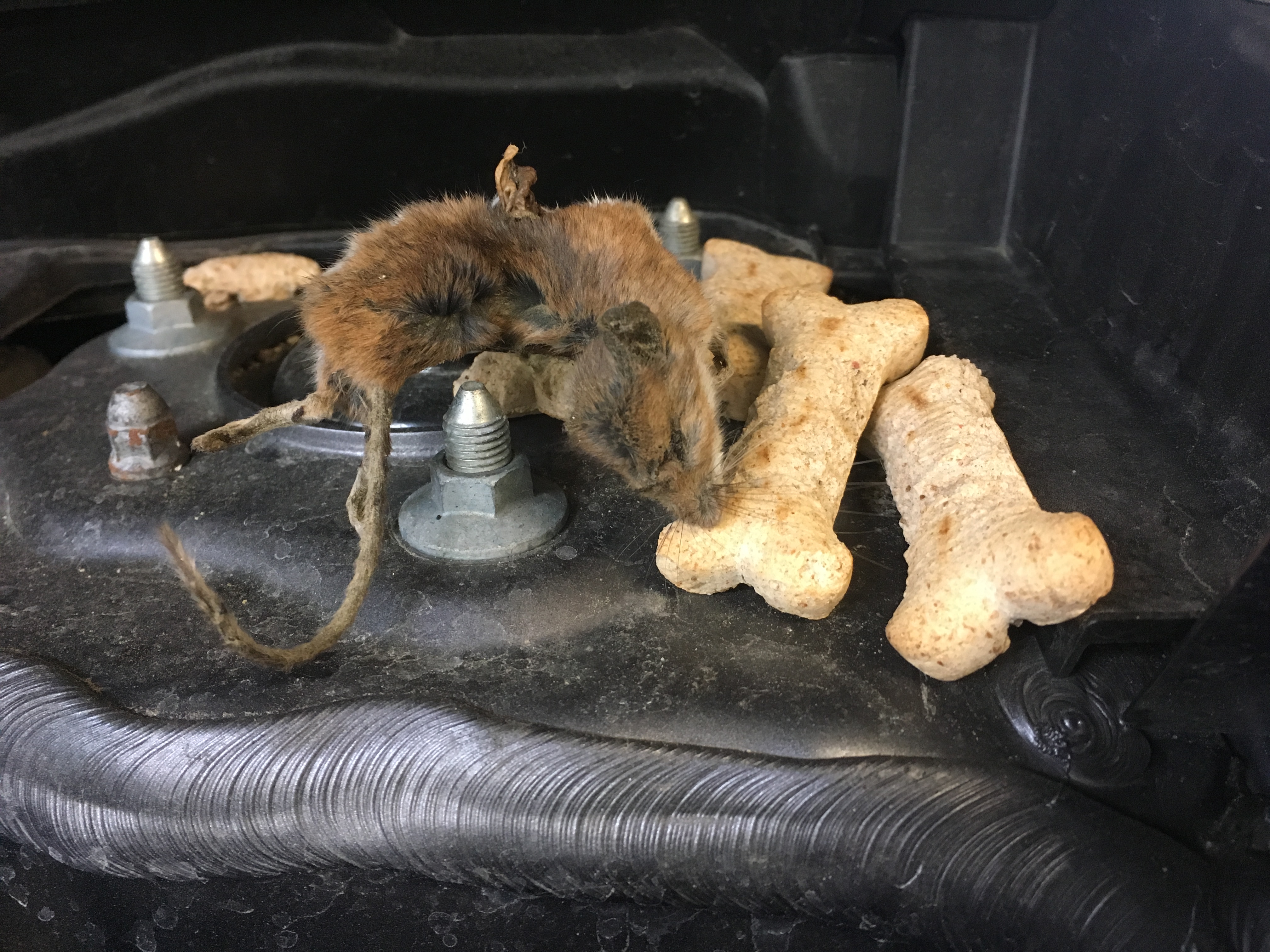
This guy was caught red-handed with the families dog bones. The customer thought the dog was eating more than his fair share,
This article is accurate and true to the best of the author’s knowledge. Content is for informational or entertainment purposes only and does not substitute for personal counsel or professional advice in business, financial, legal, or technical matters.
