What’s Wrong With Your Car?
Get Simple Answers Fast.
Did you land on the wrong page? 🚘 Start Your Diagnosis Here. 🚘
by Eddie Carrara
I’ve been working on cars for over 35 years.
I’m an ASE-Certified Master Technician, and I’ve spent most of my life diagnosing and repairing vehicles—starting right out of high school and continuing ever since.
But this site isn’t about me.
It’s about helping you understand your car—and avoiding unnecessary repairs.

Five Common Brake Problems in Cars
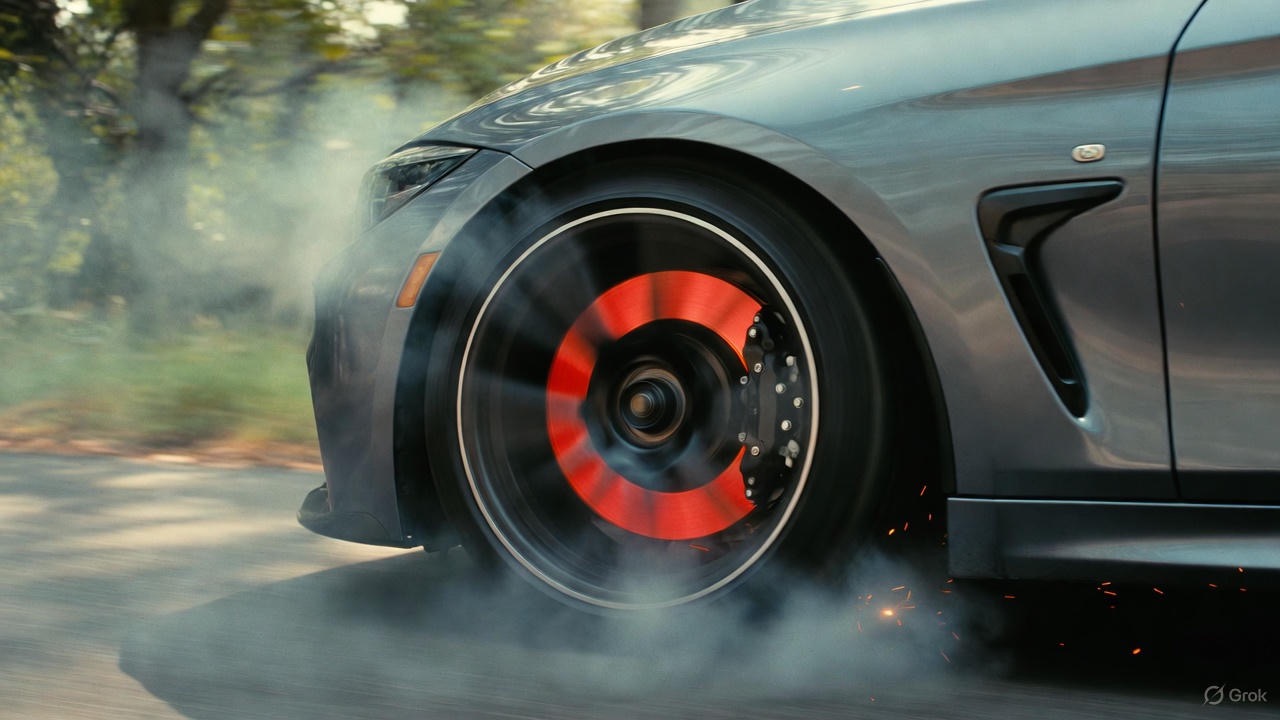
These brakes are extremely overheated most likely because the caliper is sticking and will not release the pads from the rotor.
Why Am I Having Brake Issues With My Car?
Brake problems can be daunting if you don't know what's causing them. Fear of the unknown causes anxiety. You may have questions like: Will my brakes fail? Are they safe? Can I drive my car? Should I drive my car?
Here are five of the most common brake problems I run into, starting with the most serious. It's good to understand what the cause of your problem might be before a mechanic starts talking about the need to replace this or that.
If you don’t find your issue here, check out my article on brake noises, look through the comments at the end, or leave a comment yourself telling your story.
If your brakes are making a grinding noise, 👉 Stop Guessing and Start Diagnosing Here
If your Brakes are making a squeaking noise, 👉 Don't Ignore It, Find Out Why
If your not sure what your brakes are doing, It Could Cost A Lot More If You Wait, Get The Answers Here
The Five Most Common Brake Problems
- Soft brake pedal
- Car pulls to one side
- Steering wheel shakes when brakes are applied
- Brake pedal pulses up and down
- Whole car shakes when brakes are applied
Continue scrolling to learn more about these common issues and their solutions.
Parts of the Brake System
In case these terms are new to you, real quick, I'll tell you that to stop the car, the master cylinder sends out fluid through tubes under pressure to drive a pincher (a “caliper”) that presses a “pad” or “shoe” against a metal disc (“rotor”) or drum. Most modern brakes have rotors; older ones have drums, especially in the rear.
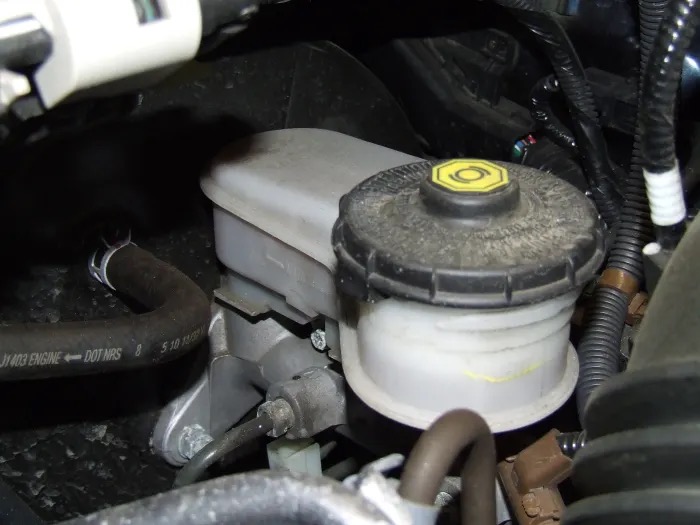
Brake fluid reservoir. if your brake pedal is soft; first check the fluid level to determine if you have a leak in the braking system.
1. Soft Brake Pedal
A soft brake pedal is a MAJOR brake issue. If your brake pedal feels squishy, "like stepping on a plum," and won't stop on the way down unless you pump it, or the brake pedal sinks to the floor with little or no resistance, you have a dangerous situation and should NOT drive any further! If you do, it could be a matter of minutes until you smash into something.
When the brake pedal gets soft or sinks to the floor, it's generally due to a leak in the braking system, most commonly the master cylinder leaking internally or externally.
The first thing you should do is check your brake fluid—look in your owner's manual to see how.
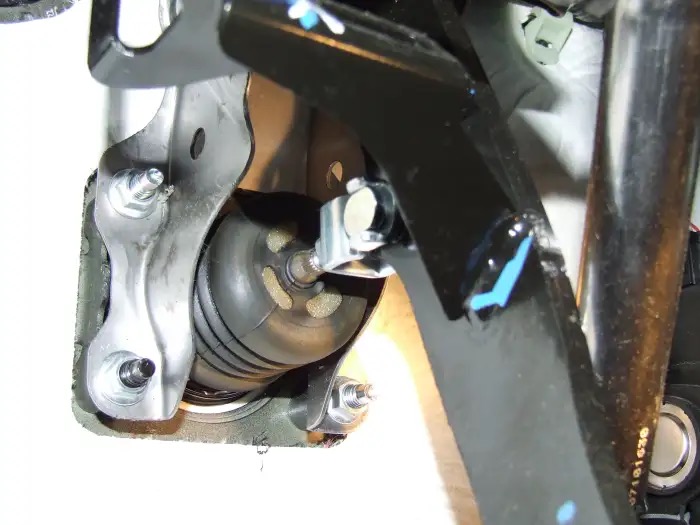
The master cylinder, where it attaches to the brake pedal inside the vehicle. If the master cylinder is leaking externally, you will see fluid dripping from the place where the rod goes into the cylinder next to the rubber boot in the picture above.
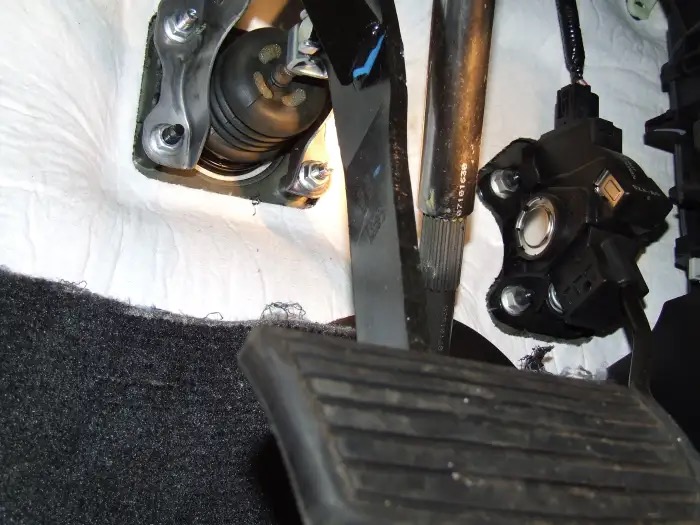
A better idea of where the master cylinder is located in relation to the brake pedal inside the vehicle.
Note
The only fix I recommend for a faulty master cylinder is to replace it with a new one. You shouldn't waste your valuable time trying to rebuild it. It's a vital component in your car; leave it to the pros. You wouldn’t pack your own parachute on your first jump, would you?
2. Car Pulls to One Side When Braking
A car that pulls to one side can be annoying and also dangerous. This braking problem can be caused by several different things, even the tires (see below), but the most common cause is a frozen caliper. Over time, a caliper can freeze up gradually, a process that can go unnoticed for a long period of time.
One way a caliper can freeze up is by the piston on the caliper being stuck in its bore. If the dust boot that protects the piston from the elements gets torn, water and debris will penetrate the metal in the caliper and cause rust and corrosion.
If the piston is stuck, and the fluid pressure can't push it back into the bore easily, the pressure on the pads will be uneven, and the car will pull. To fix this problem, you will need to replace the caliper.
Another possibility is that the pistons got bent during a brake job or a car accident and can't move freely anymore, causing the caliper to bind and limiting the amount of pressure on the pads.
The caliper can also freeze up if the caliper slide pins have lost lubrication because they have not been maintained properly. If the slide pins are your problem, they need to be cleaned and lubricated or replaced.
You can buy an overhaul kit for calipers, but they are hard to find, and your caliper may not be worth bringing back to life. Buying a new caliper may cost more, but you will make up the cost with the time you save. Been there, done that!
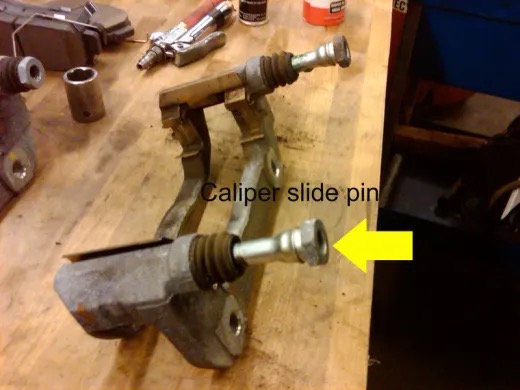
Caliper slide pins need to move freely
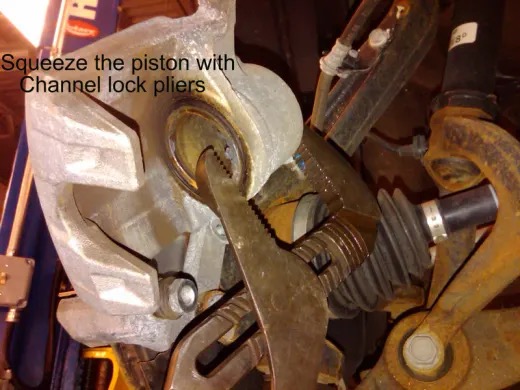
The caliper piston needs to move back into its bore with no binding.
Other Causes of a Pull to One Side When Braking
A faulty proportioning valve or master cylinder could also cause a pull to one side when braking; this is unusual, but it does happen.
Most braking systems work on a diagonal braking design for safety reasons; that is, the left front and right rear brakes work together, and so do the right front and left rear. That way, if there is a leak in one part of the system, it should only affect one front brake and one rear brake. If this is what is going on, you need to identify and replace the faulty part.
A pull when braking may also have nothing to do with brakes. Bad front tires or broken belts in a front tire could cause it. Any pull caused by unevenly worn tires will be amplified when you step on the brakes.
The tires' contact surfaces expand when you brake, thus putting more pressure on the bad tire and causing the pull to worsen. Replacing your tires will fix this, or you could try rotating your front tires to the rear of the vehicle.
3. Steering Wheel Shakes When Brakes Are Applied
This is a very common brake issue on all makes and models: When you’re driving at highway speeds and you apply your brakes, the steering wheel shakes.
There are many possible causes of this shaking, including the front rotors being warped, hot spots (slight irregularities) on your rotors caused by excessive heat, or pad impressions.
If your car sits for long periods without moving, moisture from rain or high humidity causes your rotors to rust, except for the patch of rotor surface where the pads rest. This patch of uneven rotor surface is called a pad impression and will cause the brakes to pulsate.
This brake pulsation can be fixed very easily by having your rotors resurfaced (which is cheaper) or replaced (more expensive). You can resurface the rotors if they are still thick enough.
Every rotor has a "minimum spec" for thickness, usually stamped on the rotor near the hub where the lug nuts are. The rotor needs to be measured at the thinnest point with a micrometer or vernier caliper to determine whether it can be resurfaced or not.
An intermittent noise when braking lightly, as in the video below, could also be related to an uneven surface on the rotors.
4. Brake Pedal Pulses Up and Down When Applying Brakes
If every time you apply your brakes, your brake pedal pulses up and down, the problem is usually caused by the rotors being warped or out of true. As rotors age, they go through the heating and cooling process thousands of times, so it's inevitable for them to lose their shape or trueness.
If you do a lot of highway driving and you happen to be hard on your brakes, you will probably run into this problem many times in the life of your car.
The fix for this brake problem is simple: resurfacing the rotors if they are still thick enough (see section 3 above), or replacing them if they are not. If you do either of these processes and your brake pads are more than half worn, it’s worth it to just replace the pads at the same time for the peace of mind it will give you.
Pads wear out frequently (they are a consumable item), and you might as well deal with them while in the neighborhood.
5. Whole Car Shakes When Brakes Are Applied
If your whole car shakes when your brakes are applied, it could be just your rear brakes. As a rule of thumb, shaking caused by a problem in the front end of the car will be felt in the steering wheel, while shaking in the rear will seem to affect the whole car.
To determine if your rear brakes are the problem, you need to test them in isolation. One way to test your rear drum brakes is to apply the parking brake slightly while driving, because the parking brake uses the drum brakes in the rear. You can do this test if your emergency brake handle is near the center console and it is the style that you pull up with your hand.
Note: I don’t recommend pulling up on the emergency brake handle at high speeds, it can cause your rear brakes to lock up and send the vehicle into a spin causing death or serious injury!
To do this test, drive your car in a remote location with no traffic at a speed of about 30 miles an hour. Push and hold the release button on the end of the emergency brake handle; this is so the emergency brake does not lock into place and can be released easily. Meanwhile, pull up on the handle just enough to feel the rear brakes grab slightly. If your rear drums are the cause of the brake pulsation, you will feel the pulsation at this time, and the car will shake when the emergency brake is applied.
If this is your problem, then the fix is to resurface the rear drums or replace them. Again, you will have to measure the drums to determine if they can be resurfaced or not.
If you have rear disc brakes, this procedure may not work because some makes and models have a separate emergency brake, which is connected not to the rear rotor and caliper, but to a special drum inside the rear rotors with a separate braking system. If you have this type of rear braking system, it is almost impossible to isolate the rear brakes.
Closing Thoughts
Hopefully this information will help you (and your mechanic) decide where to start when fixing your problem. When you are in a crisis situation like a brake problem, some mechanics will take advantage of the customer and over-sell the work that really needs to be done. There are only about nine evil mechanics in the world, they just move around a lot!
This article is accurate and true to the best of the author’s knowledge. Content is for informational or entertainment purposes only and does not substitute for personal counsel or professional advice in business, financial, legal, or technical matters.
