What’s Wrong With Your Car?
Get Simple Answers Fast.
Did you land on the wrong page? 🚘 Start Your Diagnosis Here. 🚘
by Eddie Carrara
I’ve been working on cars for over 35 years.
I’m an ASE-Certified Master Technician, and I’ve spent most of my life diagnosing and repairing vehicles—starting right out of high school and continuing ever since.
But this site isn’t about me.
It’s about helping you understand your car—and avoiding unnecessary repairs.

The Most Common Reasons Why a Transmission Slips
Wondering why your car's transmission slipped? Read on to discover the most common reasons. |
Why Is My Car's Transmission Slipping?
We all know what an automatic transmission is basically—very basically, at least—so I'm not going to bore you with the details about how it converts power from your engine into power at the wheels. But you should know that the process involves plenty of hydraulic fluid as well as gears and clutches.
If you don't know why your car’s transmission is slipping, I just might have the answer, though you may not want to hear what I have to say.
The cause of a slipping transmission will depend on the type of transmissionyou have in your vehicle. There are three types of transmissions: automatic, standard (or “manual”), and CVT (continuously variable transmission). I will discuss the two most common types, automatic and standard.
Why Is My Automatic Transmission Slipping?
If you have an automatic transmission and it "slips" while you are driving it—that is, the car engine revs without the power going to the wheels—the most common cause (though not the only possible cause) is low transmission fluid If the slipping is caused by low fluid, it will get worse as the transmission gets hotter.
Why Is My Manual Transmission Slipping?
A standard (“manual”) transmission uses fluid too, but leaks aren’t a common issue; a standard transmission could lose all its fluid and never slip at all, though eventually, it would lock up while driving down the road. If you have a standard transmission, and it’s slipping—the engine revs but it doesn’t transmit power to the wheels—the problem is usually in the clutch.
Further down in the article, I discuss how to diagnose this problem.
Sounds Like Low Transmission Fluid to Me
If your brakes are making a grinding noise, 👉 Stop Guessing and Start Diagnosing Here
If your Brakes are making a squeaking noise, 👉 Don't Ignore It, Find Out Why
If your not sure what your brakes are doing, It Could Cost A Lot More If You Wait, Get The Answers Here
What to Do If Your Automatic Transmission Is Low on Fluid
The next question is, why? Probably because you have a leak. Maybe you have noticed red transmission fluid in your driveway or your parking spot at work, but it didn’t occur to you that it came from your car. The cause of your leak is probably a failure of one of the seals that keep the oil inside the transmission (though there are other places the transmission might leak). How many seals the transmission has depends on whether you have a front-wheel-drive, four-wheel-drive, or rear-wheel-drive car.
If you do have a seal that is leaking, and you catch it in time before it damages your transmission, there’s a chance it might be relatively cheap to repair. Seals themselves are not expensive parts, but depending on where they are located, it might take a lot of labor to replace them.
Transmission Axle Seal: A Common Site for Leaks
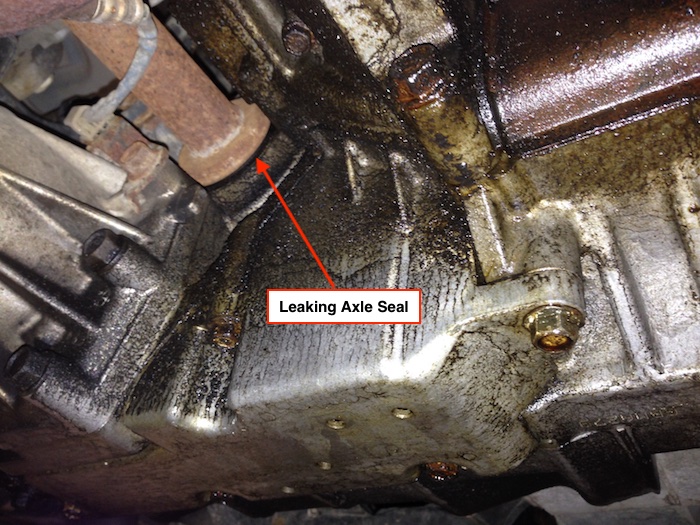
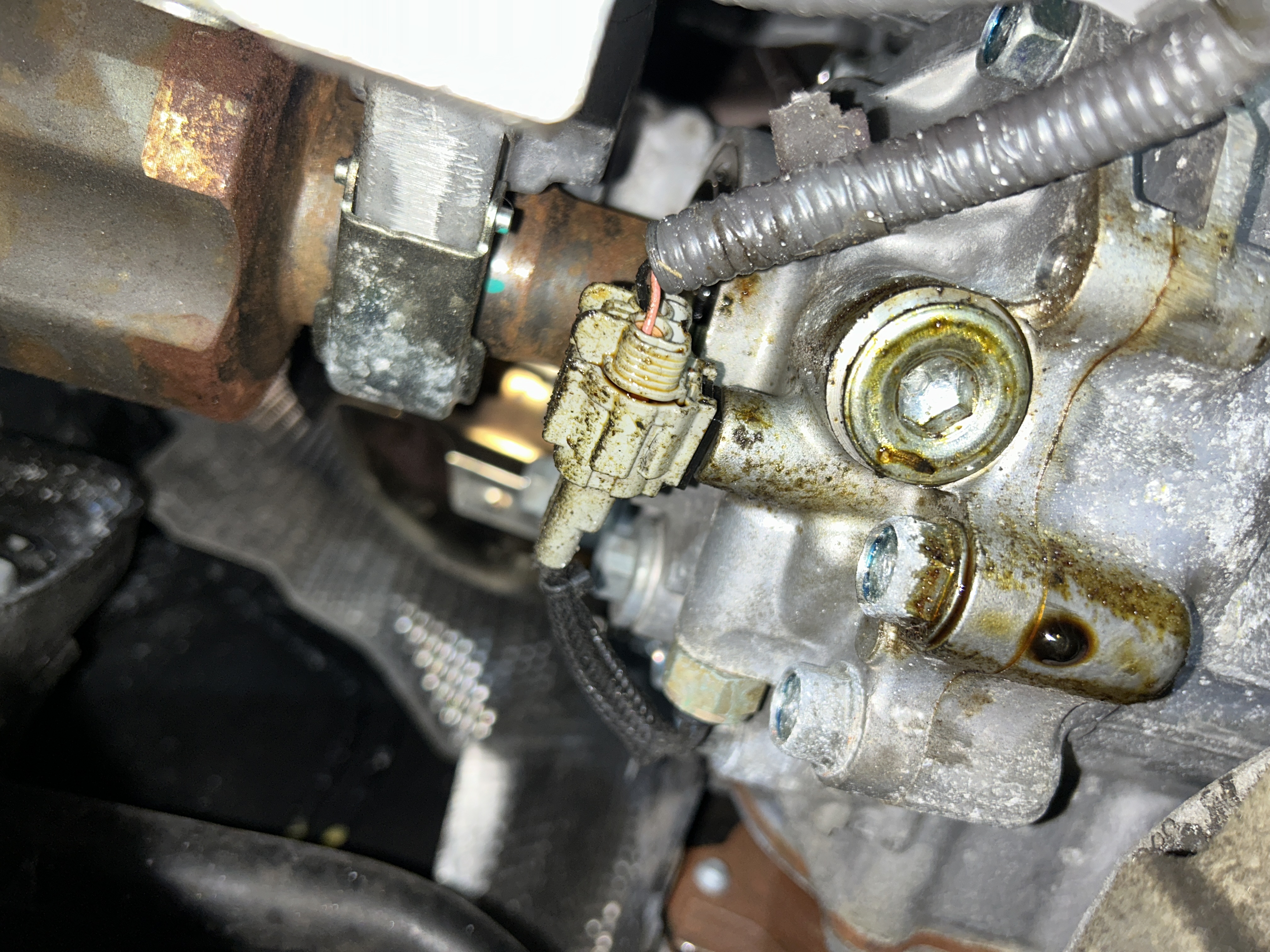
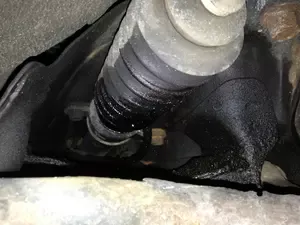
If you have the leak checked out by your mechanic, and he tells you it’s just your axle seal, it could just cost you for a couple hours of labor, and you could be back on the road in a few hours if the parts are readily available. Axle seal failures are common, and the dealer will usually have those seals in stock. But if it's your input shaft seal, plan on leaving your car for a day or two, and expect the labor cost to be upwards of eight to ten hours.
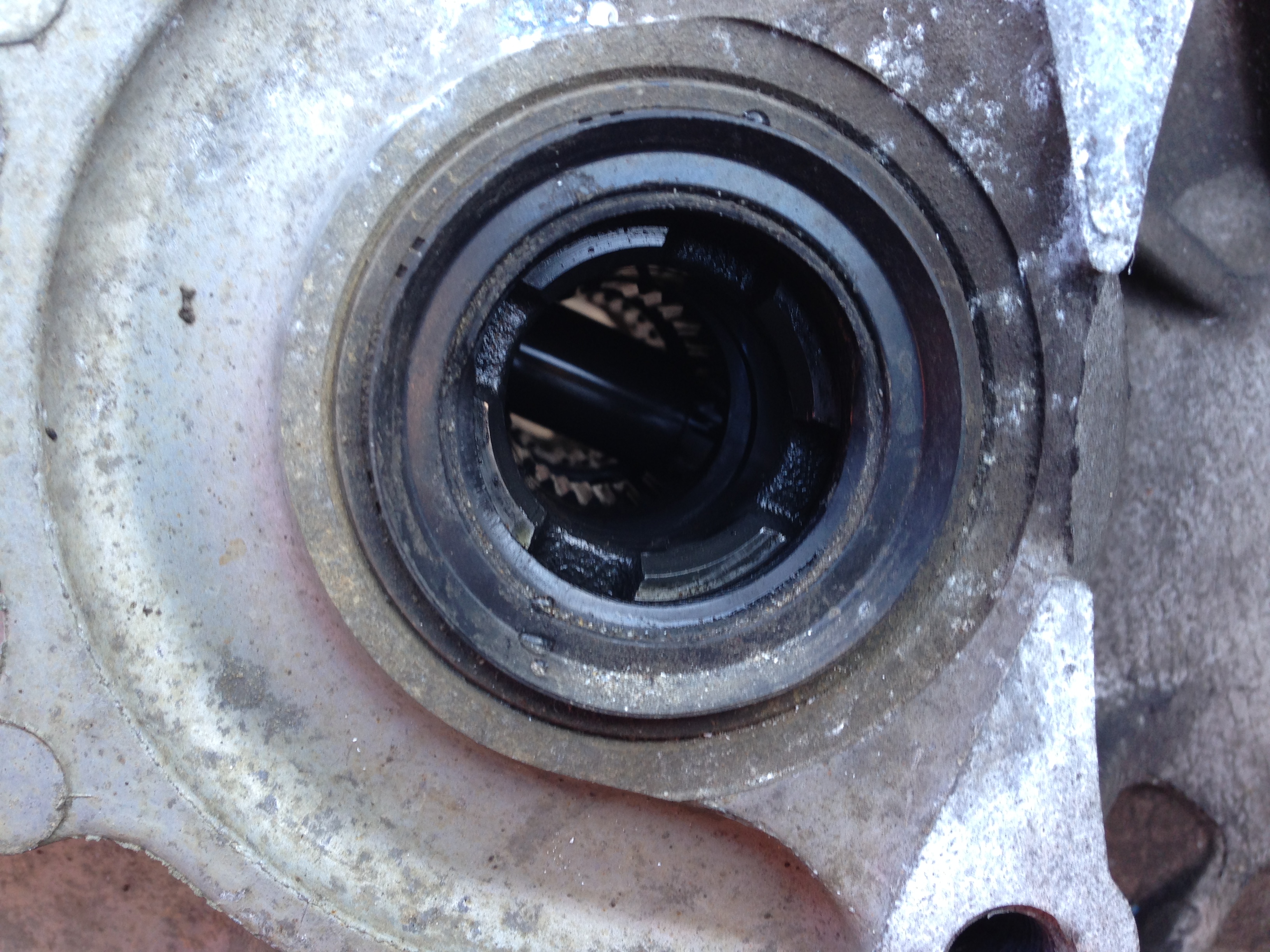
Input Shaft Seal: Another Site for Leaks
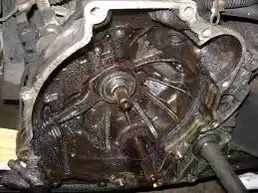
This photo shows an input shaft seal leak. To replace this seal, the transmission needs to be removed from the car; this job can get costly.
Checking and Topping Off Automatic Transmission Fluid to Prevent Slipping
If your transmission is leaking, you will want to fix it. Meanwhile, if you must drive a car with a leaking transmission, you should top off the fluid.
Check your owner’s manual to see exactly how you should check your transmission fluid level. Some manufacturers will want you to check the transmission fluid level when the engine is warmed up and running with the transmission in park, other manufacturers like Honda will have you check it with the engine warmed up but not running. So be sure to read your owner's manual, DON'T GUESS!
If your transmission fluid level is low and not showing on the dipstick, add transmission fluid--the proper transmission fluid. Each car manufacturer uses a specific fluid. If you use the wrong fluid, you could damage your transmission internally, so again, check your owner's manual. Fill it to the top line on the dipstick and then drive it to your mechanic.
Note: Sometimes when an automatic transmission is low on fluid and you top it off, air pockets develop inside the transmission that keep the fluid from getting to all the parts of the mechanism. After adding the fluid, I suggest that while the car is running, you move the shift lever through the different gears on the shifter selector, and then check the fluid again. Running the shifter through the gears redirects the fluid to different parts of the transmission and removes the air pockets. You may have to do this procedure several times, or even drive the car around the block, and then recheck the fluid level.
Note: I do not recommend using additives that are supposed to stop leaks; they can plug up the transmission. Use the automatic transmission fluid your car manufacturer makes.
How to Check Your Transmission Fluid
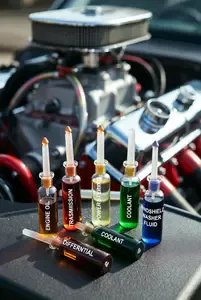
Other Fluids That Leak From Cars, See More Articles Below
Car power steering leak dripping from your car, what do you check?
Car power steering leak, how do I know its power steering fluid leaking from my car and not engine oil?
My Car Is Leaking Fluid 6 Liquids That May Drip From a Car
My Car Is Leaking Fluid 6 Liquids That May Drip From a Car. Don't guess at which one of the 6 liquids that drip from a car, know for sure! This guide is the map that will lead you to your answer.
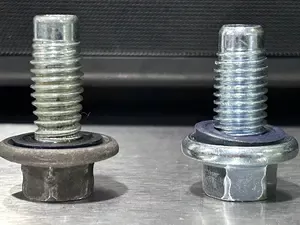
3 Ways to Deal With a Leaking Oil Pan Bolt or Stripped Threads
3 Ways to Deal With a Leaking Oil Pan Bolt or Stripped Threads
Common Cause of Manual Transmission Slippage: Worn-Out Clutch
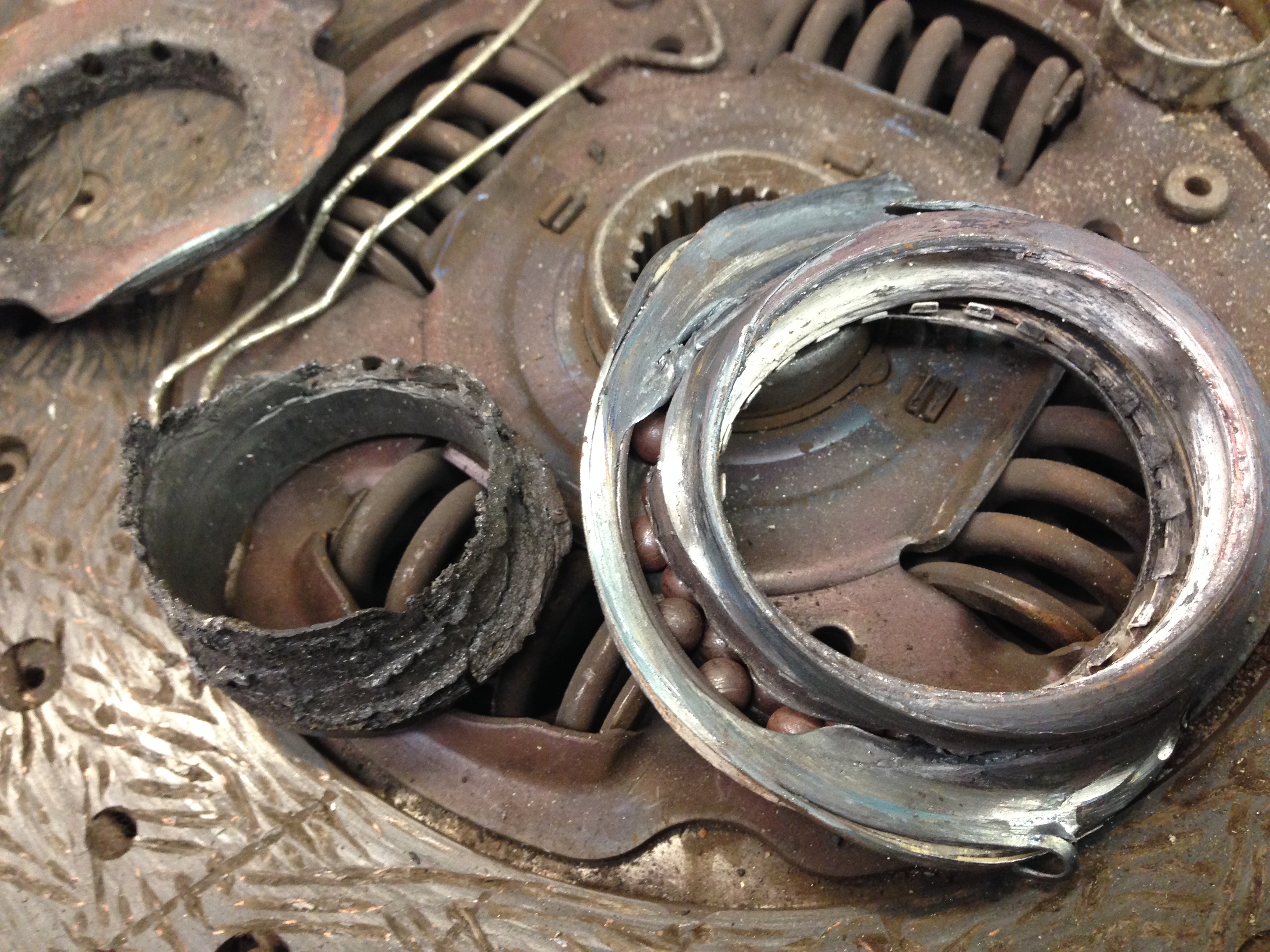
Blown up manual clutch
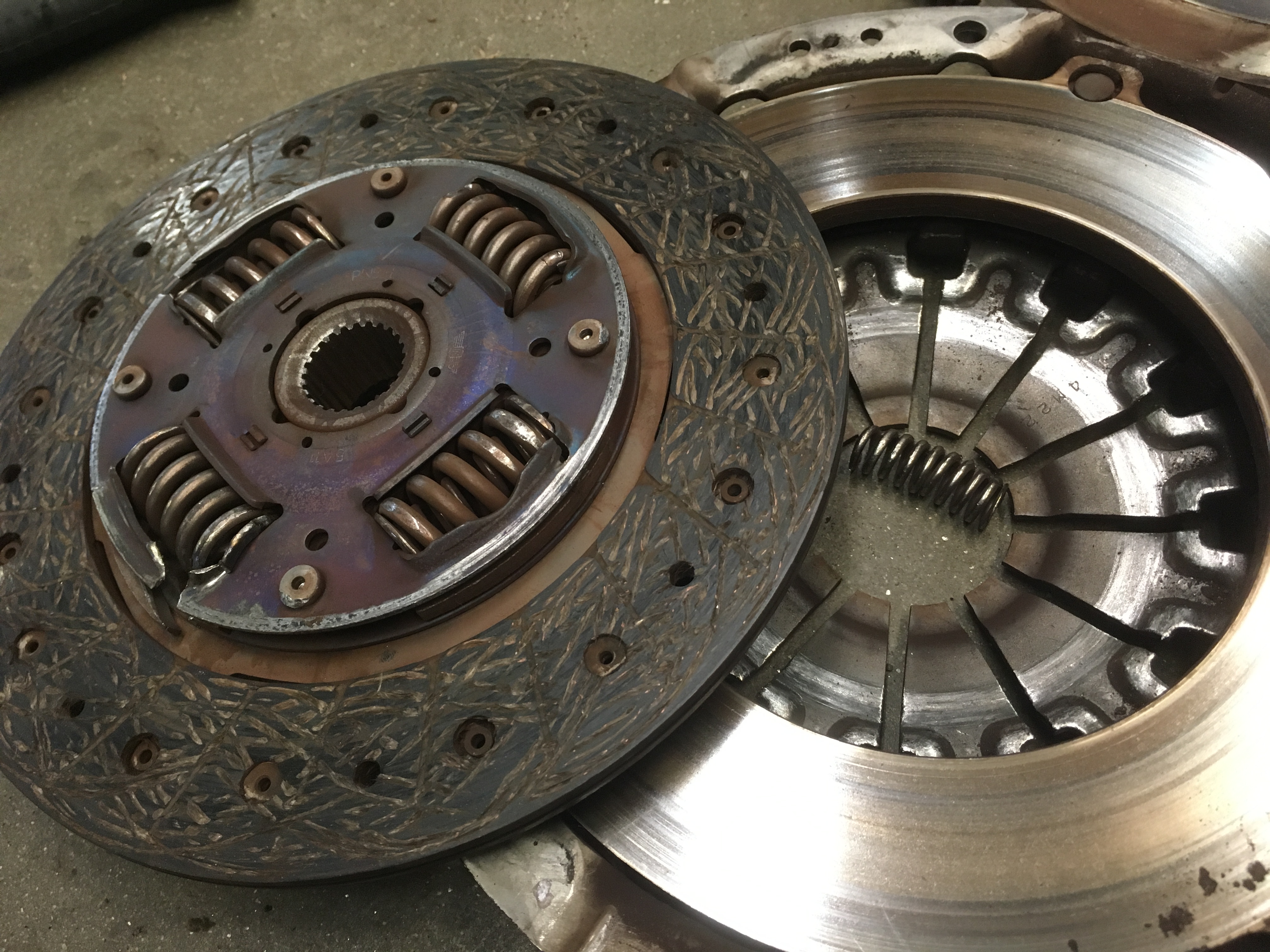
Manual clutch pressure plate and clutch disc in good condition.
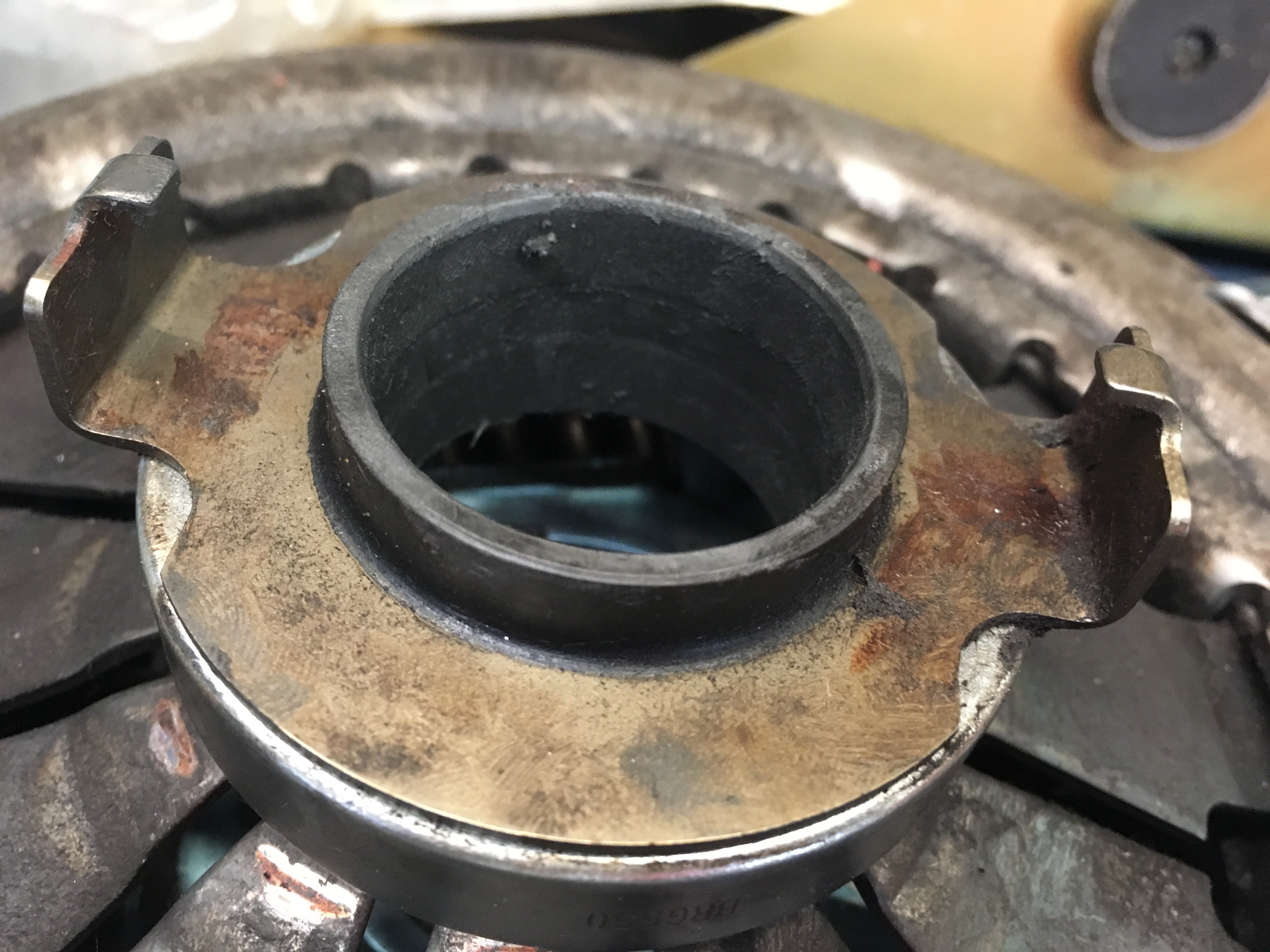
This is your clutch throwout bearing.
If you think your clutch is starting to slip, you can try a stall test. Put your car in third gear and try starting off like you would normally, as if you were in first gear. If your clutch is working properly, letting the clutch out all the way should stall the car. If, however, the clutch is slipping, the engine RPMs will rise, the car will slowly start rolling, and you will have a smell like burning paper coming from the engine compartment. When a clutch starts slipping you will smell it. It’s like the smell of overheated brakes.
There are many reasons why a clutch would slip, but the most common reason is that the clutch is worn out. A clutch disc can last anywhere from 20,000 to 200,000 miles—it all depends on the way you drive—but like a brake pad, it’s a consumable item, and will be used up eventually, leaving the parts grinding metal-on-metal. If the clutch disc is worn out, you need to replace it, generally also along with the clutch plate and one or two bearings. If you don't replace a worn clutch in time, you might have to replace the flywheel (the big chunk of metal next to it) as well.
Riding your clutch—that is, leaving your foot on the clutch pedal when you aren’t using it—can really eat up a clutch disc fast, especially if you drive in hilly areas. Just being a newbie and learning to use a clutch for the first time can cause a lot of wear and tear. Learning to drive on a standard transmission can end up costing you money if you don't get the hang of it quickly.
Then again, clutches slip for reasons not related to wear and tear or abuse. If your input shaft seal is leaking gear oil onto the clutch disc, this could very well cause a slipping clutch. Another common reason for a slipping clutch is a faulty or damaged pressure plate. The pressure plate is operated by a high-tension spring. If for some reason the pressure is not distributed evenly over the clutch disc, the clutch will start to slip.
Blown Clutch: It's Completely Worn Out
I Appreciate Your Questions!
There are many possible reasons for a slipping transmission and I could not cover all of them above. If you have any questions just leave them in the comment box below.
This article is accurate and true to the best of the author’s knowledge. Content is for informational or entertainment purposes only and does not substitute for personal counsel or professional advice in business, financial, legal, or technical matters.
