What’s Wrong With Your Car?
Get Simple Answers Fast.
Did you land on the wrong page? 🚘 Start Your Diagnosis Here. 🚘
by Eddie Carrara
I’ve been working on cars for over 35 years.
I’m an ASE-Certified Master Technician, and I’ve spent most of my life diagnosing and repairing vehicles—starting right out of high school and continuing ever since.
But this site isn’t about me.
It’s about helping you understand your car—and avoiding unnecessary repairs.

Knocking or Ticking Noise From Your Engine
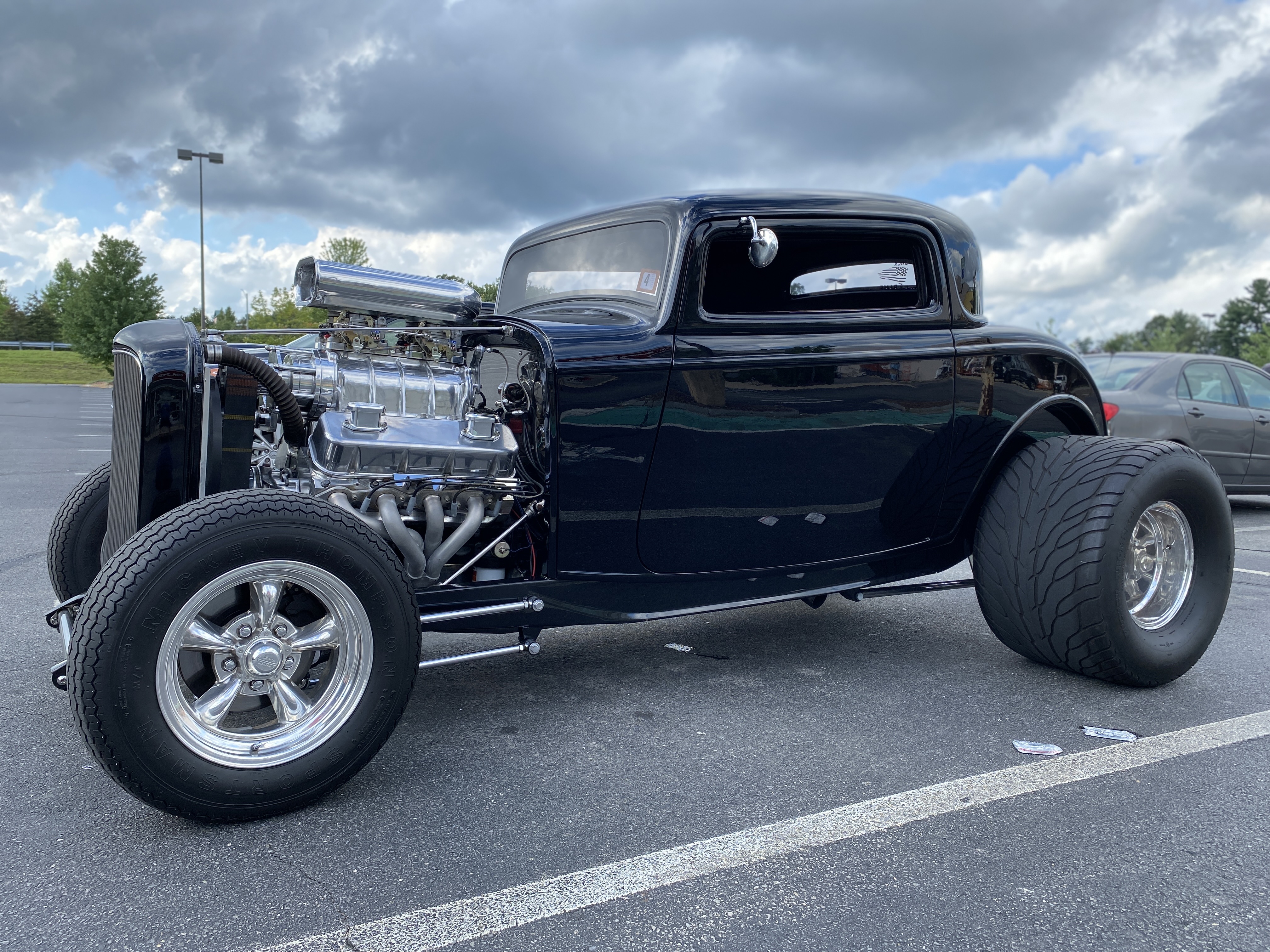
Hopefully the only Knocking and Ticking Noise you hear coming from this engine sounds like Rolling Thunder!
What Engine Noise Is Normal?
A knocking or ticking noise from your engine is a sign that something is wrong.
Usually, it's because:
- there is a lack of lubrication,
- something has broken, or
- something is about to break.
Some engines have a normal ticking noise caused by electrical components like injectors, relays, and solenoids, and also, the engine itself makes some noise turning thousands of RPMs (revolutions per minute), but for the most part, engines should generally have only a very soft ticking noise with no knocking noise.
If your engine develops a knocking noise while driving, usually it's quickly followed by a red or amber warning light on the dash notifying the driver there is a problem.
- If the light is red, I highly recommend shutting off the engine—red means STOP!
- If the light is amber, I recommend taking it easy until you reach a garage or service station—amber means CAUTION, and the noise and light should be checked very soon by a reputable mechanic (not your cousin, unless they have a mechanical background).
If your engine develops a ticking or knocking noise in a short period, the first thing you should do is shut off the engine and check the oil level. You'll need to find the engine oil dipstick and see if you need to add oil or if the oil level is up to the full line. If you cannot find the dipstick, ask for help; don't chance driving without checking the oil level first.
If your brakes are making a grinding noise, 👉 Stop Guessing and Start Diagnosing Here
If your Brakes are making a squeaking noise, 👉 Don't Ignore It, Find Out Why
If your not sure what your brakes are doing, It Could Cost A Lot More If You Wait, Get The Answers Here
Reasons Why the Oil Level Might Be Low
There are several reasons the oil level in your engine may be low. The most common cause is an oil leak. If you suspect you have an oil leak, check the ground where you usually park your car: most often you will find several drips or small puddles of oil on the ground or garage floor. If you cannot see any signs of leaks on the ground or garage floor, try placing a large piece of cardboard under the engine overnight and check for leaks in the morning. This method usually verifies an oil leak clearly without any questions.
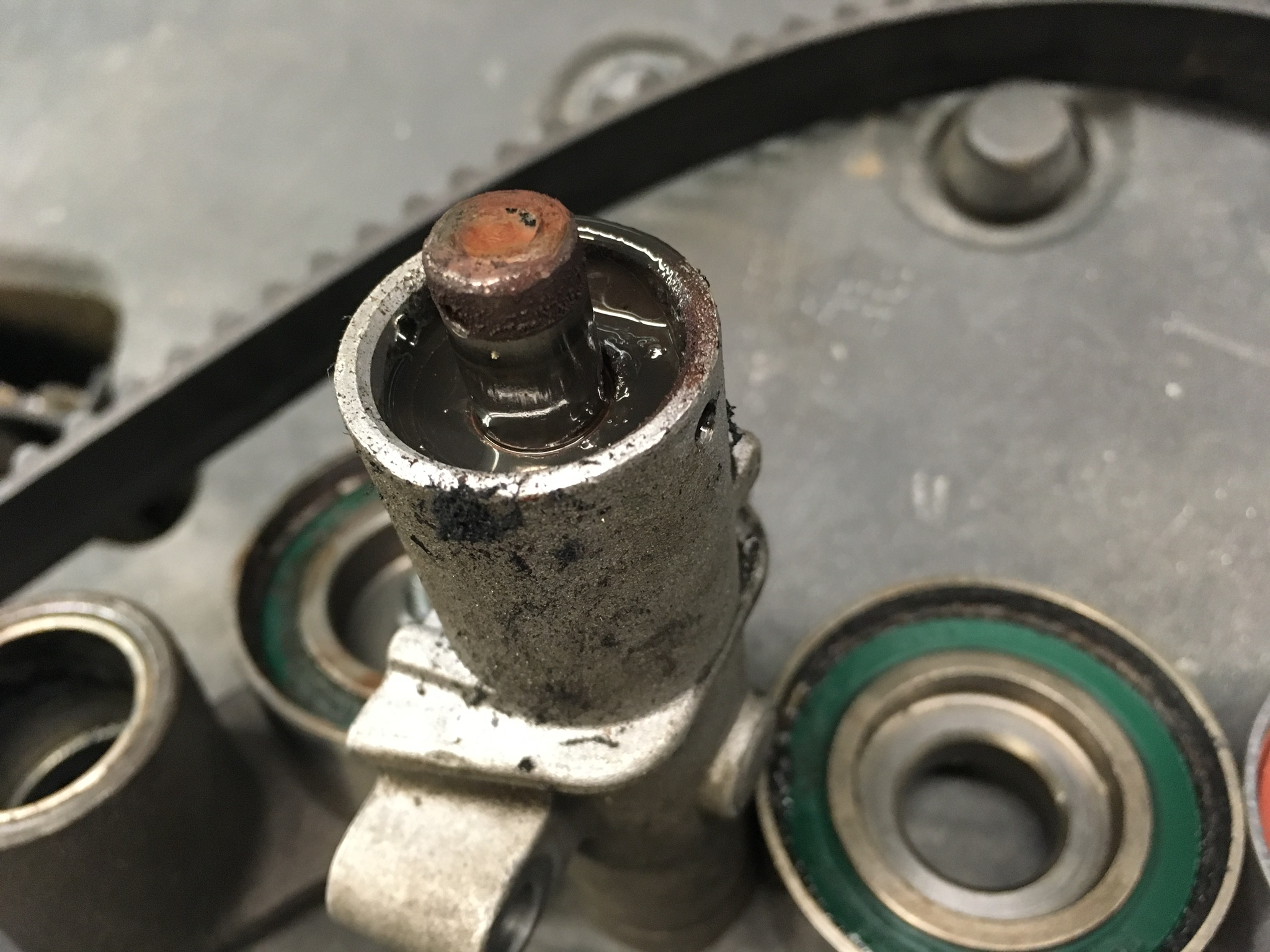
Leaking timing belt tensioner.
Noises From The Upper and Lower Engine
I created the video below of some typical engine ticking and knocking noises. Some of the ticking noises are from the top of the engine where the camshaft is located; worn camshaft lobes are a common cause of upper engine tapping/ticking noises. Deeper knocking noises are from below where the crankshaft is located. Worn crankshaft and connecting rod bearings are the usual cause of lower-pitched, deep knocking noises but are not the only parts that can cause these types of noises. I had a vehicle in the shop that had a blown timing belt tensioner (see above), and this was a very heavy deep noise, so you just never know what is making the noise until you have a knowledgeable mechanic check it out.
Below the video are some pictures of a normal camshaft and another one that is worn causing some noise.
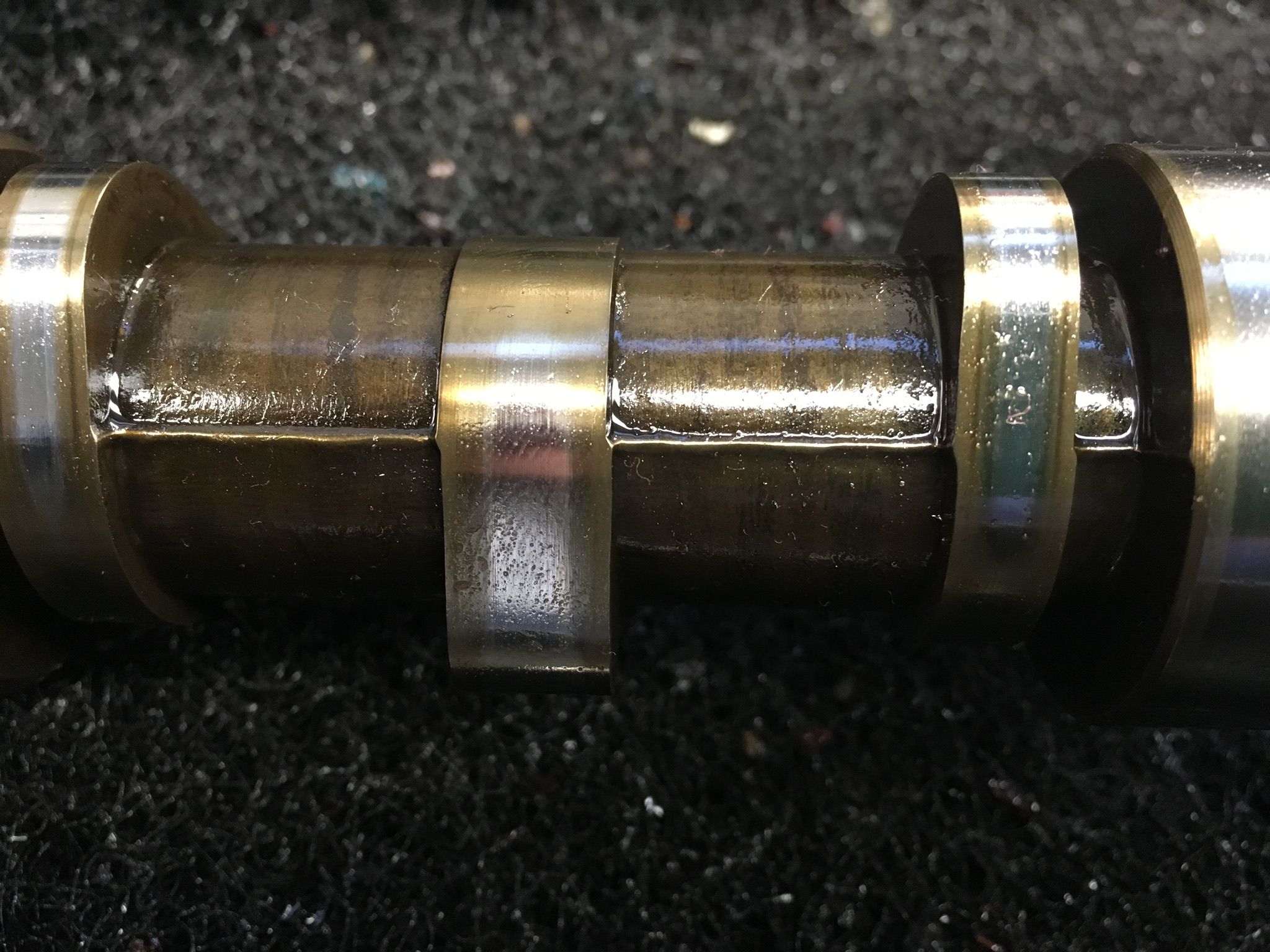
This is a normal camshaft with polished lobes.
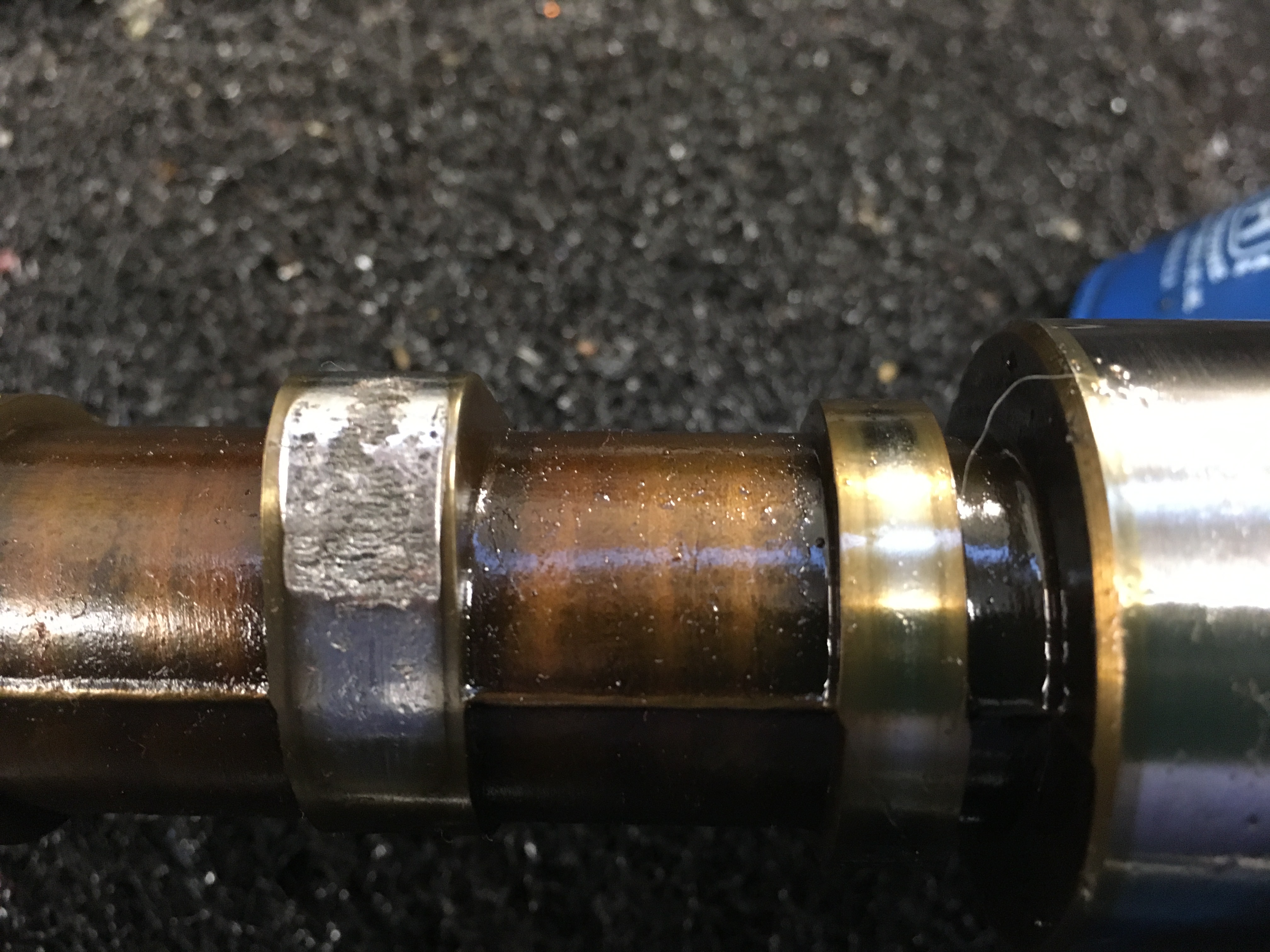
This Camshaft lobe is destroyed due to lack of lubrication.
You May Have an Internal Engine Oil Leak
If you don't see any visible external engine oil leaks, it's possible you are leaking oil internally. There are lots of possible sources of internal engine oil leaks like piston rings, valve guide seals, gaskets, and o-rings. If your engine is burning oil past the piston rings or valve guide seals, the usual sign is blue smoke exiting the exhaust pipe, some when the engine is idling, and more when the engine is accelerating.
There is another type of internal engine oil leak called a head gasket leak. In some cases, the head gasket can leak engine oil into a cylinder, again causing blue smoke out the exhaust; it can also leak coolant into a cylinder and cause thick white smoke out the exhaust. One other possibility is coolant and oil mixed together internally causing a milky mess either in the oil pan or radiator. This type of leak is very noticeable: just pull the oil dipstick, or look in the coolant overflow tank, and if you see any contamination that looks like chocolate milk, you have found your problem.
If your oil is dark brown or amber, and your coolant shows no signs of oil mixing, but you still think you may have a possible internal engine oil leak, top off the oil to the full line on the dipstick, then check your oil level every 500 miles and document your findings.
Note: If the oil level is low when checking it after 500 miles, top it off again and recheck it in another 500 miles, this will give you an idea of how much oil you're losing or burning.
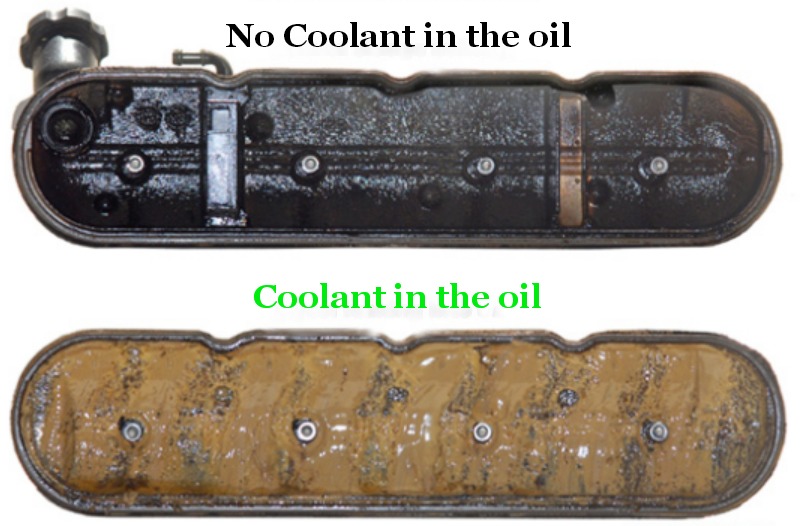
When you. have an internal oil leak mixing with coolant.
What Is the Fix When Your Engine Makes These Noises?
Once an engine develops a noise like this, there is no easy fix. Typically, you'll need to dig deep into the engine to either fix the noise by replacing internal engine parts (camshaft or crankshaft) or replacing the complete engine. Once an engine runs low on oil to the point where the engine makes noise, it's usually too late; the damage is done.
Here is one tip of advice. If you never do any service to your vehicle, the one maintenance item you should always do is change your oil. The oil is the blood of your engine, and the engine is the heart of your car, just like the human body, take care of your heart, and the blood will keep pumping.
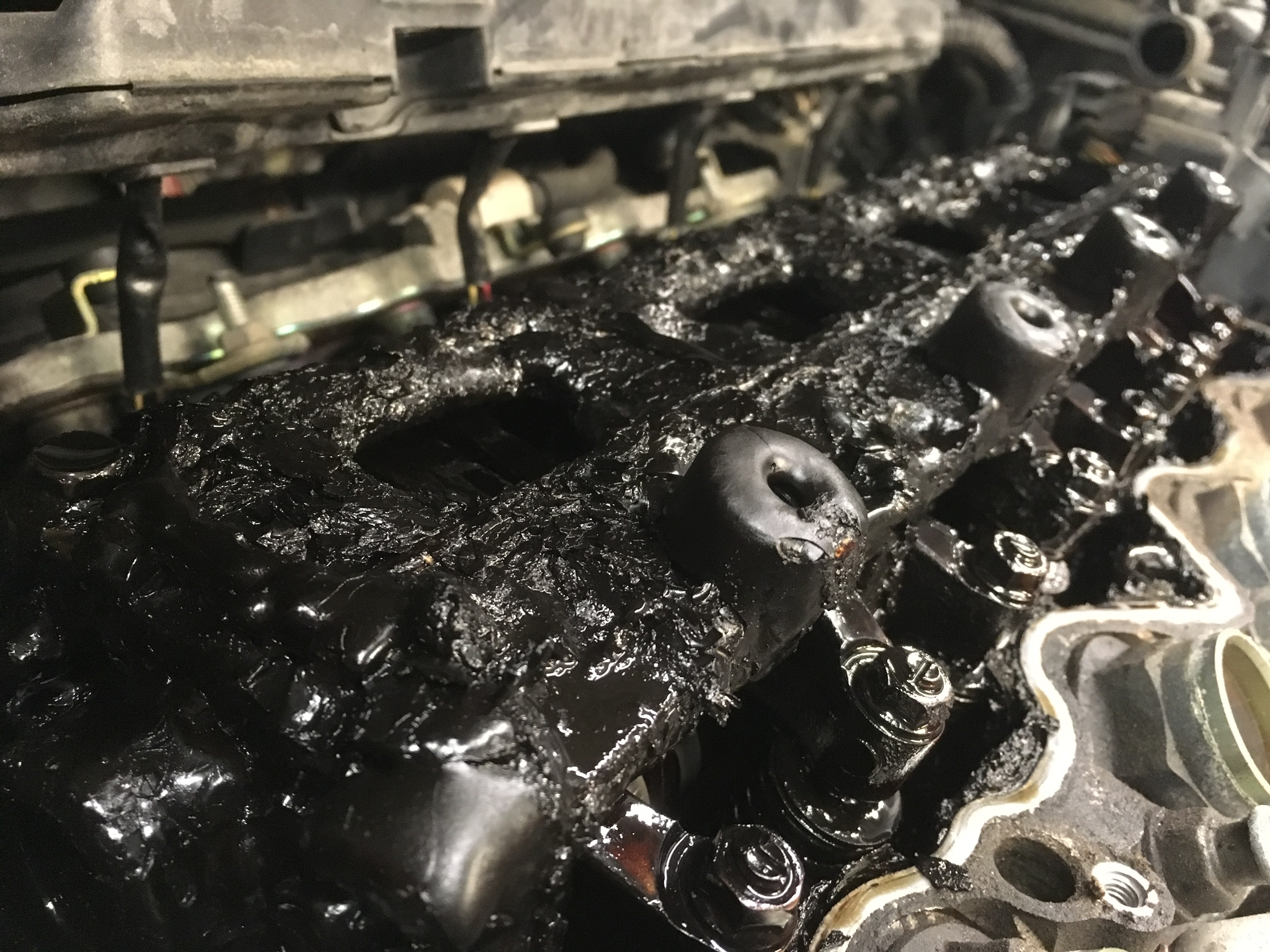
The Difference an Oil Change Can Make! A Dirty Engine . . .
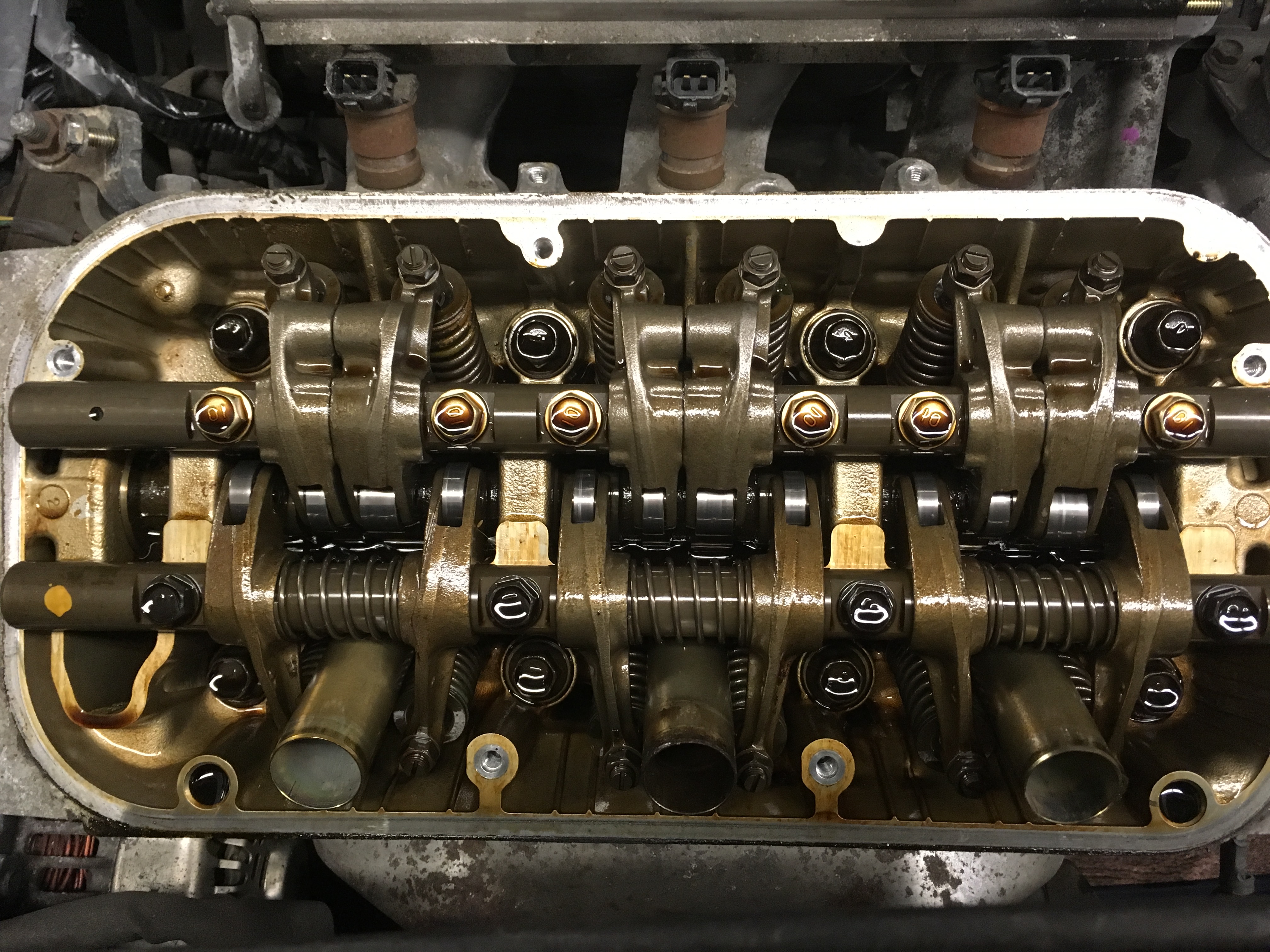
The Difference an Oil Change Can Make! A Clean Engine . . .
This article is accurate and true to the best of the author’s knowledge. Content is for informational or entertainment purposes only and does not substitute for personal counsel or professional advice in business, financial, legal, or technical matters.
